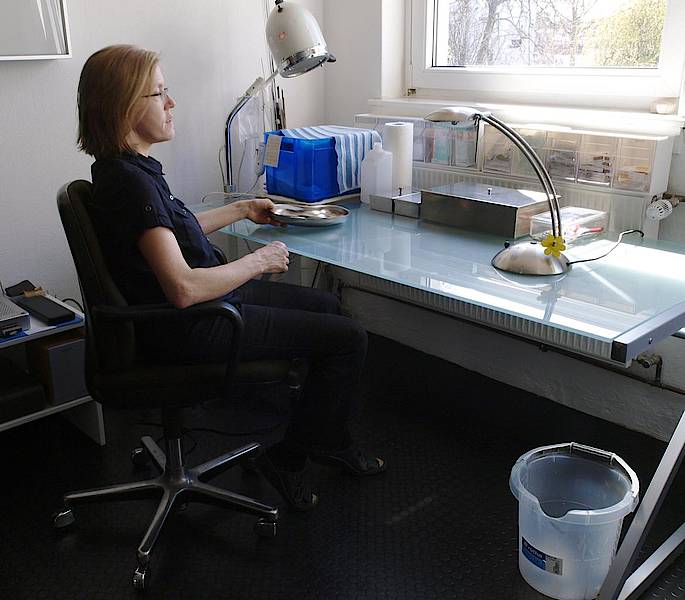
Einlieferung eines Fundvogels
In der Mauerseglerklinik verläuft die Vorgehensweise bei Meldung oder Abgabe eines Findlings nach relativ einheitlichem Schema. Gewöhnlich werden Fundvögel entweder direkt der Klinik telefonisch gemeldet und abgeliefert, oder sie gelangen über Umwege dorthin, nachdem sie vom Finder bei seiner Meinung nach zuständigen Stellen abgegeben worden sind (Tierarzt, Tierheim, andere Pflegestelle, Förster, Vogelfreund, Zoo...). Häufig muss der Transport des Vogels von den Mitarbeitern der Mauerseglerklink selbst organisiert werden, dabei können einerseits ehrenamtliche Kurierfahrer zum Einsatz kommen; eventuell können auch Fahrten über eine ehrenamtliche oder hauptamtliche Tierrettung organisiert werden und in den letzten Jahren gelingt es immer wieder, ehrenamtliche Fahrer über Facebook - Gruppe Wildvogelrettung zu gewinnen. Grundsätzlich ist hier aber auch die Mitwirkung der Finder gefragt.
Telefonische Meldung
Häufig wissen Finder nicht, welchen Vogel sie gefunden haben. Die Mitarbeiter am Telefon sind darin ausgebildet worden, durch gezielte Fragen herauszufinden, ob es sich um einen Mauersegler handelt. Häufig wird der Finder gebeten, ein Foto per Email zu senden. Eine Beratung zu anderen Vogelarten oder anderen Tieren findet nicht statt. Die Finder werden darauf hingewiesen, dass sie sich an anderer Stelle, z.Bsp. beim jeweils örtlichen Bund für Naturschutz, der Facebookgruppe Wildvogelhilfe oder den Tierheimen Rat und Hilfe holen sollen. Ist es ein Mauersegler, wird gefragt, von wem, wann, wo und unter welchen Umständen der Vogel gefunden wurde, wie lange er bereits in Obhut des Anrufers ist, ob er vorbehandelt wurde, gefüttert oder anderweitig versorgt wird und wie er untergebracht ist. Finder erhalten Anweisungen, wie mit dem gefundenen Mauersegler bis zur Abgabe in einer Pflegestelle oder der Mauerseglerklinik umzugehen ist. Je nach Fall werden Finder auf Pflegestellen in ihrer räumlichen Nähe verwiesen (leider ist dies mangels Pflegestellen nicht in allen Fällen möglich) oder der Segler kann zur Mauerseglerklinik gebracht werden. Wenn ein Finder nach eingehender Beratung entscheidet, selbst für einen Jungvogel sorgen zu wollen, kann er sich auf der DGfM Homepage immer wieder informieren und selbstverständlich auch per Email Rat holen.
Abgabe an anderer Stelle
Hier fehlen häufig Daten über Finder und nähere Umstände, denn nicht selten werden gefundene Mauersegler bei Tierärzten, Tierheimen, Zoologischen Gärten, Vogelschutzvereinen etc. kommentarlos abgeliefert und gelangen erst später in die Klinik. Kontakt zu den Findern ist meistens nicht mehr herzustellen, eine Vorgeschichte wurde in der Regel nicht aufgenommen.
Stationäre Aufnahme in der Klinik
Bei Ankunft in der Klinik werden Finder und Vogel von einer Mitarbeiterin oder einem Mitarbeiter der Klinik in Empfang genommen. Gemeinsam werden die Stammdaten im Patientenbogen aufgenommen und die Vorgeschichte erfasst. Die Angabe persönlicher Daten ist freiwillig und dient der Kontaktaufnahme, falls der Zustand des Vogels Rückfragen erforderlich macht. Selbstverständlich können diese Angaben verweigert werden; Daten werden nicht weitergegeben.
Der Segler wird gewogen, bei Jungvögeln das Alter geschätzt. Er wird anschließend in eine mit Küchenrollenpapier ausgekleidete Curver-Box gesetzt. An diesem Punkt heißt es für die Finderin oder den Finder Abschied nehmen: Der Segler wird nun in den Klinikbereich gebracht und schnellstmöglich untersucht und versorgt. Hier ist der Zutritt für fremde Personen aus hygienischen Gründen und zur Stressvermeidung generell nicht gestattet. Die Finderin oder der Finder erhalten ein Informationsblatt, in der allgemein das weitere Vorgehen beschrieben wird, selbstverständlich kann man sich nach dem Zustand und dem weiteren Verbleib des Mauerseglers erkundigen. Günstig ist es, eine E-Mail zu schreiben; in der Hauptsaison sollte das Telefon vor allem den gemeldeten Notfällen vorbehalten sein. Emails werden zeitnah beantwortet.
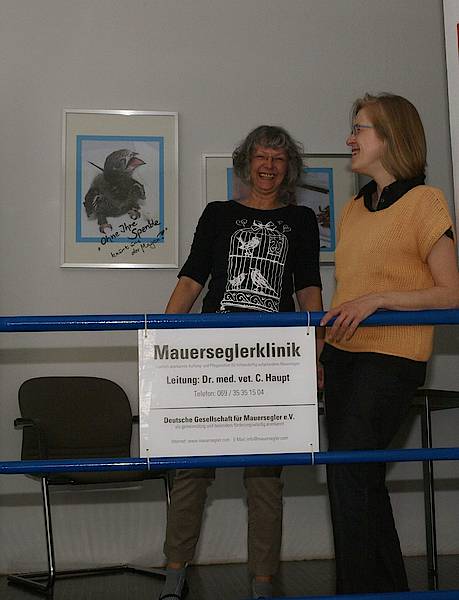
Patientenbogen und Anamnese
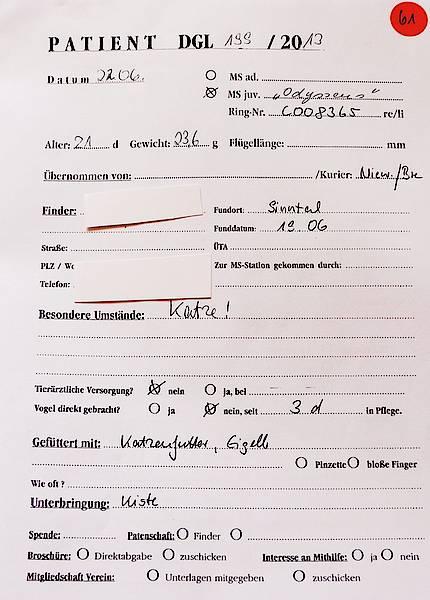
Die anamnestisch bedeutsamen Fragestellungen für einen Mauersegler wurden in der Klinik seit 1995 bis hin zu einem schematisierten Fragenkatalog vervollständigt. Seit 2000 werden sie in einem 4-seitigen Patientenbogen für jeden Fundvogel systematisch erfasst. Notiert werden Angaben über den Finder (Name, Anschrift, Telefonnummer), über Fundort und Funddatum, die genauen Fundumstände sowie Details bezüglich der am Fundtier vorgenommenen Maßnahmen vom Finder, von einem Tierarzt oder einer anderen Person. Ferner werden etwaige Fütterungsversuche, Fütterungstechnik und Unterbringung des Findlings erfragt sowie Informationen zur Dauer des Aufenthaltes beim Finder, Kontakten zu Menschen und Tieren. Auch die Frage, durch wen der Finder an die Station verwiesen wurde, ist relevant.
Anschließend wird der Finder informiert, was nun mit „seinem“ Mauersegler geschieht, und seine Fragen beantwortet. Er erhält ein Informationsblatt über die Arbeit in der Mauerseglerklinik.
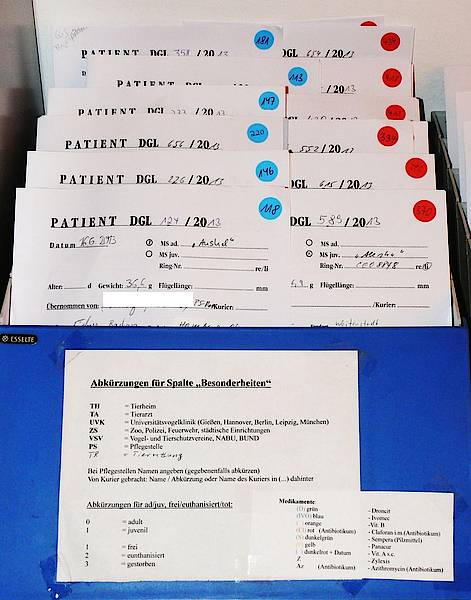
Ist der eingelieferte Vogel ein Notfall und/oder herrscht während der Hochsaison extremer Stress in der Klinik, können die Gespräche mit den Findern zwangsläufig sehr kurz ausfallen, um die Versorgung der Patienten nicht durch lange Unterbrechungen zu gefährden.
Der Mauersegler wird gewogen und untersucht und in den Aufzucht- und Pflegebereich der Klinik aufgenommen. Jung- und Altsegler werden meist in getrennten Boxen, stets jedoch in kleinen Gruppen von zwei bis vier Vögeln untergebracht. Ausgenommen sind Patienten mit Verdacht auf infektiöse Erkrankungen, die in Quarantäneboxen isoliert werden. Für Notfallpatienten stehen beheizte, auf 30 – 32°C gehaltene, abgedunkelte Intensivboxen zur Verfügung.
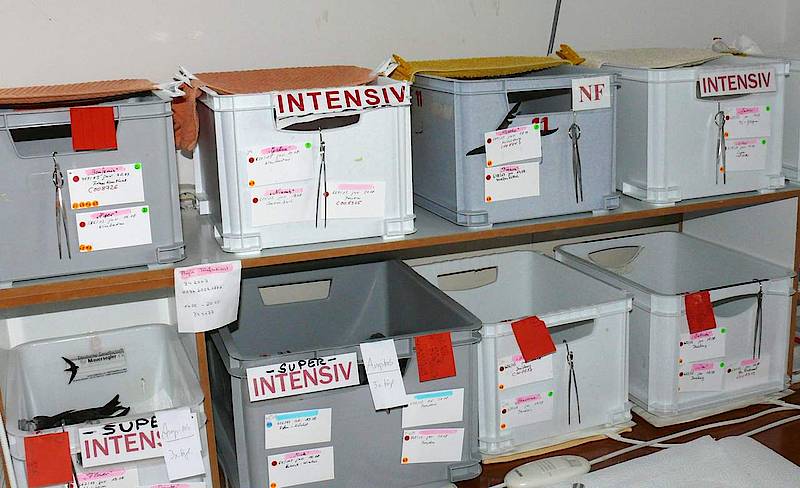
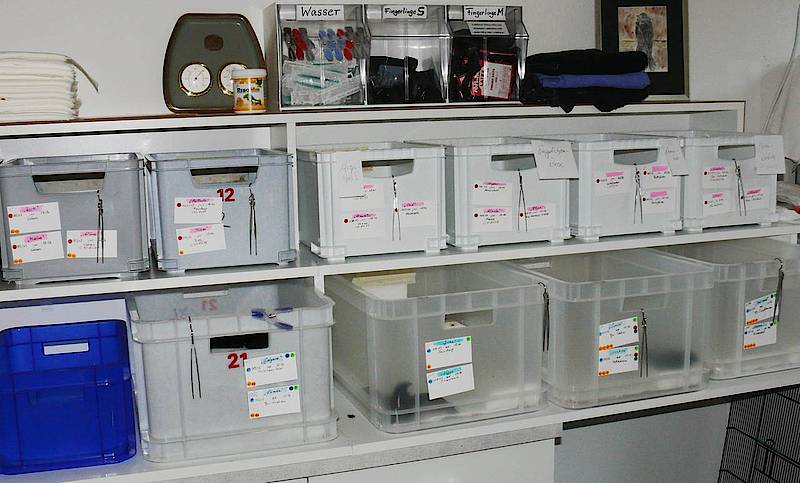
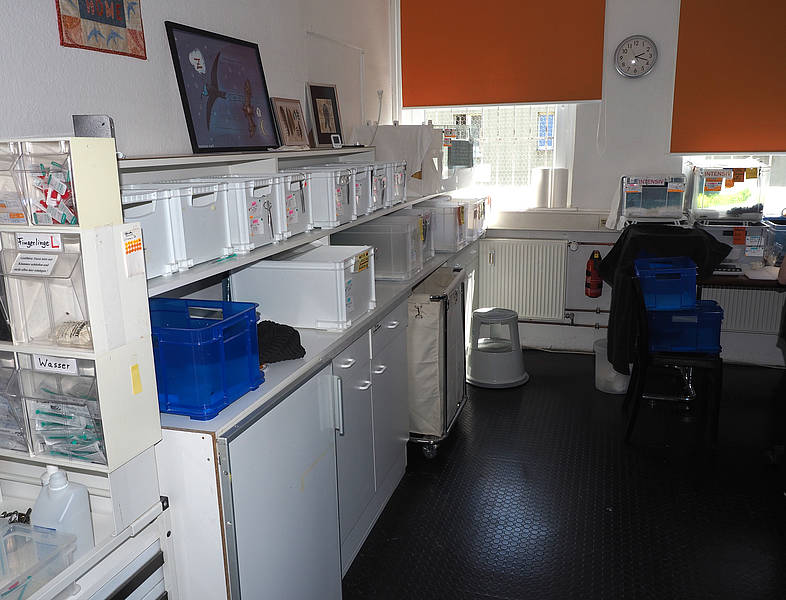
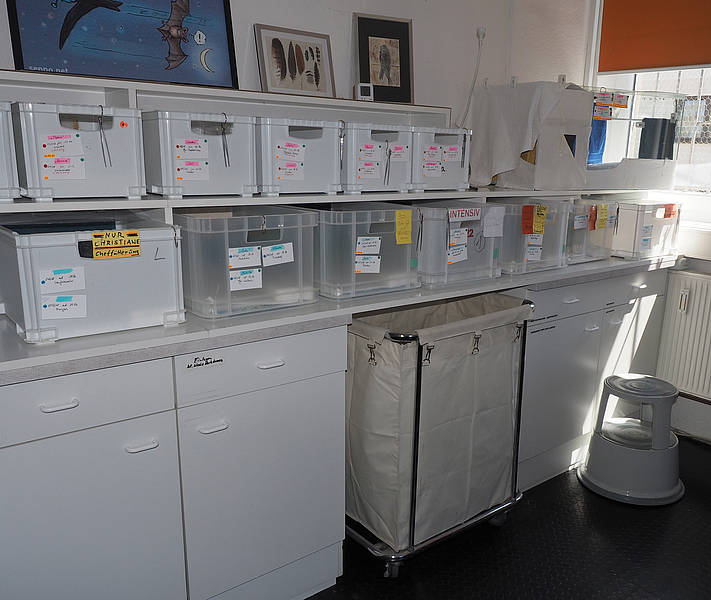
Nach Kenntnisnahme des Vorberichtes, klinischer Untersuchung des Fundvogels, stationärer Aufnahme und Erstversorgung werden die erhobenen Daten nach Dringlichkeit gegliedert, im fortlaufend numerierten Patientenbogen protokolliert und beurteilt. Sie dienten als Entscheidungshilfe für die anschließende Behandlung des Findlings, das weitere medizinische Vorgehen und die Notwendigkeit einer radiologischen oder weiterführenden Untersuchung.
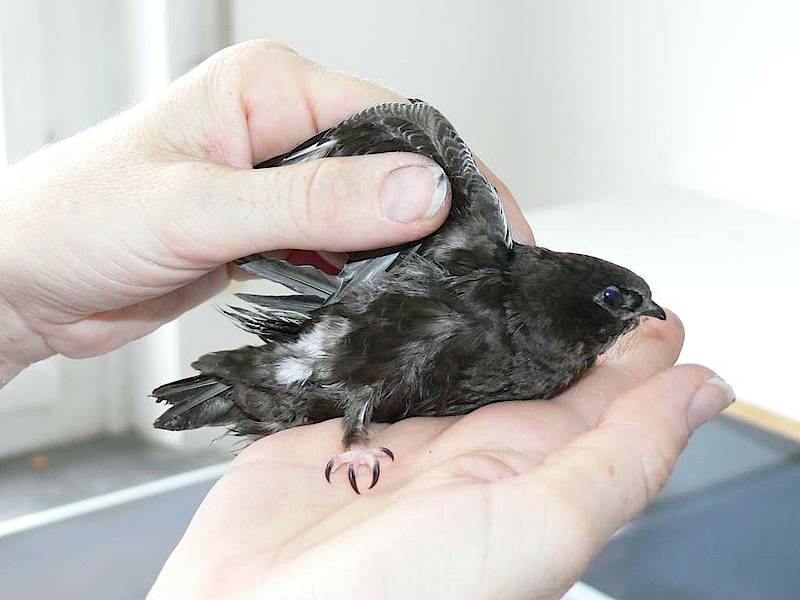
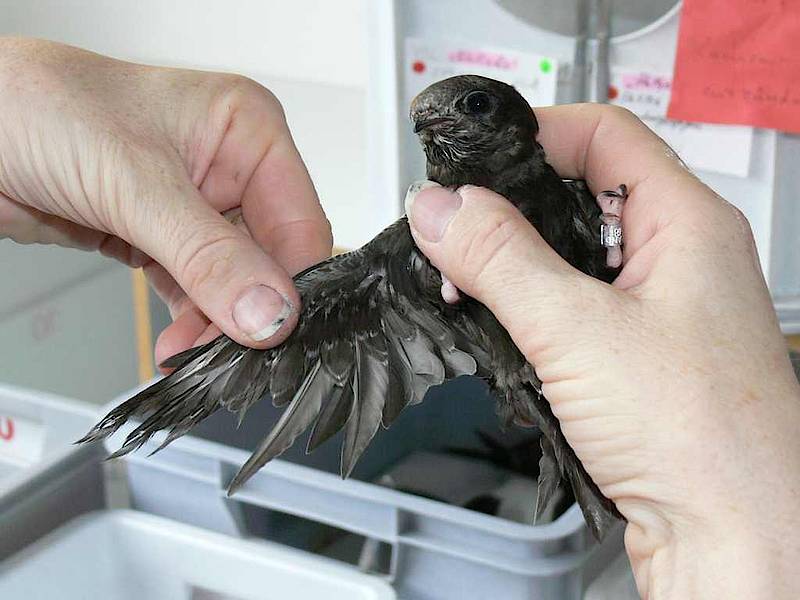
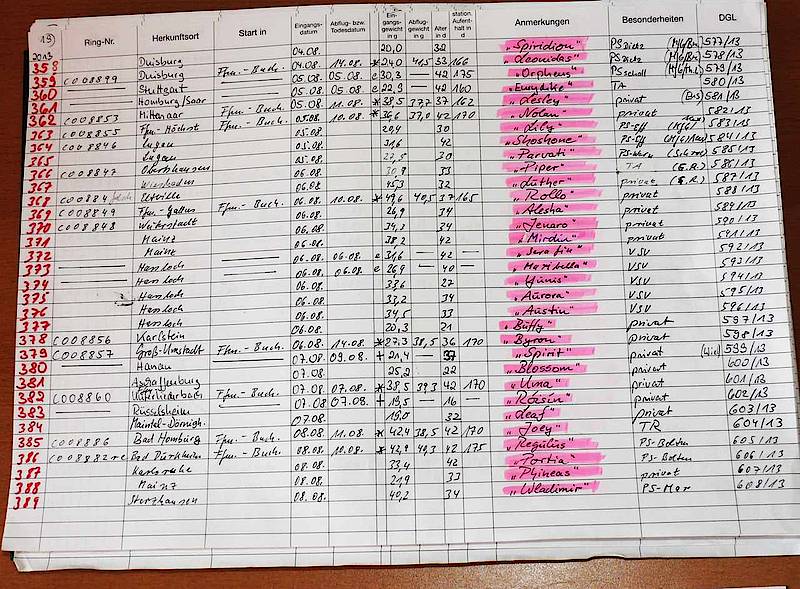
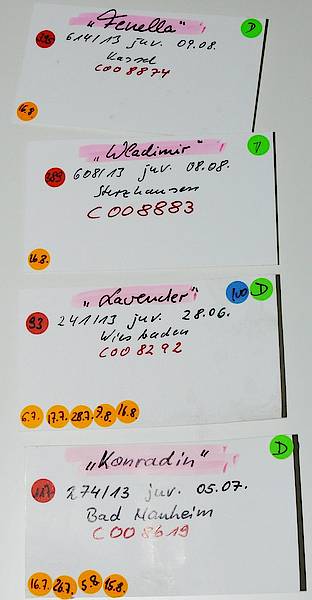
Die Eckdaten des Vogels werden in der Durchgangsliste der Mauerseglerklinik erfasst. Für den neuen Patienten wird eine ID-Karte geschrieben und an der Curverbox befestigt, in der er untergebracht wird. Dies sind Büroarbeiten, die parallel zur Versorgung des Fundvogels ablaufen. Jeder Vogel kann eindeutig identifiziert werden. PC-Arbeiten wie z.B. die Übertragung der Durchgangsliste in Excel und die Erstellung der Beringungsliste werden derzeit extern oder auf privat mitgebrachten Laptops ausgeführt.
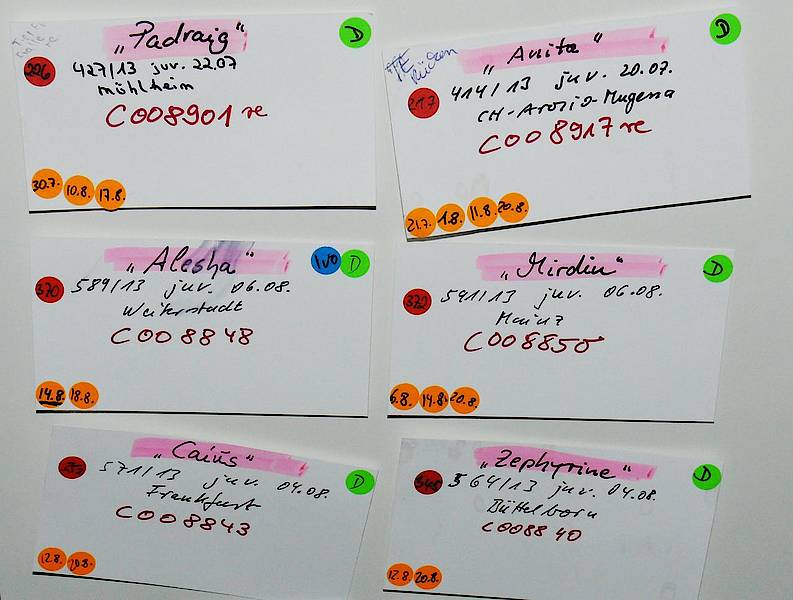
Die Identifizierung der Mauerseglerpatienten wird durch Beringung mit Aluminiumringen der Vogelwarte Helgoland sichergestellt oder vorläufig durch eine dezente Markierung an Kopf, Rücken oder Flügelbug mit TippEx, welches sich nach einiger Zeit rest- und schadlos von selbst wieder löst.
Fütterung, Versorgung und medizinische Behandlung der Patienten erfolgt wie unter „Fundvogel“ und „Tierarzt“ beschrieben.