Mauersegler NIEMALS in die Luft werfen !!!
Sie haben einen Mauersegler gefunden – ist menschliche Hilfe erforderlich? Dürfen Sie ihn anfassen? Müssen Sie ihn in Sicherheit bringen?
Ja! Sofort! Denn ohne Grund wird kein Mauersegler am Boden gefunden. Den Vogel niemals einfach hochwerfen! Eine gründliche Untersuchung des Findlings, am besten durch den Tierarzt, ist notwendig, um genau festzustellen, warum der Mauersegler niedergegangen ist, und um sinnvoll und zielgerichtet helfen zu können.
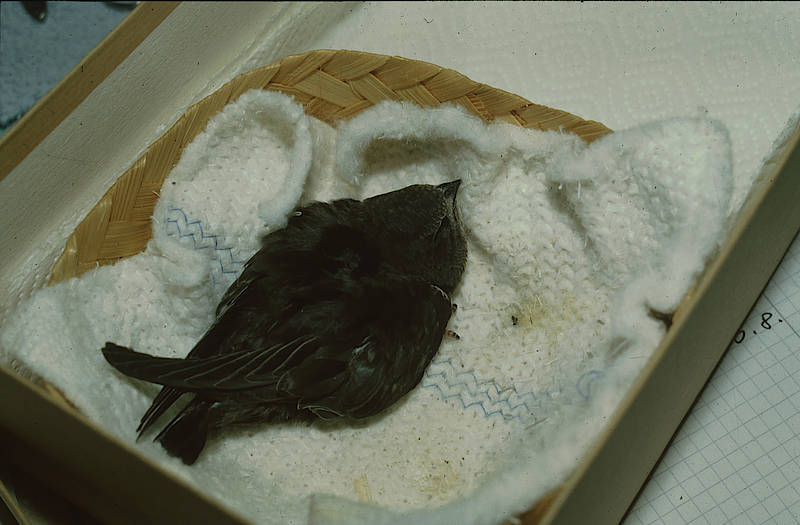
Aufgeplusterter Jungvogel, abgemagert und fast verhungert. © C. Haupt
Wenn Sie sich unsicher sind, ob es sich bei Ihrem Findling tatsächlich um einen Mauersegler handelt, hilft Ihnen die Rubrik "Der Mauersegler -> "Identifikation" weiter.
Warum ein erwachsener Mauersegler in Menschenhand geraten kann
Bei der Suche nach Nistplätzen
Mancher Dachboden wird zur immerwährenden Todesfalle. Durch kleine Öffnungen unter den Dachschindeln schlüpfen immer wieder neue Mauersegler ein, die auf der Suche nach Brutplätzen emsig Firste und Dachkanten umfliegen, und finden nicht wieder hinaus. Sie verhungern und verdursten qualvoll, wenn sie nicht rechtzeitig gefunden werden. Auch durch gekippte Fenster in oberen Stockwerken können Mauersegler in Gebäude gelangen. Einmal in Zimmer oder Treppenhaus niedergegangen, fehlt ihnen der nötige Raum, um sich wieder aufzuschwingen, und sie krabbeln hilflos am Boden umher. Sie sind in der Regel unverletzt und können, sofern man sie rechtzeitig entdeckt, gleich wieder freigelassen werden. Irrt ein solcher Mauersegler aber bereits längere Zeit hungernd und dürstend im Gebäude umher und ist stark abgemagert, werden Notversorgung und Auffütterung notwendig.
Durch einen Kampf
Nicht selten kommt es unter Mauerseglern zu erbitterten Kämpfen um einen der wenigen begehrten Nistplätze. Blind und taub für alles andere können solche "Streithähne" dabei ineinander verkrallt aus der umkämpften Nisthöhle fallen und zu Boden gehen, wo sie nicht selten wie Gladiatoren verbissen weiterkämpfen. Bevor sie dann zum Opfer von Katzen, Verkehr, unfreundlichen Zeitgenossen o.ä. werden, sollte man sie aufheben, vorsichtig trennen, untersuchen und gleich wieder fliegen lassen, sofern sie nicht verletzt sind und tierärztlicher Hilfe bedürfen.
Durch Schwäche und Erschöpfung
Mehrere Tage Kälte, Wind und Regen, und ein Mauersegler findet keine Nahrung
mehr. Halb verhungerte und völlig erschöpfte Altsegler können bei anhaltend schlechter Witterung, wenn es nirgendwo mehr Fluginsekten gibt, in ganzen Trauben an Mauern hängend oder auf dem Boden liegend gefunden werden. Sie benötigen dringend Wärme, eine Notversorgung mit Aufbaupräparaten durch den Tierarzt und vorsichtige Auffütterung mit Insekten, bevor sie bei besserem Wetter wieder in die Freiheit entlassen werden können.
Aufgrund eines Unfalls
Unfälle bleiben bei den rasanten Flugjägern nicht aus und sind besonders häufig zur Zeit der Nistplatzsuche, wenn Mauersegler auf der Suche nach Brutstätten in ganzen Pulks durch die Straßenschluchten schießen und Häuser umkreisen. Kollisionen mit Stromleitungen, Glasscheiben, Dachkanten und anderen zivilisationsbedingten Hindernissen sind vorprogrammiert. Auch bei schlechten Wetterverhältnissen kommt es vermehrt zu Unfällen, an solchen Tagen sollten Autofahrer vorsichtig sein: Oft sind jagende Mauersegler und Schwalben dicht über den Fahrbahnen von Straßen auf Futtersuche, besonders in der Nähe von Flüssen, und können dabei zu Hunderten Opfer des Verkehrs werden. Solche Anflüge enden meist tödlich oder mit schweren Schäden wie Schock, Gehirnerschütterung und Knochenbrüchen. Mit überlebenden Unfallopfern muss schnellstmöglich ein vogelkundiger Tierarzt aufgesucht werden!
Gerät ein erwachsener Mauersegler in Menschenhand, kann es sich um einen Brutvogel handeln, der Junge versorgt, welche durch sein Ausbleiben gefährdet sind. Kein Altsegler sollte länger in menschlicher Obhut verbleiben, als es unvermeidlich ist, um z.B. Verletzungen zu behandeln oder, wenn er stark abgemagert war, ihn wieder aufzufüttern.
Wann junge Mauersegler auf menschliche Hilfe angewiesen sind
Immer, wenn sie in noch nicht flugfähigem Zustand außerhalb ihrer Nisthöhle aufgefunden werden!
Das ist anders als bei anderen Vögeln: Viele junge Singvögel, die ihre Nester sehr früh verlassen, stehen mit ihren Eltern in ständiger Verbindung und werden oft aufgrund ihrer Kontakt- und Bettelrufe von besorgten, aber leider falsch informierten Tierfreunden fälschlich für verlassen gehalten und eingesammelt (was den Vogelkindern dann meistens zum Verhängnis wird).
Junge Mauersegler jedoch, die auf dem Boden liegend gefunden werden, sind ohne menschliche Hilfe verloren: Mauersegler füttern ihre Jungen niemals außerhalb der Nisthöhle. Hier ist Ihr Eingreifen also gerechtfertigt und notwendig! Mit befiederten, aber noch nicht flugfähigen Mauerseglern muß man ab Mitte Juni rechnen. Flügge Jungsegler gibt es frühestens ab Anfang Juli.
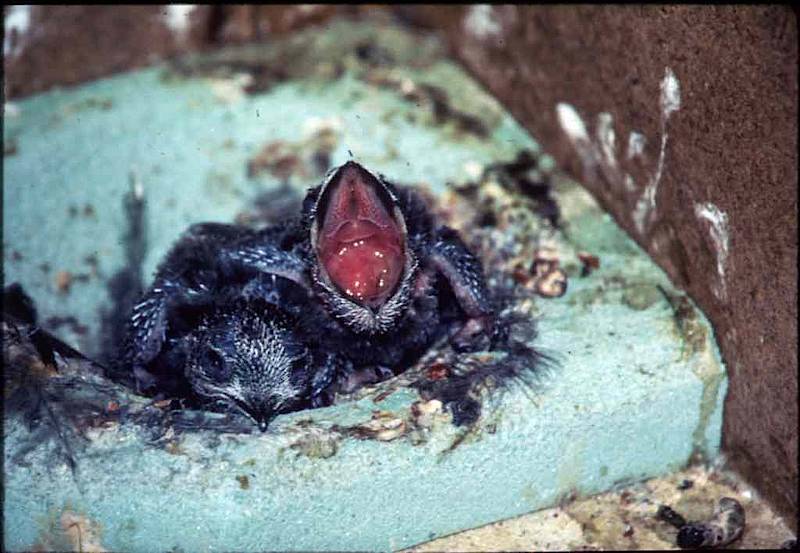
Hilflos verloren durch Abrissarbeiten: Mauersegler-Geschwisterpaar, ca. 2 Wochen alt. © I. Polaschek
Folgende Gründe können dazu führen, daß ein junger Mauersegler Hilfe braucht:
Große Hitze
Direkt unter den Dächern können die Temperaturen im Sommer aberwitzige Höhen erreichen. Häufig stürzen Jungvögel dann ab, wenn sie sich, nach Abkühlung suchend, an die Fluglöcher ihrer stickigen Nisthöhlen drängen. Diese Findlinge sind meist gut genährt, können sich aber trotzdem in sehr kritischem Zustand befinden, wenn sie längere Zeit am Boden ungeschützt der Sonne ausgesetzt waren oder sich beim Absturz verletzt haben.
Kälteeinbrüche
Bei schlechtem Wetter und knapper Nahrung bestürmen die jungen Mauersegler ihre Eltern immer ungestümer um Futter. Hungriges Gebettel direkt am Flugloch oder fieberhaftes Umherirren in der Bruthöhle können zum Absturz führen. Solche Findlinge sind meist hochgradig abgemagert und akute Notfälle, die oft nur durch Infusionen mit Aufbaupräparaten durch den Tierarzt gerettet werden können.
Ausbleiben der Elternvögel/Partnerwechsel
Junge Mauersegler können vor Hunger einen verfrühten Absprung wagen, falls die Eltern verunglücken und ausbleiben. Wenn einem der beiden Elternvögel etwas zustößt, gelingt es dem verbliebenen Altvogel nicht unbedingt, alle Jungen erfolgreich aufzuziehen. Sind die Jungen bereits sehr weit entwickelt und kurz vor dem Ausfliegen, mag es gelingen. Doch ansonsten ist es wahrscheinlicher, dass der zurückgebliebene Mauersegler sich einen neuen Partner sucht. Dieser wirft dann die Brut seines Vorgängers aus dem Nest.
Dachabdeckungen
Dacharbeiten werden aus guten Gründen bevorzugt im Sommer ausgeführt. Leider wird erfahrungsgemäß selbst bei Wissen um die Existenz einer Mauersegler-Brutkolonie nur selten Rücksicht auf Brutvögel und hilflose Nestlinge genommen. Viele flugunfähige Jungsegler kommen Jahr für Jahr elendiglich im Schutt der Dacharbeiten um, und häufig wird nicht nur die jeweilige Brut vernichtet, sondern nachfolgend jede Lücke hermetisch abgeriegelt und somit wieder eine Brutkolonie für alle Zeiten zerstört. Mancher Jungsegler aber konnte durch mitleidige Bauarbeiter oder aufmerksame Nachbarn noch gerettet werden. Solche Findlinge können in jedem Alter anfallen und sind im allgemeinen in gutem Ernährungszustand.
Gerüste an Häusern
Erschütternde Dramen und langes stilles Sterben spielen sich alljährlich unbemerkt hinter so manchem Gerüst ab, das zwecks Sanierungsarbeiten an einem von Mauerseglern bewohnten Haus gestellt wird und den anfliegenden Altseglern den Weg zu ihren Jungen in den Nisthöhlen versperrt. Auch hier haben wachsame Nachbarn oder Bewohner schon Schlimmes verhindern können, wenn die Tragödie rechtzeitig entdeckt wurde, entweder wegen der permanent das Haus umkreisenden Altvögel oder weil halb verhungerte Nestlinge auf oder unter dem Gerüst gefunden wurden! Gerüstteile, die den Einflug versperren, müssen dann umgehend entfernt werden (Bundesnaturschutzgesetz!), damit die Mauersegler ihre Jungen bis zum Ausfliegen versorgen können. Haben die Nestlinge aber bereits mehrere Tage gehungert, sind sie ohne menschliche Hilfe meist nicht mehr zu retten.
Eine "Bruchlandung"
Auch der Jungfernflug eines bereits flüggen Mauerseglers kann schon mal unbeabsichtigt am Boden enden. Problematische Ausflugverhältnisse (z.B. durch ungünstig gelegene Fluglöcher, Bäume vor der Nisthöhle, Windböen o.ä.) zwingen manchmal selbst völlig gesunde, flugfähige Jungvögel zur Notlandung. Hier bedarf es lediglich eines zweiten Startes von der erhobenen Hand auf einer übersichtlichen Fläche.
Aber Vorsicht: Zunächst muss gründlich abgeklärt werden, ob der Mauersegler sich nicht verletzt hat! Denn oft beendet auch ein Unfall jäh den ersten Flug des künftigen Meisterfliegers: eine Kollision mit einer Stromleitung, einem Auto oder einer Glasscheibe. Solch ein "Bruchpilot" kommt nur selten glimpflich davon, häufig sind schwere Verletzungen und der Tod die Folge.
Meist ist es unmöglich und hat wenig Sinn, abgestürzte Jungsegler in ihre Nester zurückzusetzen. Engagierte Manöver mit Feuerwehr und Leiter wären nicht nur halsbrecherisch, sondern auch sinnlos: Im allgemeinen landet der Vogel wenig später aus denselben Gründen wie beim ersten Mal wieder unten, und die Verletzungsgefahr durch den Sturz aus großer Höhe hat sich nur verdoppelt.
Abgestürzte Mauersegler liegen oft schon Stunden oder Tage hilflos, hungrig, durstig, vielleicht verletzt am Boden, bevor sie entdeckt werden. Man muss mit Komplikationen rechnen und sollte schnellstens einen auf Vögel spezialisierten Tierarzt zu Rate ziehen!