Für einen Dauerflieger wie den Mauersegler ist ein vollständiges, unversehrtes Gefieder genauso wichtig wie ein intakter Bewegungsapparat. Gefiederschäden beim Mauersegler können verschiedene Ursachen haben:
Traumatisch bedingte Gefiederschäden
Bei Unfällen und Anflügen kann es zum Abbrechen oder Ausschlagen von Schwung- und Steuerfedern kommen. Auch flächige Skalpierungswunden mit umfangreichem Federverlust kommen vor, verursacht z. B. durch Hochspannungsleitungen. Angriffe von Beutegreifern (Rabenvögel, Greifvögel, Katzen…) enden, sofern der Mauersegler die Attacke überlebt, oft mit gewaltsam ausgerissenen Federn und Weichteiltraumata. Perforierende Wunden im Flügelbereich betreffen nicht selten auch die Federanlagen der Handschwingen.
Mechanisch bedingte Gefiederschäden
Diese Schädigungen beobachtet man vor allem bei falscher Haltung und Unterbringung von Mauerseglern in Menschenhand. Mauersegler, die in einen Käfig, hinter Draht oder auch in zu enge, kleine Behältnisse gesetzt werden, können sich die Schwung- und Stoßfedern knicken und abbrechen. Zu ähnlichen Defekten kann es kommen, wenn Mauersegler sich in Gebäuden verfliegen, z. B. auf Dachböden, und sich zu befreien versuchen. Des weiteren kommt es gelegentlich zu abgeknickten, verdrillten und völlig verdrehten Schwungfedern, wenn ein Mauersegler sich in fadenförmigen Fremdkörpern verfängt und verwickelt, was gerade am Nistplatz leicht geschieht: Haussperlinge tragen umfangreiches Nistmaterial und auch Fäden in ihre Niststätten ein, was einem Mauersegler, der das Nest anschließend nutzt, zum Verhängnis werden kann.
Unsachgemäße, unhygienische Haltung in menschlicher Obhut verursacht bei Mauerseglerpfleglingen nicht selten derartig verschmutztes, kotverkrustetes Gefieder, dass der Vogel damit nicht mehr wildbahnfähig ist. Ähnliches kann bei unachtsamer dilettantischer Fütterung geschehen, wenn der Mauersegler von Kopf bis Fuß mit irgendeiner "Futterpampe" verschmiert und verkrustet wird.
Durch Fehlernährung bedingte Gefiederschäden
Bei falscher und nicht artgerechter Fütterung werden bei juvenilen Mauerseglern fast regelmäßig schwere Gefiederschäden beobachtet, die in zwei Gruppen zusammengefasst werden können:
1) Ausfall von Handschwingen im Blutkiel
2) Kiel- und Fahnendefekte verschiedenster Ausprägung
Parallel ist oft auch das Körpergefieder mehr oder weniger umfangreich geschädigt, es wirkt stumpf, fleckig, zerfasert, struppig, seine natürliche Isolierfähigkeit, die den Vogel vor Nässe und Kälte schützt, ist herabgesetzt oder aufgehoben.
1) Ausfall von Handschwingen im Blutkiel:
Es können unterschiedlich viele Primaries betroffen sein. Die Schädigung tritt sowohl symmetrisch als auch asymmetrisch auf. Manchmal wirft der fehlernährte junge Mauersegler nur beidseitig je eine Handschwinge ab, weitaus häufiger ist jedoch der Verlust von bis zu fünf oder sechs Handschwingen pro Seite. Fast immer stagnieren die betroffenen Federn zuvor im Wachstum, der Vogel "bleibt kurz". Das Zeitintervall von der Wachstumsstagnation bis zum Abwurf der ersten Federn ist unterschiedlich lang und beträgt manchmal nur wenige Tage, manchmal einige Wochen. An den abgeworfenen Federn fällt auf, dass die noch nicht ausgewachsenen Kiele verkürzt und oft deformiert sind. Ein stabiler belastbarer Federkiel wird gar nicht erst ausgebildet. Die Steuerfedern sind in der Regel nicht betroffen, bilden jedoch meistens Fahnendefekte, Knickstellen im Kiel oder Läsionen aus, die man als Grimale bezeichnen könnte.
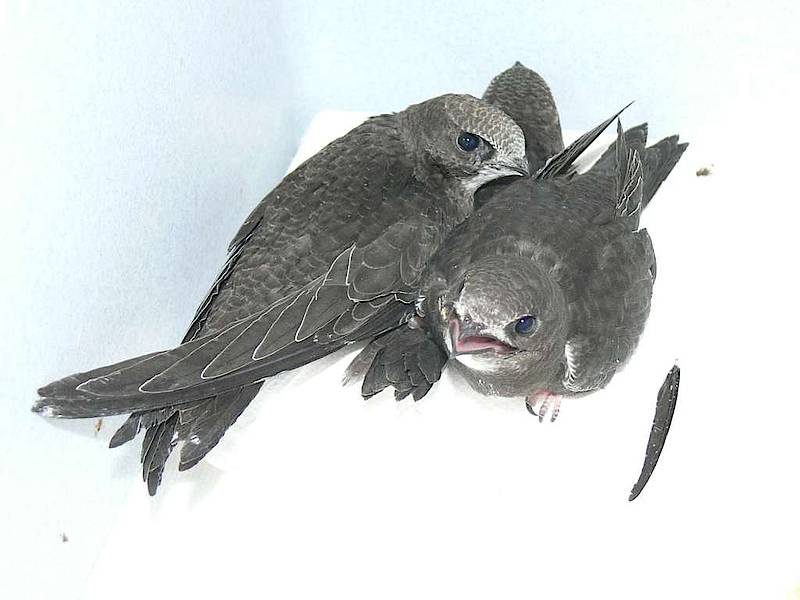
Eine Kausalität zu Art und Zeitpunkt der einwirkenden Noxe kann nicht immer hergestellt werden. In einigen Fällen jedoch gibt es Erfahrungswerte: Hackfleischfütterung führt fast immer ca. 8-10 Tage nach der Ernährungsumstellung des Pfleglings vom falschen Futter auf Insektennahrung zum Abwurf mehrerer Handschwingen. Die Vögel sind zu diesem Zeitpunkt meistens ca. 4-5 Wochen alt.
Fütterung mit Haferflocken bewirkt, sofern der junge Mauersegler sie überlebt, regelmäßig nach Ablauf von 4 Wochen den Verlust der großen Handschwungfedern. Dies trat sogar dann ein, wenn nur ein einziges Mal Haferflocken gefüttert wurden!
Das Alter des jungen Mauerseglers zum Zeitpunkt der Fehlfütterung scheint von Bedeutung zu sein. Bei Geschwistern aus Dreierbruten, die nur einen Tag Altersunterschied aufwiesen, wurde z. B. mehrfach beobachtet, dass die drei Nestlinge bei gleicher Fehlfütterung unterschiedliche Arten von Gefiederschäden entwickelten. Generell traten bei gleicher Fehlfütterung in unterschiedlichen Altersstufen verschiedene Arten von Gefiederschäden auf.
2) Kiel- und Fahnendefekte verschiedenster Ausprägung
Zu diesen Defekten zählen Knickstellen, Sollbruchstellen und Deformationen des Federkiels, die einer Belastung nicht standhalten und abknicken bzw. abbrechen. Fahnendefekte manifestieren sich als durchscheinende, unvollständig ausgeprägte oder fehlende Areale, welche die Kontinuität der Federfahne unterbrechen und die Funktion der Feder beeinträchtigen. Da sie meistens nicht auf eine Feder begrenzt sind, sondern in Reihe auftreten und schlimmstenfalls den gesamten Verbund der Handschwingen betreffen, kann die Flugfähigkeit des Mauerseglers dadurch zunichtegemacht werden. Kiel- und Fahnendefekte treten zumeist nicht nur an den Handschwingen, sondern parallel auch an den Steuerfedern auf.
Nicht selten, vor allem bei Mehlwurm-Fütterung, kommt es zum Persistieren der Federspulen, die nicht normal beim Putzen entfernt werden können, weil sie zäh und gummiartig an der Feder kleben. Die Federfahne kann sich nicht entfalten. Im schlimmsten Fall entstehen dadurch Schäden an der Federfahne.
Durch Stress bedingte Gefiederschäden
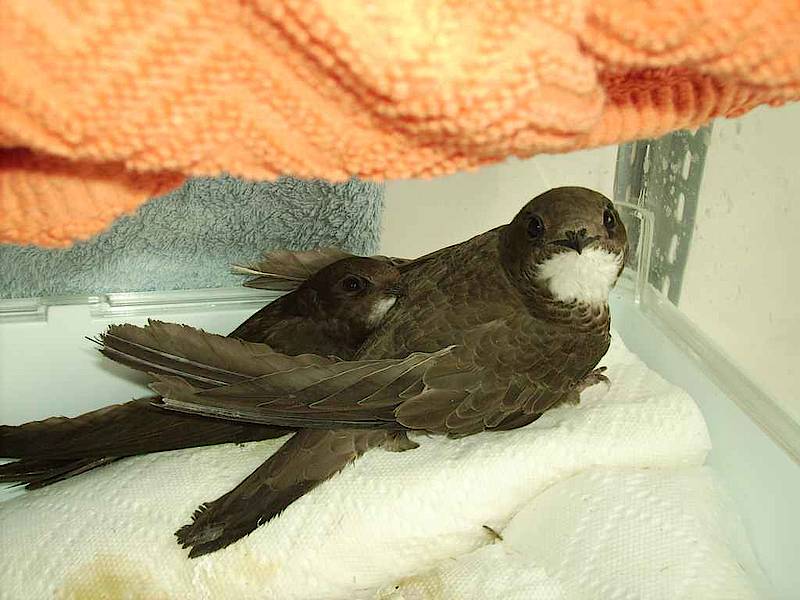
Nicht selten werden Gefiederschäden bei Mauerseglernestlingen beobachtet, die erhöhtem Stress ausgesetzt waren. Dies betrifft oft Findlinge, die bei aufgeregten Findern von Hand zu Hand gehen, Lärm und Unruhe ausgesetzt sind, mit denen Kinder herumspielen, die herumgetragen und herumgefahren werden. Im Wachstum stagnierende und abgeworfene Handschwingen sind dann die Folge des nicht sachgemäßen Umgangs mit dem Mauerseglerfindling.
Sonstige Gefiederschäden
Seit einigen Jahren wird bei juvenilen Mauerseglern eine bislang unbekannte Art der Großgefiederschädigung beobachtet, das sogenannte Papierkiel-Syndrom (PKS). Als Ursache des PKS wird eine Protein-Unterversorgung während der Nestlingszeit vermutet. Erstmals in großer Zahl dokumentiert wurde das PKS während des übermäßig heißen Sommers 2003. Betroffen sind Primaries und Secundaries. Pathognonomisch sind zusammengedrückte papierdünne Federkiele unmittelbar am Federansatz. Der Defekt ist schwer zu entdecken, da er nicht auf den ersten Blick auffällt wie andere Gefiederschäden. í„ußerlich wirken die jungen Mauersegler oft völlig unversehrt. Erst wenn man unterhalb des Deckgefieders jeden federkiel genau untersucht, wird das Ausmaß der Schädigung offenbar. Die Funktion und Stabilität des gewöhnlich dreidimensionalen Federkiels als hyperleichte belastbare Rohrkonstruktion ist komplett aufgehoben, die eingedrückten Federkiele knicken bei der geringsten Belastung ab. Stets sind die inneren Primaries und alle Secundaries in Reihe betroffen, daher ist der Defekt besonders folgenschwer, denn die Flugfähigkeit wird vollständig aufgehoben. Die Kiele der großen Handschwingen (10. bis 7. / 6.) sind nicht zusammengedrückt, weisen aber fast immer Sollbruchstellen ungefähr 1-2 cm über dem Ansatz auf. Die Steuerfedern sind häufig, aber nicht immer ebenfalls vom PKS betroffen.
Maßnahmen bei Gefiederschäden:
Zu voraussichtlich reparablen Großgefiederschäden zählen:
a) nach Fehlernährung oder Stress abgeworfene Schwungfedern, die nachgeschoben werden,
b) durch mechanische oder traumatische Einwirkung verlorene Schwung- oder Steuerfedern, bei denen ein normales Nachwachsen zu erwarten ist,
c) abgebrochene, abgeschnittene, abgeknickte oder anderweitig defekte Schwung- und Steuerfedern, die mit der falknerischen Methode des Schiftens ersetzt werden können,
d) beschädigte Schwung- und Steuerfedern, die mit der falknerischen Methode des Schiftens nicht ersetzt werden können, sondern gegebenenfalls unter Allgemeinanästhesie gezogen werden müssen, um ein Nachwachsen zu ermöglichen.
zu a) und b): Der betroffene Mauersegler verbleibt in menschlicher Obhut, bis die fehlenden Federn nachgewachsen sind. Sind Federn ausgefallen, werden meistens recht schnell neue angebildet und wachsen binnen 4-5 Wochen nach. Nach einem Trauma dauert es oft mehrere Wochen, bis eine neue Feder zu wachsen beginnt.
Komplikationen sind häufig. Junge Mauersegler, die über die normale Nestlingszeit hinaus in Gefangenschaft verbleiben müssen, und erwachsene Mauersegler sind oft äußerst unruhig und schlagen sich beim Versuch, in Freiheit zu gelangen, die nachwachsenden Federn blutig. Es kommt zu profusen Blutungen, die lebensgefährlich sein können. Ein einmal beschädigter, geknickter oder gar abgebrochener Blutkiel stirbt unweigerlich ab. Er muss dann, wenn er vollständig ausgetrocknet ist (nach ca. 8-10 Tagen), vorsichtig entfernt werden, damit eine neue Feder nachwachsen kann. Das Problem kann zu einem wahren circulus viciosus werden. Schlimmstenfalls ist das Federfollikel nach mehreren vergeblichen Versuchen, eine neue Feder zu produzieren, völlig erschöpft und schiebt in Folge nur noch unbrauchbare "Federkrüppel" oder gar nichts mehr.
Sind Handschwingen gewaltsam ausgeschlagen oder entfernt worden, kann es ebenfalls erhebliche Komplikationen beim Nachschieben neuer Federn geben. Nicht selten ist die Federanlage schwer oder sogar irreversibel geschädigt. Es wächst keine Feder nach, das Follikel verschließt sich. Eine einzige fehlende Handschwinge kann von einem Mauersegler eventuell noch toleriert werden, mehrere jedoch nicht, die Euthanasie des Vogels ist dann unvermeidbar. Zuvor sollte jedoch unter Allgemeinanästhesie eine gründliche, gegebenenfalls endoskopische Untersuchung der beschädigten Federfollikel erfolgen. Häufig sind die Federanlagen in der Tiefe mit Detritus, geronnenem Blut oder abgebrochenen Federkielspitzen verstopft. Nach deren Entfernung können neue Federn nachwachsen.
zu c): Bei intakten Federkielen können defekte Schwung-oder Stoßfedern geschiftet werden. Das Schiften ist eine bereits im Mittelalter praktizierte Methode in der Falknerei, um abgebrochene Federn des Großgefieders zu reparieren (HEIDENREICH, 1995): Man benutzte eine kantige Metallnadel (Schiftnadel), mit der man eine unversehrte Feder auf den Kiel einer beschädigten aufsteckte. HEIDENREICH (1995) beschreibt weitere und neuzeitige Methoden des Schiftens mit Glasfiber und Bambus oder bevorzugt den Kiel einer anderen Feder, der als homologes Material die besten Eigenschaften aufweise. Das Schiften von Mauerseglern, ultima ratio bei vielen aussichtslos erscheinenden Gefiederschäden, wird im nachfolgenden Kapitel ausführlich beschrieben.
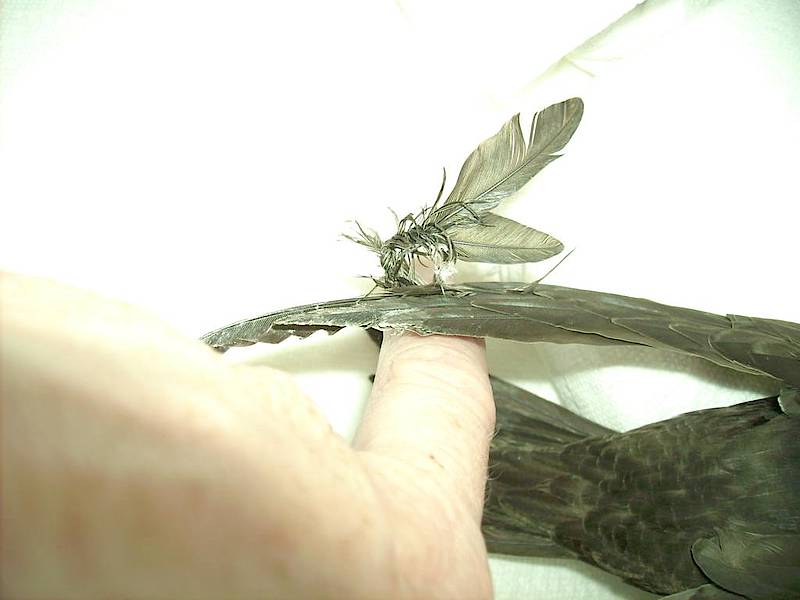
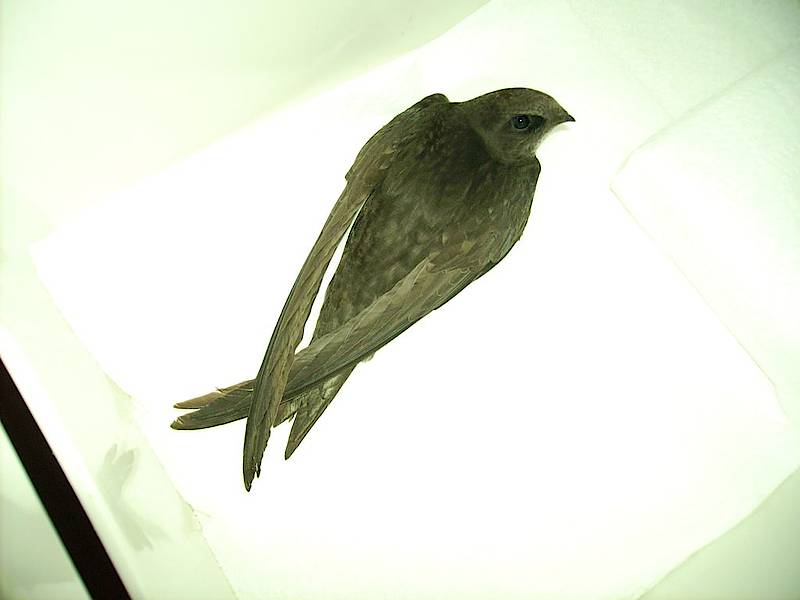
zu d): Wann immer es eine andere Möglichkeit zur Behebung eines Gefiederdefekts gibt, muss das gewaltsame Ziehen von beschädigten Schwungfedern unbedingt vermieden werden! Zu groß ist die Gefahr, die Federanlage dadurch irreversibel zu schädigen. In Ausnahmefällen kam und kommt es vor, dass Handschwung- oder Steuerfedern dennoch ausgezogen werden müssen. Man kann nur hoffen, dass die oben aufgeführten Komplikationen nicht auftreten, und dass neue unversehrte Federn nachwachsen. Es muss jedoch ausdrücklich darauf hingewiesen werden, dass die Chancen für ein komplikationsloses Nachwachsen von großen Handschwingen relativ klein sind. Beim Ziehen von Secundaries oder Steuerfedern kommt es nachfolgend seltener zu Problemen.
Defekte Federn werden in der Mauerseglerklinik nur noch dann gezogen, wenn auch die Kiele beschädigt sind und das Schiften nicht möglich erscheint.
Die äußeren, großen Handschwingen dürfen niemals ohne Narkose gezogen werden, da dies für den Mauersegler mit erheblichen Schmerzen und Leiden verbunden wäre. Die Verankerung der großen Handschwingen reicht bis zur Knochenhaut, ihre Entfernung daher außerordentlich schmerzhaft. Außerdem reagieren Mauersegler in höchstem Maße panisch auf jegliche Manipulationen an ihren Flügeln.