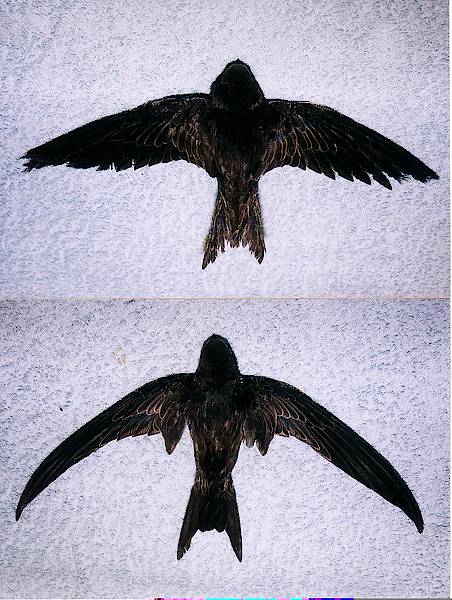
Schiften - eine Chance bei Gefiederschäden
Das Wort "Schiften" entstammt der Jägersprache und bezeichnet eine jahrhundertealte Methode aus der Falknerei, nämlich das Einsetzen neuer Schwungfedern bei einem Beizvogel. Das Schiften von abgebrochenen Federn wurde schon von Falknern im Altertum praktiziert, indem man den Kiel der beschädigten und den einer gleichartigen unversehrten Feder, die aus einer Mauser des Vogels stammte, mit einer kantigen Stahlnadel, der Schiftnadel, verband. Zusätzlich behandelte man das Metallstück mit Säure (Zitronensaft), um durch die rasch einsetzende Rostbildung eine erhöhte Stabilität zu erreichen. Heutzutage verwendet man elastische Fiberglasstäbe, Carbonstäbe oder die Kiele anderer Federn sowie schnell aushärtenden Sekundenkleber. Diese Arbeit erfordert Routine und äußerste Sorgfalt, da die ersetzte Feder exakt in den Verband eingepasst werden muss, ohne die benachbarten Federn zu verkleben.
Beim Mauersegler ist diese Methode wahrscheinlich bislang noch nicht vorgenommen worden, und ganz gewiss nicht in dem mittlerweile praktizierten Umfang. Begann das Schiften von Mauerseglern in der Frankfurter Mauerseglerklinik 1997 mit dem Austausch vereinzelter defekter Schwungfedern, ist es inzwischen möglich, im Ausnahmefall bei Indikation fast das gesamte beschädigte Großgefieder eines Seglers zu ersetzen. Bis zu 15 Hand- und Armschwungfedern pro Flügel sowie maximal zehn Steuerfedern können ersetzt werden. Es ist auch möglich und notwendig, die Deckfedern der Primaries zu schiften, wenn sie abgeknickt oder abgebrochen sind, da sie für die Geschlossenheit und Stabilität der Handschwinge von Bedeutung sind.
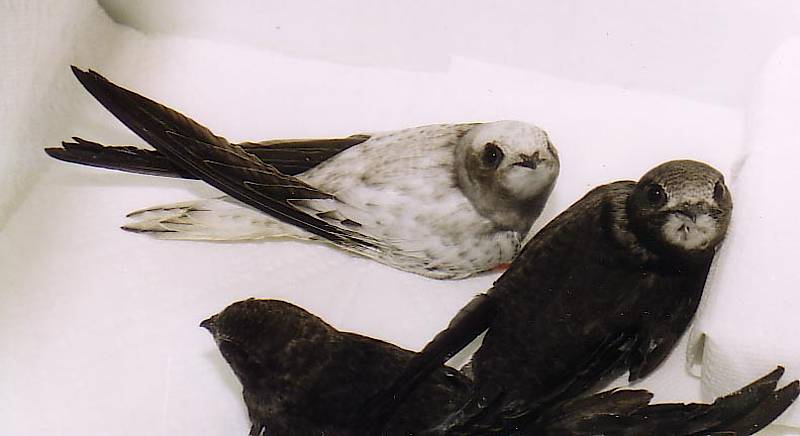
Schift-Bedarf:
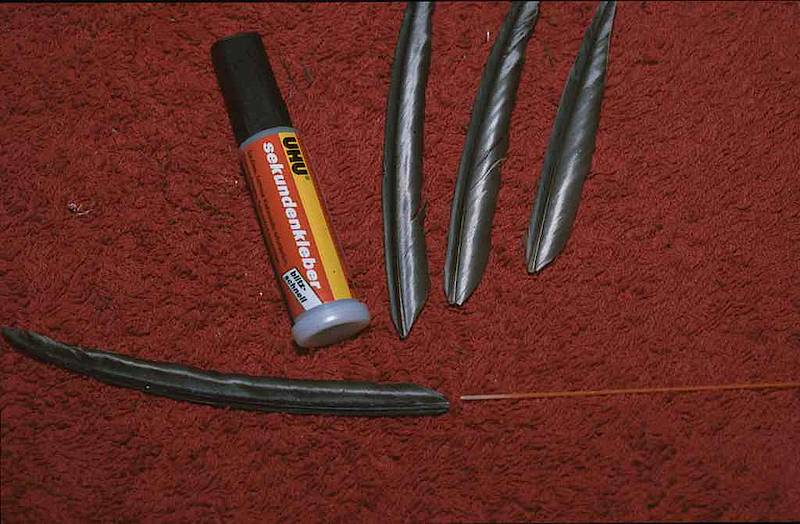
Zum Schiften defekter Schwung- und Steuerfedern werden als Schiftnadeln handelsübliche Carbonstäbe (Durchmesser 0,5 – 1,8 mm) sowie Angelspitzen aus Glasfiber verwendet (Durchmesser 15/5 –35/5 mm), eine Krallenschere oder kleine anatomische Schere zum Absetzen der Federn, Cyanacrylat (Sekundenkleber-Gel der Firma „UHU“) zur dauerhaften Verbindung von Federkiel und Schiftnadel. Handelsübliches Schmirgelpapier (Körnung 180, 240) dient dazu, die Schiftnadeln zurechtzufeilen.
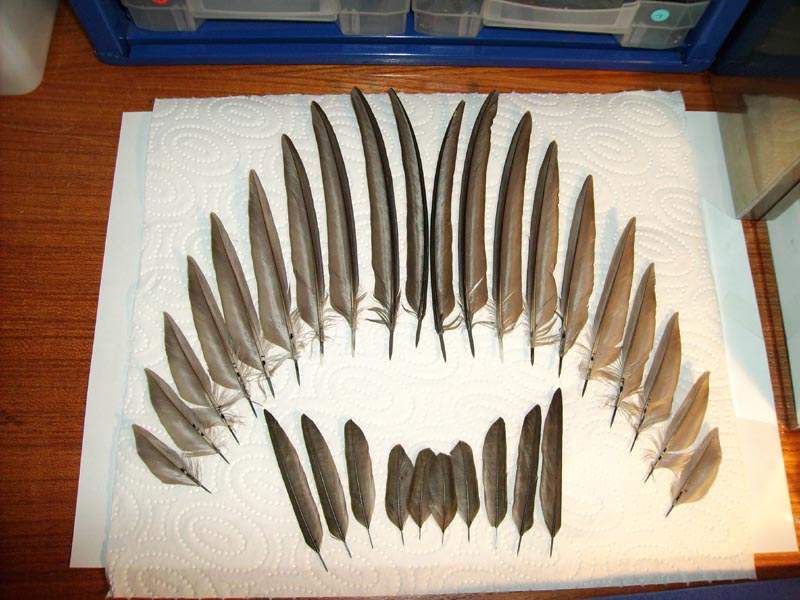
Das zum Schiften benötigte Federmaterial stammt von nicht flugfähigen alten und jungen Mauerseglern mit intaktem, vollständig ausgebildetem Großgefieder, die entweder tot eingeliefert wurden oder in der Klinik starben oder euthanasiert werden mussten. Nach Möglichkeit sollte man einen Mauersegler nur mit Federmaterial eines Vogels der gleichen Altersklasse schiften, adult oder juvenil, da Unterschiede in der Größe und Länge des Großgefieders bestehen. Schiftet man etwa einen Jungsegler mit den Schwungfedern eines Altvogels, ergeben sich an den Handschwingen Längendifferenzen von 10–12 mm und in den Federfahnen Breitendifferenzen von 1–2 mm, und die Proportionen des Flügels verschieben sich. Die Steuerfedern sind 6–8 mm länger als die des juvenilen Seglers. Es ist nicht nachprüfbar, welche Auswirkungen dies auf Flugweise und Flugvermögen hat. Daher erscheint es ratsam, sich möglichst nahe an die natürlichen Verhältnisse zu halten.
Absetzen der Federn vom Spender:
Die Federn des „Organspenders“ werden der Reihe nach akkurat abgesetzt. Es empfiehlt sich, die abgesetzten Federn zu numerieren, um sie später nicht zu verwechseln, und vor allem auch die Entfernung vom Federansatz bis zur Schnittstelle zu markieren, damit am lebenden Vogel dieselben Markierungen übernommen werden können und später die neue Schwinge „passt“.
Vorbereiten von Federn und Patient:
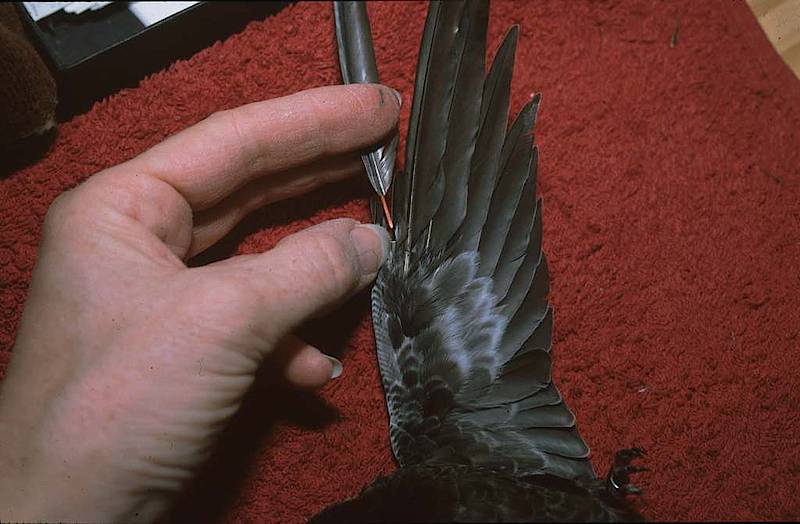
Zunächst wird in aufwendiger Kleinarbeit ein Federsatz vorbereitet. Dazu werden kleine Carbon- oder Glasfiberstücke passend zurechtgefeilt und in die Federkiele eingepasst. Erst wenn alle benötigten Federn vorbereitet sind, wird der betroffene Mauersegler anästhesiert. Ohne Allgemeinanästhesie ist das Schiften beim Mauersegler meistens nicht durchführbar, da diese Vögel auf jede Manipulation an ihren Schwingen äußerst empfindlich und mit heftigster Abwehr reagieren. Sie müssen beim Einsetzen neuer Federn aber absolut ruhig liegen, sonst ist eine exakte Rekonstruktion der Schwinge nicht möglich. In Ausnahmefällen (ruhiger Vogel, nur maximal 1-3 Handschwungfedern oder einige Steuerfedern zu schiften) gelingt die Operation auch ohne Narkose, sofern der ausführende Tierarzt / Falkner erfahren und mit der Methode vertraut ist.
Schiften:
Die defekten Federn des Mauerseglers, der geschiftet werden soll, werden eine nach der anderen genau an der gleichen Stelle wie beim toten "Spender" vorsichtig mit einer scharfen Schere abgetrennt, wobei darauf zu achten ist, dass das darüberliegende Deckgefieder nicht beschädigt wird. Das nachfolgende Einpassen und Einkleben der vorbereiteten "neuen" Federn ist diffizile Feinarbeit, die Geschicklichkeit und Erfahrung erfordert. Das Schiften eines Mauerseglers sollte nur von einem Falkner oder Tierarzt ausgeführt werden, der dieser Methode gelernt und schon oft angewendet hat. Bei Mauerseglern ist der Toleranzbereich, was Fehler beim Schiften betrifft, äußerst eng. Schon geringgradige Fehlstellungen oder Ungenauigkeiten können zur eingeschränkten Flugfähigkeit führen, eine Wildbahnfähigkeit wäre dann nicht mehr gegeben, da für den Mauersegler perfektes Flugvermögen unerlässlich ist, um in freier Natur zu überleben.
Vorteile des Schiftens:
Der größte Vorteil des Schiftens ist, dass der betroffene Mauersegler schon wenige Tage nach dem Eingriff in Allgemeinanästhesie, bei dem die defekten Federn geschiftet wurden, wieder in die Freiheit entlassen werden kann. Insbesondere bei brütenden oder fütternden Altseglern kann dies von entscheidender Bedeutung für das Überleben der Brut sein. Das in früheren Zeiten praktizierte Ausziehen beschädigter Federn hingegen birgt hohe Verletzungsgefahr, und selbst wenn neue Schwungfedern ohne Komplikationen nachwachsen sollten, vergehen bis zum möglichen Start mindestens 8-10 Wochen. Solche Operationen sind aber als Ausnahmen zu betrachten und keinesfalls ein Allheilmittel gegen vermeidbare Gefiederschäden. Die Verhütung von ernährungs- und haltungsbedingten Federdefekten muss immer und unbedingt im Vordergrund stehen. Die Gefiedererneuerung durch Schiften beim Mauersegler bleibt eine "ultima ratio".
Gefiedererneuerungen sind in höchstem Maße aufwendig: Das Vorbereiten
eines neuen Federsatzes dauert ca. 6 Stunden, das Schiften selbst je nach
Umfang 1 - 3 Stunden. Doch ist es ganz gewiss ein wundervoller Moment, wenn
ein solcher "rundumerneuerter" Mauersegler, der ohne Schiften zum Tode verurteilt gewesen wäre, kraftvoll in den Himmel steigt, - und eine letzte Würdigung an denjenigen, der weniger Glück hatte als er, ihm aber durch seine unversehrten Federn das Leben in Freiheit ermöglichte.