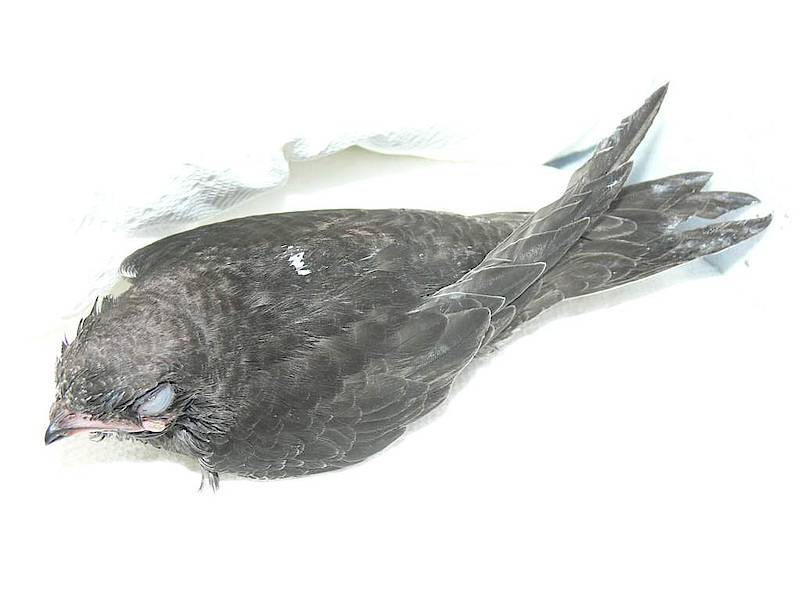
Über Infektionskrankheiten bei freilebenden Mauerseglern ist nichts bekannt. Bei Mauerseglern in Menschenhand jedoch treten mit einiger Regelmäßigkeit bestimmte Krankheitsbilder auf, die nachfolgend beschrieben werden. Nicht in allen Fällen können beobachtete Symptomkomplexe einer bestimmten Erkrankung zugeordnet werden. Diagnostik und Therapie ist hier häufig noch rein empirisch.
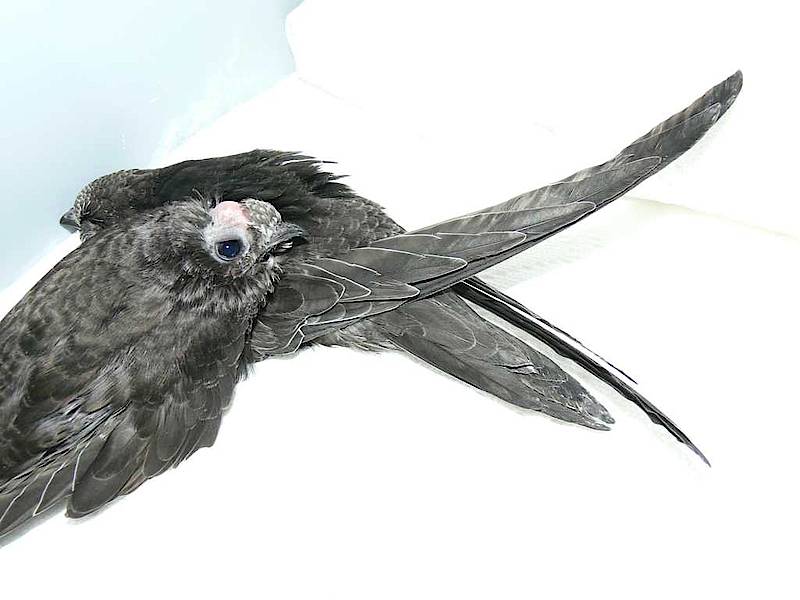
Aspergillose
Manche Vogelarten wie z. B. tropische Papageien, Mynahs, diverse Greifvögel und Wasservögel sind extrem anfällig für Infektionen des Respirationstraktes mit Aspergillus spp. Auch beim Mauersegler wurde eine hohe Anfälligkeit für eine Infektion mit Schimmelpilzen beobachtet. Insbesondere betroffen sind immunsupprimierte Mauersegler sowie Patienten, die eine Antibiotika-Therapie erhalten. Die bislang dokumentierten Aspergillus-Infektionen beim Mauersegler verliefen ausnahmslos perakut und führten nicht selten wenige Stunden nach Auftreten der ersten Symptome zum Tode durch Ersticken. Beim Mauersegler scheint eine ausgeprägte Affinität der Pilzsporen zur Trachea und insbesondere zum Syrinx zu bestehen. Ein sich dort bildendes Aspergillom kann binnen Stunden die Trachea so dramatisch verlegen, dass keine Rettung mehr möglich ist. Treten erst einmal Symptome wie fiepsende, piepsende Dyspnoe und hektische Schnabelatmung auf, kommt eine Behandlung in der Regel bereits zu spät. Hier ist auf kleinste warnende Anzeichen zu achten: häufiges Hecheln, Atmen mit geöffnetem Schnabel, erhöhte Atemfrequenz ohne ersichtlichen Grund, schon leichteste Atemgeräusche. Da das sicher und schnell wirkende Itraconazol vom Mauersegler gut vertragen wird und bislang keine Nebenwirkungen gezeigt hat, sollte schon beim geringsten Verdacht einer beginnenden Aspergillose unverzüglich die Behandlung begonnen werden.
B-Hypovitaminose
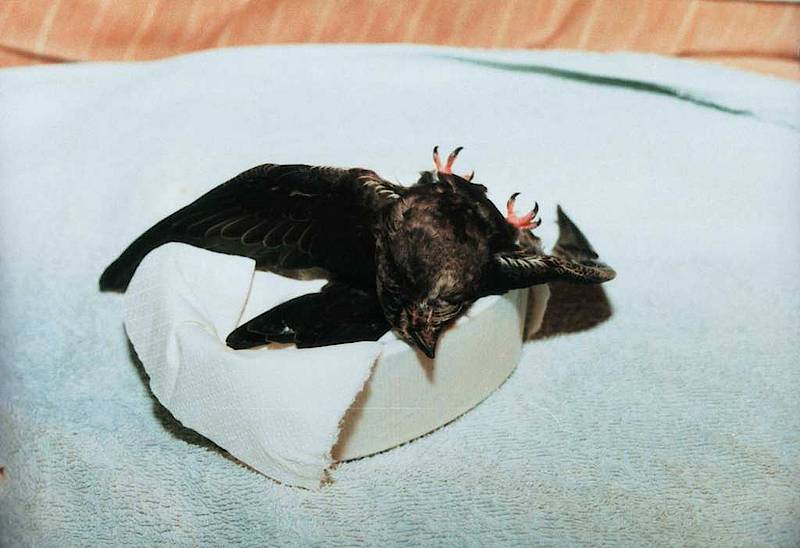
Seit einigen Jahren tritt bei Mauerseglern in Menschenhand zunehmend häufiger ein Symptomkomplex auf, der auf eine Vit. B-Hypovitaminose schließen lässt. Anfangs relativ unspezifische Symptome - Anorexie, starrer Blick, dann zwanghafte Kopfbewegungen - steigern sich sehr rasch bis hin zu hochgradigen Ataxien, Torticollis und Opisthotonus. Aufregung und Stress können diese Symptome bei einem Segler mit Vitamin-B-Unterversorgung binnen weniger Minuten auslösen. Unbehandelt schreitet das Krampfgeschehen rasant fort und führt letztlich zum Tode. Je jünger der Vogel, desto dramatischer der Verlauf. Ein 9tägiger Nestling war eine halbe Stunde nach Auftreten der ersten Symptome tot.
Im Anfangstadium einer Vit. B-Hypovitaminose ist die subkutane Verabreichung von Vit. B-Komplex ausreichend, um die Symptome binnen kürzester Zeit (circa eine halbe bis eine Stunde) wieder abklingen zu lassen. Bei fortgeschrittenem Krampfgeschehen ist eine intramuskuläre Injektion nötig. Durch regelmäßige prophylaktische Gabe von Vit. B-Komplex in Form einer subkutanen Infusion alle 8 - 10 Tage kann dieser Mangelerscheinung vorgebeugt werden. Eine orale Verabreichung, bei Schwalben erfolgreich, ist beim Mauersegler nach eigenen Beobachtungen weitestgehend unwirksam.
Magen-Darm-Infektionen
Nicht näher spezifizierte Magen-Darm-Infektionen treten insbesondere bei Mauerseglern auf, die nach langen Hungerphasen in Menschenhand kommen und sofort zu reichlich mit Futter versorgt werden. Es kommt binnen kürzestem zu mittel- bis hochgradig gestörtem Allgemeinbefinden und breiiger, stinkender Diarrhoe. Bei milden Verlaufsformen ist die orale Verabreichung von Ampicillin („Ampitab“) über 2-3 Tage erfolgreich. Ampicillin wirkt rein lokal im Darm, nicht systemisch. Daher ist die gleichzeitige prophylaktische Gabe eines Antimykotikums in diesem Fall nicht nötig. Des weiteren sollte ein Präparat verabreicht werden, das die physiologische Darmflora unterstützt, z. B. „Bene-Bac“. Die Anfütterung eines hochgradig abgemagerten Mauerseglers sollte immer sehr vorsichtig und zurückhaltend erfolgen und von Infusionen mit Roborantia unterstützt werden, nicht nur um Magen-Darm-Infektionen zu vermeiden, sondern auch um eine lebensgefährlichen Magenüberladung vorzubeugen.
Kommt es zu einer explosionsartigen Vermehrung von darmpathogenen Keimen, z. B. zu einer E. coli-Infektion, kann es erforderlich werden, ein systemisches Antibiotikum zu verabreichen. Enrofloxacin („Baytril“) oder Amoxicillin/Clavulansäure („Augmentan“) haben sich in einigen Fällen bewährt. Therapie nach Kloakenabstrich und Antibiogramm ist ratsam.
Pododermatitis („Bumble foot“)
Die von Greifvogelhaltern gefürchteten und auch in der Ziervogelmedizin (z. B. bei Wellen- und Nymphensittichen) bekannten Sohlenballenabszesse treten beim Mauersegler in verschiedenen Verlaufsformen gelegentlich auf. Beobachtet wurden vor allem zwei Formen:
1) Insbesondere bei fehlernährten jungen Mauerseglern kam es hin und wieder zu eitrigen Schwellungen eines Fußes oder beider Füße im Sohlenbereich sowie zu starken Schwellungen der Zehen. Bei chirurgischer Eröffnung der Abszesse konnten große Mengen harten weißlichen bröckligen Eiters ausgeräumt werden. Durch den mechanischen Druck der Eiterherde auf das umliegende Weichteilgewebe und die Sehnenzüge kommt es vermutlich zu einem circulus viciosus, die Infektion hält sich selbst in Gang und verschlimmert sich mehr und mehr. Eine erfolgreiche Sanierung gelang in keinem Fall, da weder durch Ausräumen noch durch Spülen jeder Eiterherd aus den straffen sehnigen Strukturen des Fußes entfernt werden konnte. Auch konservative Behandlungsversuche mit antibiotischen Verbänden (z. B. Chloramphenicol, Tetracyclin) in Fällen, bei denen es noch nicht zu Eitereinlagerungen gekommen war, blieben meist ohne Erfolg.
2) Die zweite Form einer Pododermatitis manifestierte sich als diffuse Weichteilschwellung, vor allem bei adulten Mauerseglern. Ein Zusammenhang zu vorheriger Fehlernährung konnte in diesen Fällen nicht hergestellt werden, es waren sogar Altsegler betroffen, die ohne jede vorherige Manipulation direkt eingeliefert wurden. Es ist nicht bekannt, ob es sich um entzündliche oder ödematöse Schwellungen handelt. Die Schwellungen erfassen Krallen, Sohle und breiten sich über den gesamten Tarsometatarsus aus. Es kommt letztlich zur Bildung monströser „Pranken“ und sekundär zu Verletzungen durch die eigenen Krallen und nachfolgenden schweren bakteriellen Infektionen. Sind Mauersegler betroffen, bei denen noch ein langfristiger stationärer Aufenthalt vonnöten ist, bleibt schlimmstenfalls nur die Euthanasie. Ist der „Bumble foot“ nur geringgradig ausgeprägt und kann der Mauersegler in absehbarer Zeit freigelassen werden, sollte man ihn auch mit den geschwollenen Füßen fliegen lassen (allerdings keinesfalls beringen!). Unter natürlichen Bedingungen – beim Fliegen! - sind die Füße eines Mauerseglers kaum belastet, die normale Bewegung dürfte auch der Resorption von eingelagerter Gewebeflüssigkeit förderlich sein, eine Heilung ist eher in Freiheit zu erwarten als bei weiteren Therapieversuchen in Menschenhand.
Racheninfektionen
Der Rachenraum eines freilebenden Mauerseglers ist in der Regel steril. Alle bisher beobachteten Infektionen der Rachenschleimhaut und des Schlundes waren multifaktorielle Erkrankungen, die bei Gefangenschaftshaltung auftraten, begünstigt u.a. durch ungenügende Hygiene, ein geschwächtes Immunsystem, Vitaminunterversorgung, zu trockene Schleimhäute und Stress.
Die häufigste Form ist eine Schmierinfektion mit Candida albicans. Infizierte Tiere zeigen schleimige weißliche Rachenbeläge und süßlichen foetor ex ore. Unbehandelt können sich die Rachenbeläge zu dicken bräunlichen Krusten auswachsen, die schlimmstenfalls den Vogel sogar beim Schlucken und Atmen behindern. Bisher wurde bei Rachenabstrichen betroffener Mauerseglern nur Candida albicans nachgewiesen. Hefen anderer Gattungen und Spezies traten nicht auf. Infektionen mit Candida albicans sollten umgehend behandelt werden, denn sie wurden mehrfach als Vorstufe hochgradiger bakterieller Racheninfektionen beobachtet. Nicht selten wurden bei der bakteriellen Untersuchung pathogene Keime wie Klebsiella spp., Proteus spp. und Pseudomonas aeruginosa nachgewiesen. Für eine erfolgreiche Behandlung ist ein Antibiogramm unverzichtbar. Jedoch haben sich solche Racheninfektionen schon häufig als therapieresistent erwiesen und aufgrund ihres dramatischen perakuten Verlaufs die Euthanasie des erkrankten Mauerseglers erforderlich gemacht!
Ein Mangel an Vitamin A, der bei längerem Aufenthalt in Gefangenschaft nicht selten auftritt, sowie zu trockene Schleimhäute begünstigen ebenfalls Racheninfektionen, da es zu Mikroläsionen in der Schleimhaut und somit zur Eintrittspforte für pathogene Keime kommt.