Mauersegler werden frühestens gegen Ende des 2. Lebensjahres geschlechtsreif. Einjährige Vögel übersommern häufig in Gesellschaft der Brutvögel und können bereits Nisthöhlen besetzen. Mauersegler führen eine monogame Saisonehe mit ausgeprägter Nistplatzbindung und darauf beruhender Gattentreue. In der Regel erfolgt innerhalb der Saison nur bei Verlust des Partners eine neue Verpaarung, diese dann manchmal aber schon nach 1-2 Tagen.
Das Gelege des Mauersegler umfaßt meist 2 bis 3 weißschalige, langgestreckt elliptische, ungleichhälftige Eier. Es gibt nur eine Jahresbrut. Die Brutdauer beträgt ca. 20 Tage, beide Partner brüten. Brütende Mauersegler liegen kaum eine Minute ruhig, putzen und schütteln sich, beklopfen die Wände, bauen am Nest, reagieren rufend auf vorüberfliegende Artgenossen und verlassen oft die Eier, um nach draußen zu blicken (GLUTZ und BAUER, 1980). Die Nächte und Schlechtwetterphasen verbringen beide Brutvögel im Nest, einer sitzt auf den Eiern, der andere meist dicht daneben oder sogar auf dem Partner.
Gleich nach dem Schlupf der völlig unbefiederten Jungen beginnen die Eltern zu füttern. In den ersten zwei bis sieben Tagen hudern sie nahezu ständig. Nahrung wird im Kehlsack gesammelt und mit Speichel zu einer haselnussgroßen Kugel geformt. In den ersten Tagen wird der Ballen portionsweise an die Jungen übergeben, später „verschlingt“ der Jungsegler Schnabel und Vorderkopf des Altvogels, der den Futterballen tief in den Rachen des Nestlings würgt.
Die Nestlingszeit beträgt im Mittel 42 Tage, beide Eltern füttern. Die Jungen betteln intensiv singend mit zitternden Flügeln. In fortgeschrittenem Alter und bei großem Hunger verfolgen sie den Altvogel auch flatternd, versuchen an dessen Schnabel zu gelangen und schlagen wild mit den Flügeln. Fallen Schlüpflinge neben das Nest und vermögen aus eigener Kraft nicht wieder zurück zu klettern, werden sie trotz Bettelns von den Eltern nicht mehr beachtet und verhungern. Gefüttert wird in der Regel nur im Nest, auch wenn die Jungen bereits älter sind und in der Bruthöhle umherkrabbeln. Beim Einfliegen des Altvogels eilen sie zurück zum Nest, um das Futter entgegenzunehmen, am Eingang der Höhle wird nur in Ausnahmefällen gefüttert.
Bei frisch geschlüpften Mauerseglern fällt bereits der außerordentlich starke Greifreflex auf – lebenswichtig für den jungen Vogel, um sich im Nest festzuhalten. Schon mit wenigen Tagen zeigt der noch nackte und blinde Nestling Putzverhalten und schlägt phasenweise mit den Flügeln. Die Augen öffnen sich zwischen dem 6. und 13. Tag und sind während der ersten 4-5 Lebenswochen blau, erst danach färbt die Iris sich tiefbraun.
Kot wird immer über den Nestrand abgesetzt, im Alter von drei bis vier Wochen aus dem Flugloch hinaus. Aktivität im Nest ist Tag und Nacht zu beobachten, feste Schlafphasen gibt es nicht; auch Mauersegler im Nest scheinen jeweils nur in kurzen Intervallen zu ruhen, liegen dann entspannt mit geschlossenen Augen, den Kopf nie ins Gefieder gesteckt, sondern oft über den Nestrand nach unten hängend, um jäh wieder aufzufahren, sich zu putzen oder mit den Flügeln zu schlagen. Leises „Singen“ als Kontaktlaut ist unablässig auch während der Nacht zu vernehmen und reißt erst mit Flüggewerden ab.
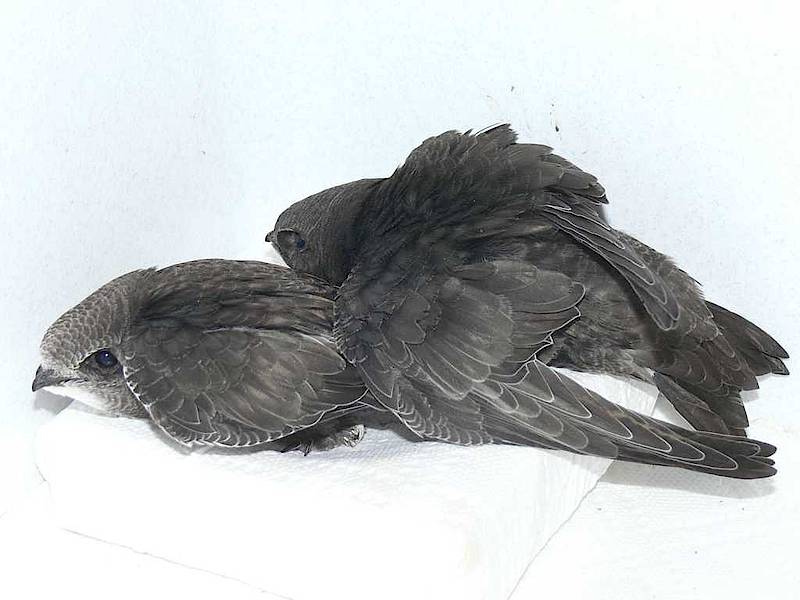
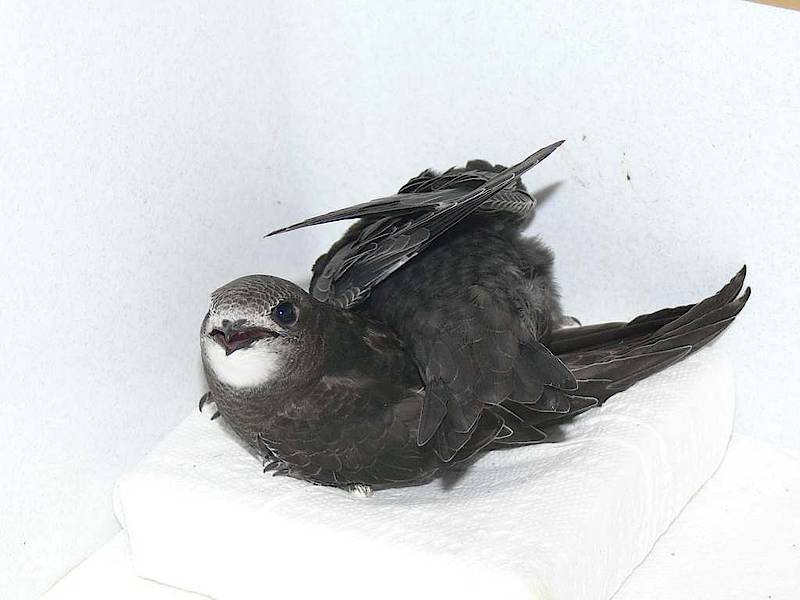
Untereinander sind junge Mauersegler äußerst sozial und verträglich, gleich ob es sich um leibliche Geschwister oder fremd dazugesetzte Individuen handelt. Stets liegen sie dicht bei- und auf einander, putzen sich gegenseitig und legen die Flügel übereinander. Emsiges Erproben der Flugmuskulatur in Form von „Liegestützen“ und Flatterübungen kann von der 3. Woche an regelmäßig festgestellt werden, insbesondere in den späten Abendstunden. Bei schlechtem Wetter und Nahrungsmangel verhalten die Jungvögel sich zumeist passiv und verwenden alle Energie darauf, den zurückkehrenden Altvogel anzubetteln. Dauern Hungerphasen länger, können die Nestlinge in Torpidität verfallen und mit herabgeschraubten Körperfunktionen mehrere Tage ohne Futter überdauern.
Beobachtungen in der Mauerseglerklinik an fast verhungert eingelieferten Jungseglern ergaben allerdings in vielen Fällen eine pathologisch gesteigerte, fieberhafte „Aktivität“ in Form rastlosen, unaufhaltsamen Umherirrens, die erklären könnte, warum im Verlauf von Schlechtwetterperioden so viele bis auf die Knochen abgemagerte Jungsegler außerhalb des Nistplatzes gefunden werden, weil sie nämlich bei ihrem „Drangwandern“ früher oder später aus dem Flugloch stürzen anstatt torpide in den Nisthöhlen zu sterben.
Mit zunehmendem Alter verlassen die Jungen das Nest immer öfter und bewegen sich in der Nisthöhle, verbringen schließlich den größten Teil des Tages am Flugloch und sehen hinaus. Sind sie flügge, vergehen bis zum Verlassen der Höhle dennoch oftmals viele Stunden. Der junge Vogel streckt immer wieder den Kopf nach draußen, fächert den Stoß und breitet die Flügel aus, ehe er endlich ins Freie springt. Die Geschwister reagieren darauf nicht, die Eltern sind in der Regel nicht zugegen (GLUTZ und BAUER, 1980).
Kehrt ein futterbringende Altvogel zurück und findet das Nest leer, berichtet LACK (1956) von einem beinahe verstörten Verhalten – mehrmaligem Hin- und Herlaufen, ans Nest Picken, balzähnliche Gesten mit erhobenen Flügeln, Hochaufrichten und Gähnen –, das er als Ersatzhandlung interpretiert, weil der Vogel das Füttern der Jungen nicht zuende bringen kann. Schließlich schluckt er den Futterballen selbst und fliegt wieder ab. Nach dem Ausfliegen der Jungen, die nicht wieder zurückkehren und sofort selbständig sind, nächtigen die Altvögel oft noch einige Tage in der Bruthöhle, ehe sie sich auf den Rückweg ins Winterquartier begeben.