Entwicklungsstadien beim Mauersegler
Ernährungs- und Witterungsabhängig können die einzelnen Entwicklungsstufen auch variieren. Weiter unten finden Sie eine Tabelle mit Anhaltspunkten zur Gewichtsentwicklung eines Nestlings.
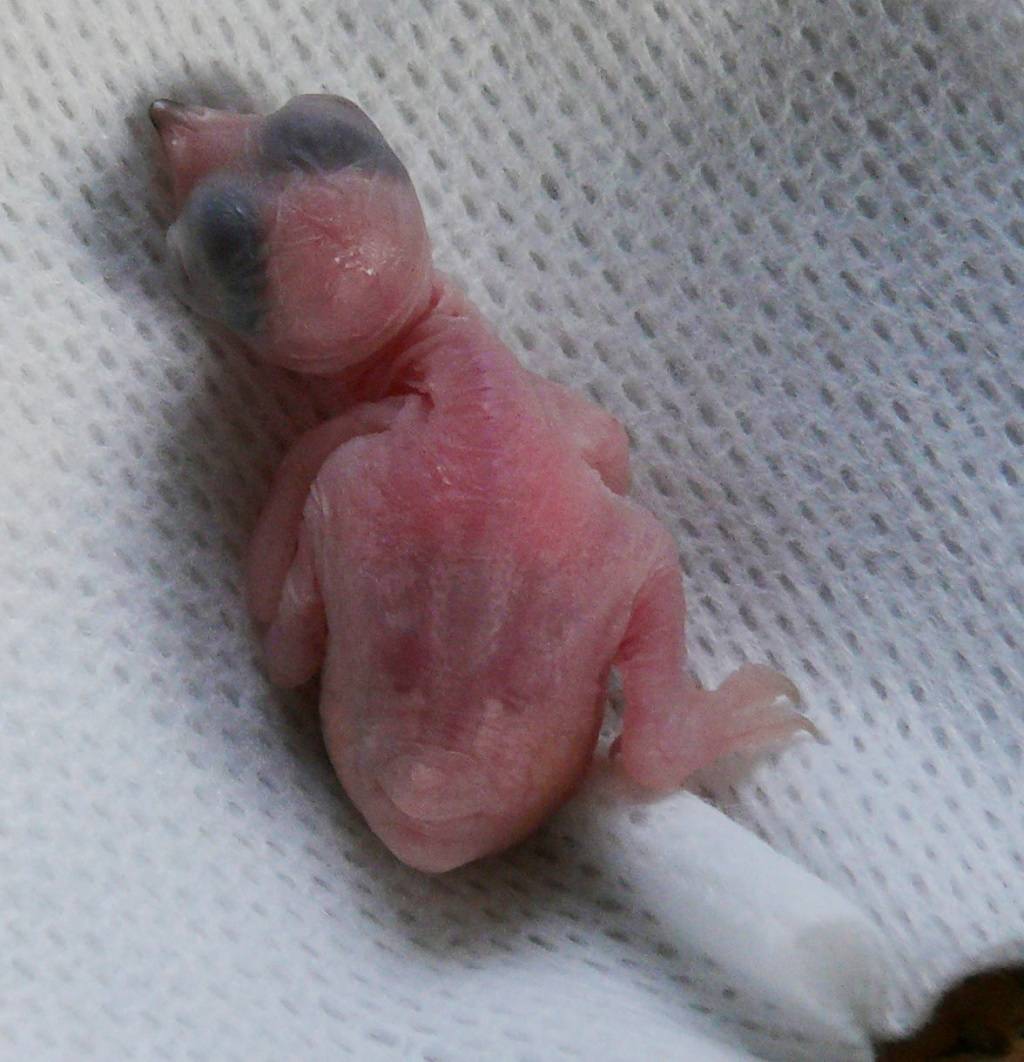
Tag 1 © E. Brendel
1 Tag alter Mauersegler
Zunächst nackt und blind.
Handhabung: Brauchen eine permanente Wärmequelle und müssen viertel- bis halbstündlich mit sehr kleinen Heimchen gefüttert und kontrolliert werden.
Die Wärmequelle darf nicht wärmer als 30-32°C sein (Kontrolle!). Am besten wird eine Bodenwärmequelle verwendet (z.B. Heizdecke, Snuggle Safe). Wärme von oben ist zu vermeiden, da die Gefahr des Austrocknens des Babys besteht. Die Luftfeuchtigkeit sollte bei ca 50% gehalten werden.
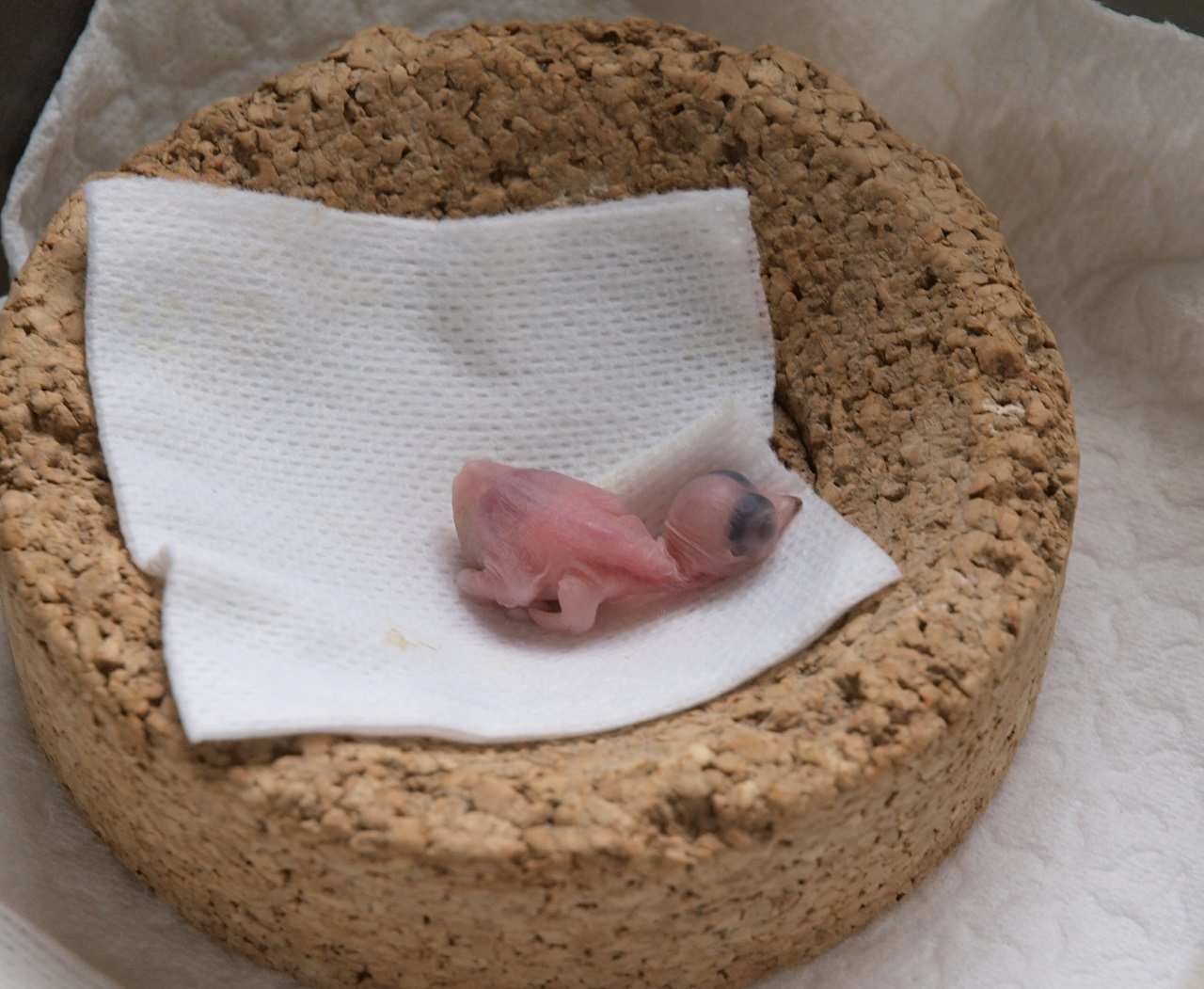
Tag 2 © E. Brendel
2 - 4 Tage alte Mauersegler
Blind, ab dem 3. - 4. Tag erscheinen die ersten Nestlingsdaunen als schwarze Punkte.
Zwischen dem 6. und 13. Tag werden die Augen geöffnet.
Ab dem 7. Tag durchstoßen die Kiele des Großgefieders die Haut.
Handhabung: Brauchen eine permanente Wärmequelle und müssen viertel- bis halbstündlich mit sehr kleinen Heimchen gefüttert und kontrolliert werden.
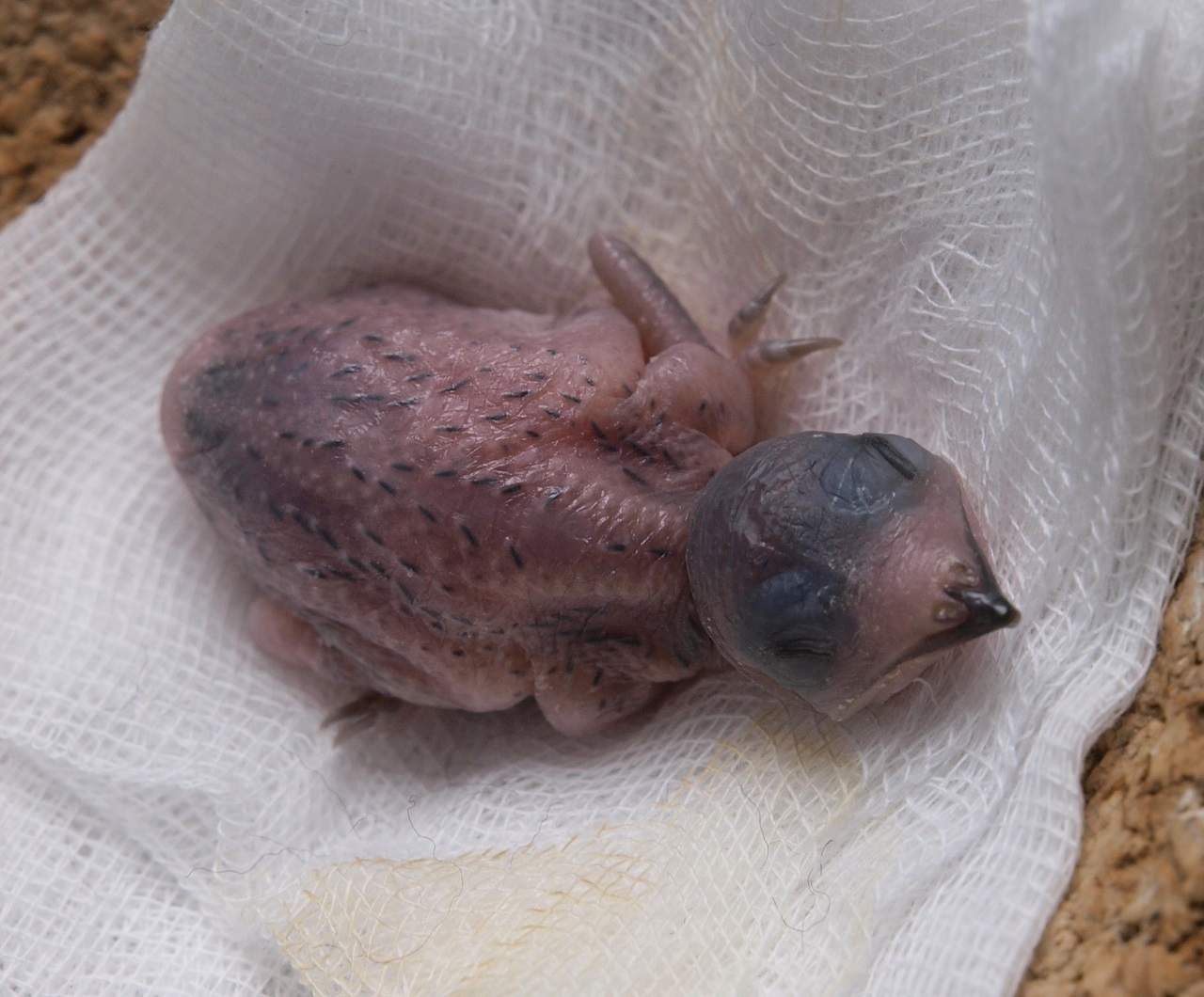
Tag 6 © E. Brendel
Ab Tag 6 genügt halbstündliche Fütterung mit sehr kleinen Heimchen.
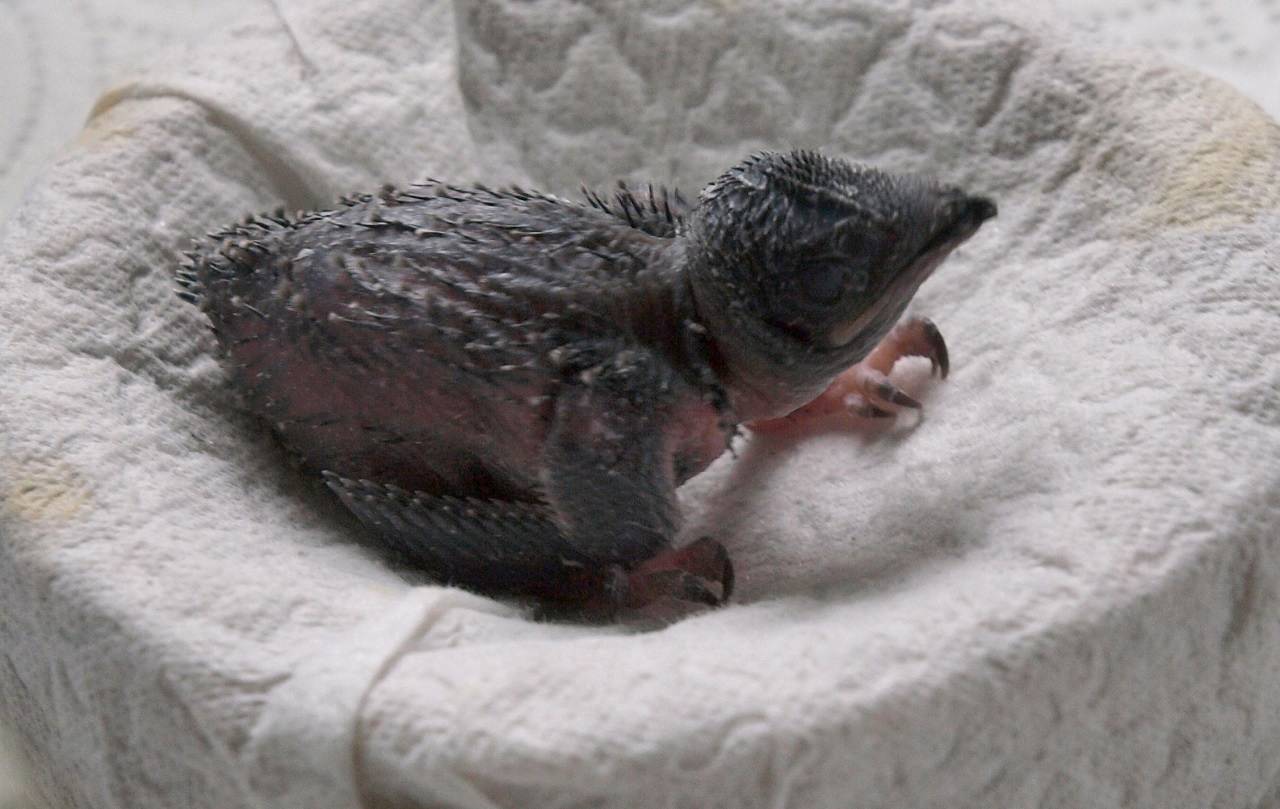
Tag 10 © E. Brendel
10 Tage alter Mauersegler
Augen geöffnet.
Kiele des Großgefieders sind durch die Haut gestoßen.
Handhabung: Brauchen eine permanente Wärmequelle (28-30°C) und müssen stündlich mit ca. 10-20 kleinen Heimchen gefüttert und kontrolliert werden.
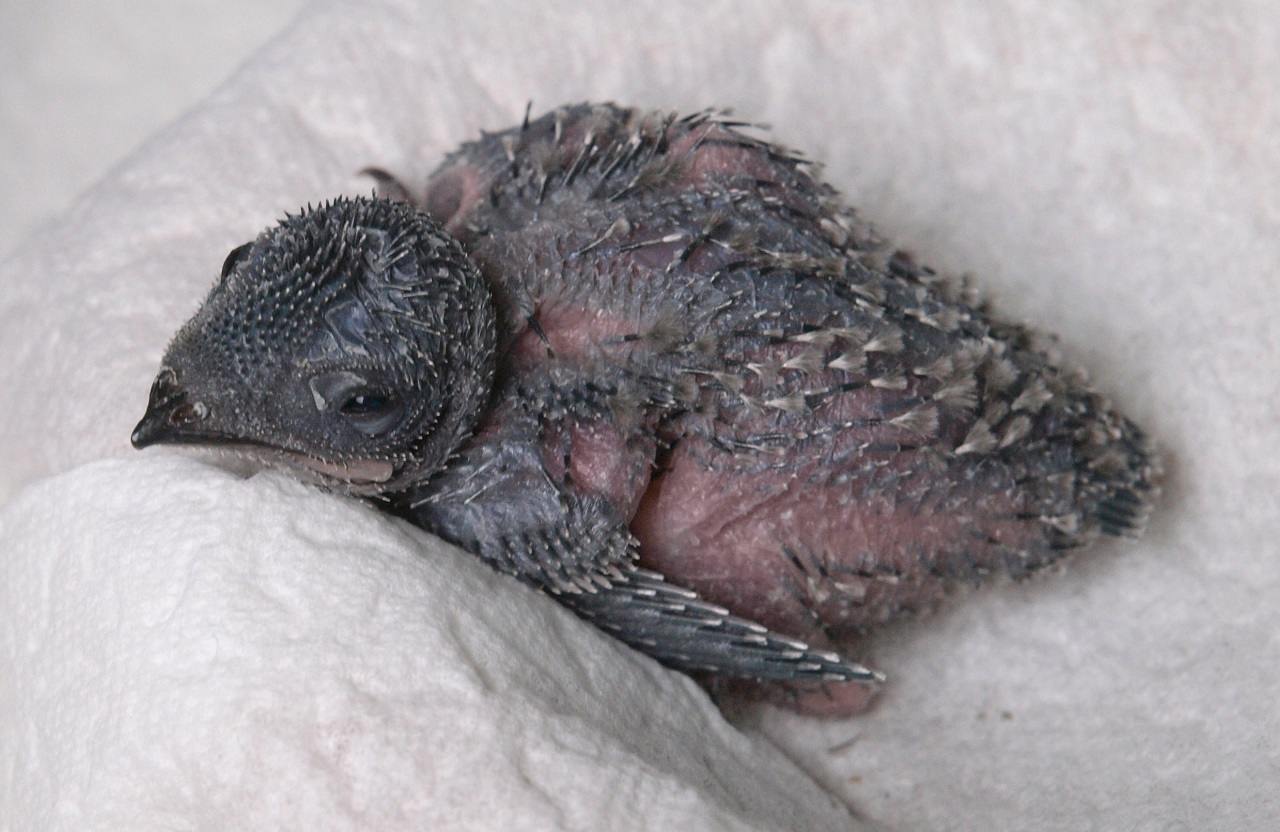
Tag 11 © E. Brendel
11 Tage alter Mauersegler
Handhabung: Brauchen eine permanente Wärmequelle (28-30°C) und müssen stündlich mit ca. 10-20 kleinen Heimchen gefüttert und kontrolliert werden.
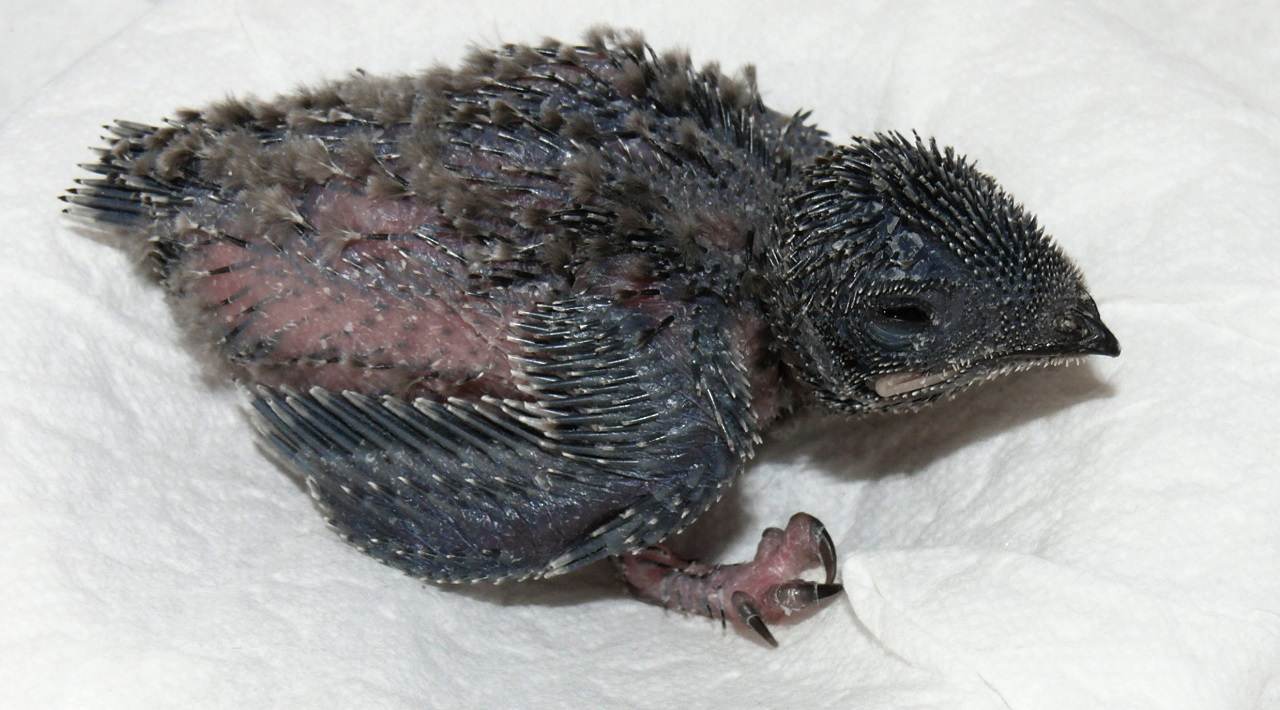
Tag 12 © E. Brendel
12 Tage alter Mauersegler
Handhabung: Brauchen eine permanente Wärmequelle über Nacht und müssen alle 2 Stunden mit kleinen Heimchen gefüttert und kontrolliert werden. Die Menge orientiert sich nun an der Gewichtstabelle (s.u.) und sollte eine kontinuierliche Steigerung des Gewichtes ergeben.
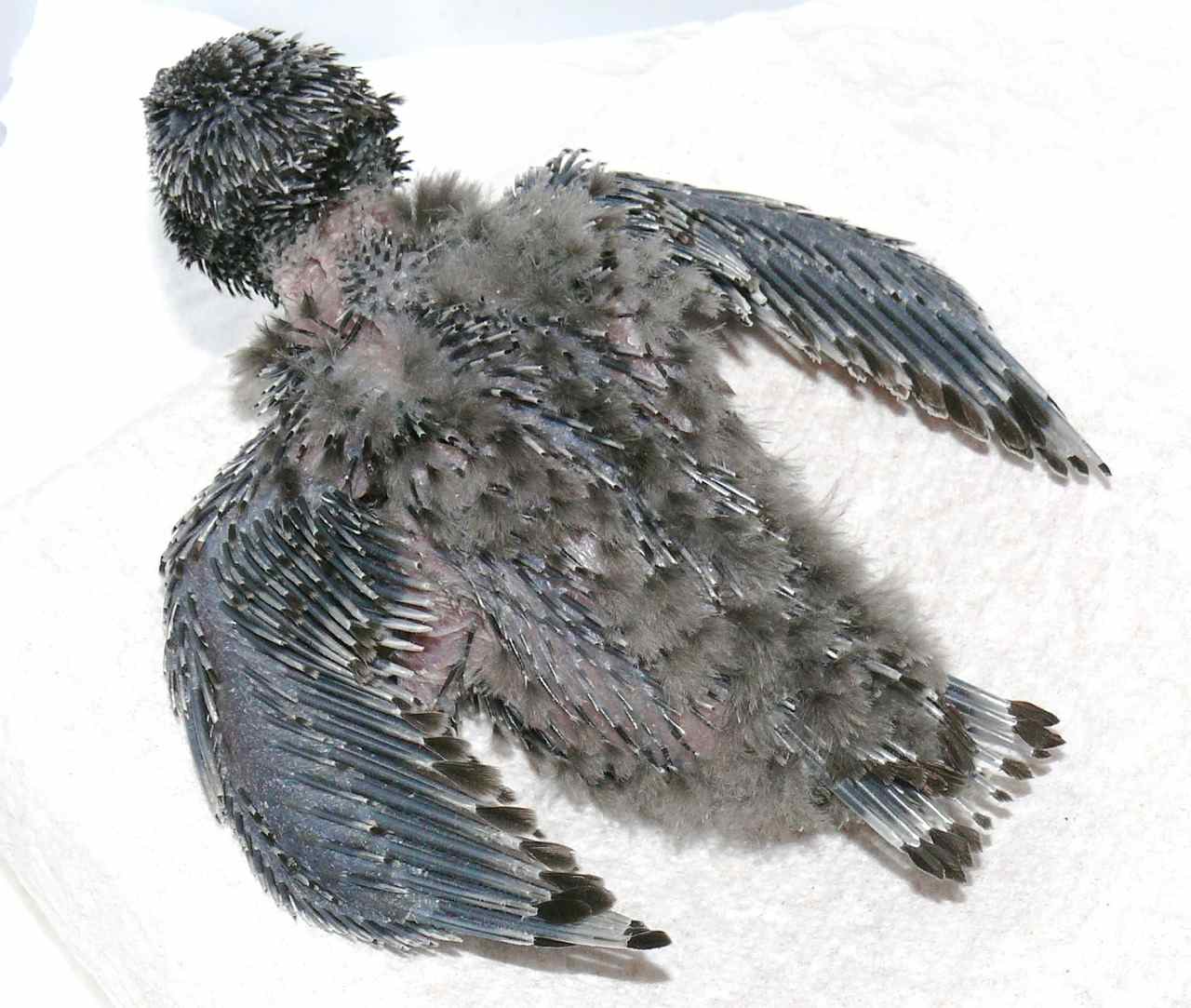
Tag 15 © E. Brendel
15 Tage alter Mauersegler
Handhabung: Brauchen Wärmequelle evtl noch über Nacht.
Ausnahme: stark ausgehungerte oder geschwächte Tiere brauchen permanent Wärme.
Sie müssen alle 2 Stunden mit mittelgroßen subadulten Heimchen von morgens ca. 7.00 Uhr bis abends 22.00 Uhr gefüttert und kontrolliert werden.
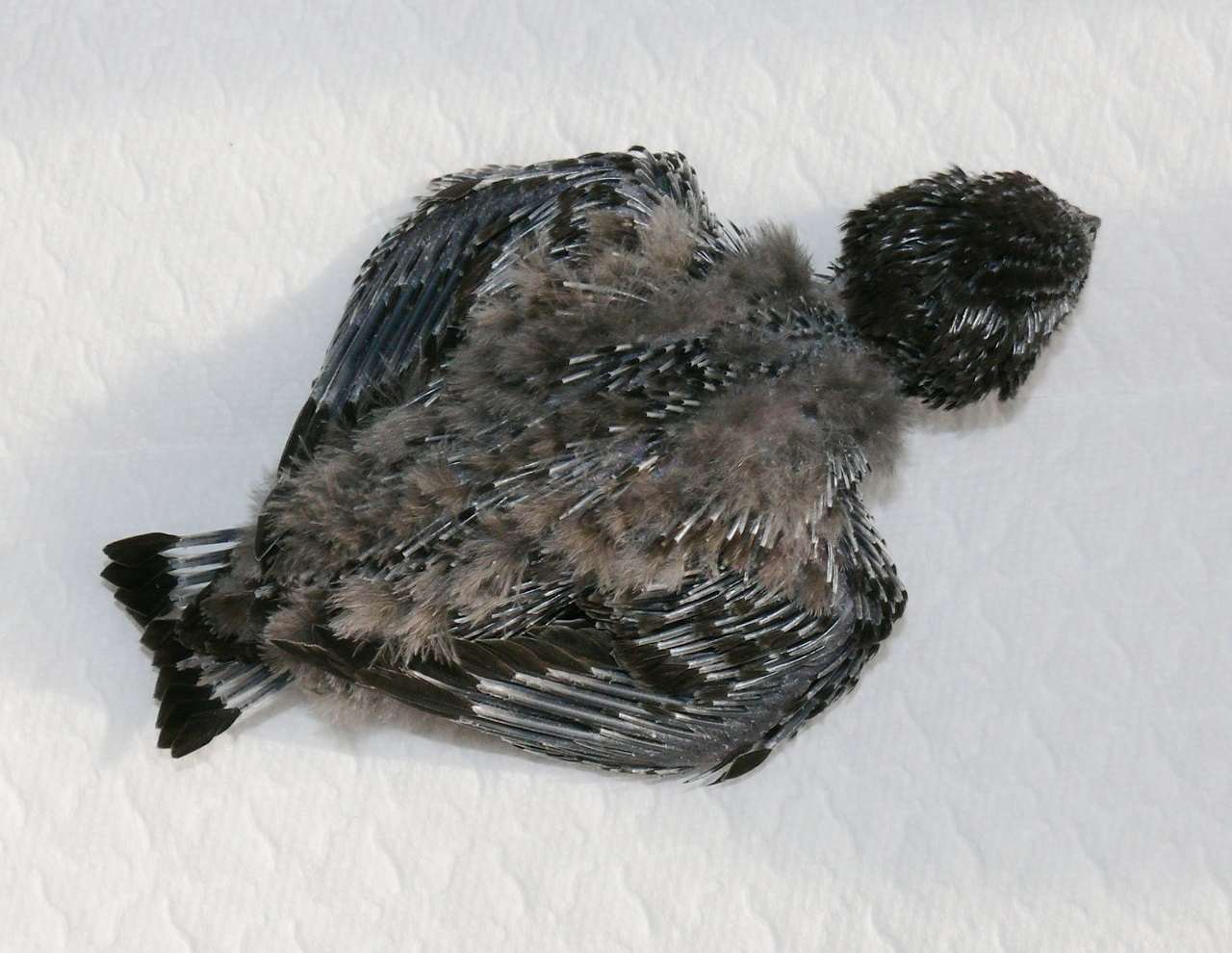
Tag 17 © E. Brendel
17 Tage alter Mauersegler
Handhabung: Wärmequelle nur nötig bei stark ausgehungerten und geschwächten Tieren.
Sie müssen alle 2 Stunden mit mittelgroßen subadulten Heimchen von morgens ca. 7.00 Uhr bis abends 22.00 Uhr gefüttert und kontrolliert werden.
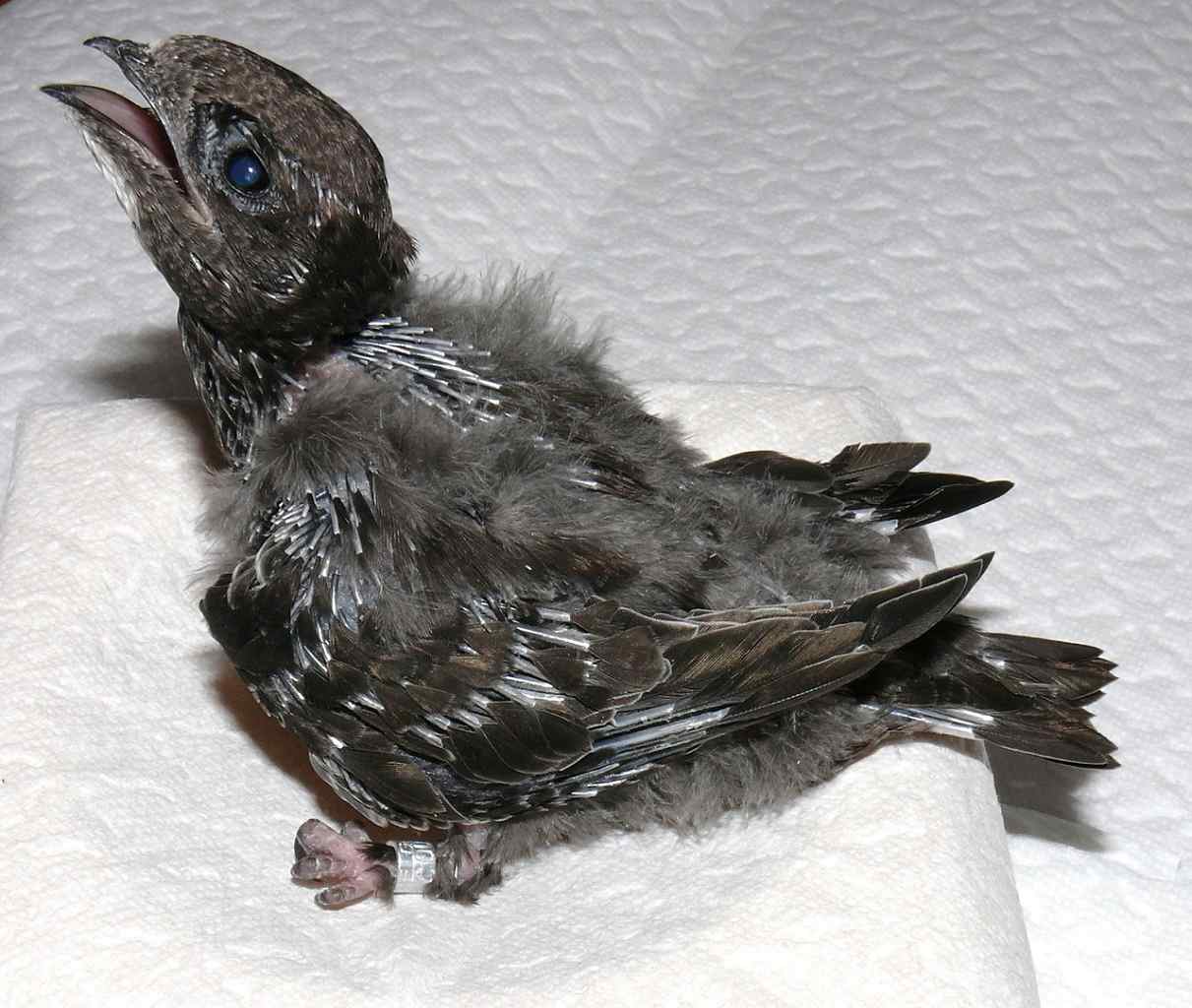
Tag 19 © E. Brendel
zwischen 15 und 20 Tage alter Mauersegler
Handhabung: Wärmequelle nur nötig bei stark ausgehungerten und geschwächten Tieren.
Sie müssen alle 2 Stunden mit mittelgroßen subadulten Heimchen von morgens ca. 7.00 Uhr bis abends 22.00 Uhr gefüttert und kontrolliert werden.
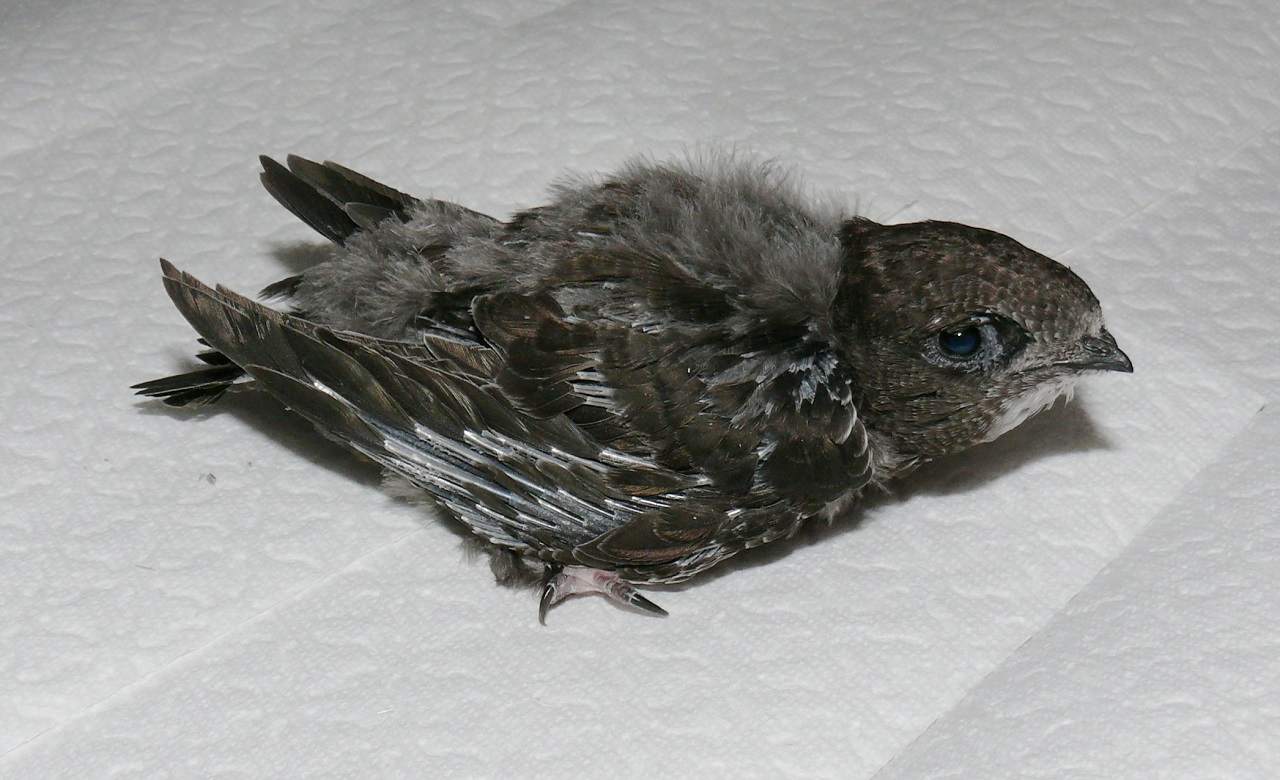
Tag 20 © E. Brendel
20 Tage alter Mauersegler
Handhabung: Wärmequelle nur nötig bei stark ausgehungerten und geschwächten Tieren
Sie müssen alle 2 bis 2,5 Stunden mit mittelgroßen subadulten Heimchen von morgens ca. 7.00 Uhr bis abends 22.00 Uhr gefüttert und kontrolliert werden.
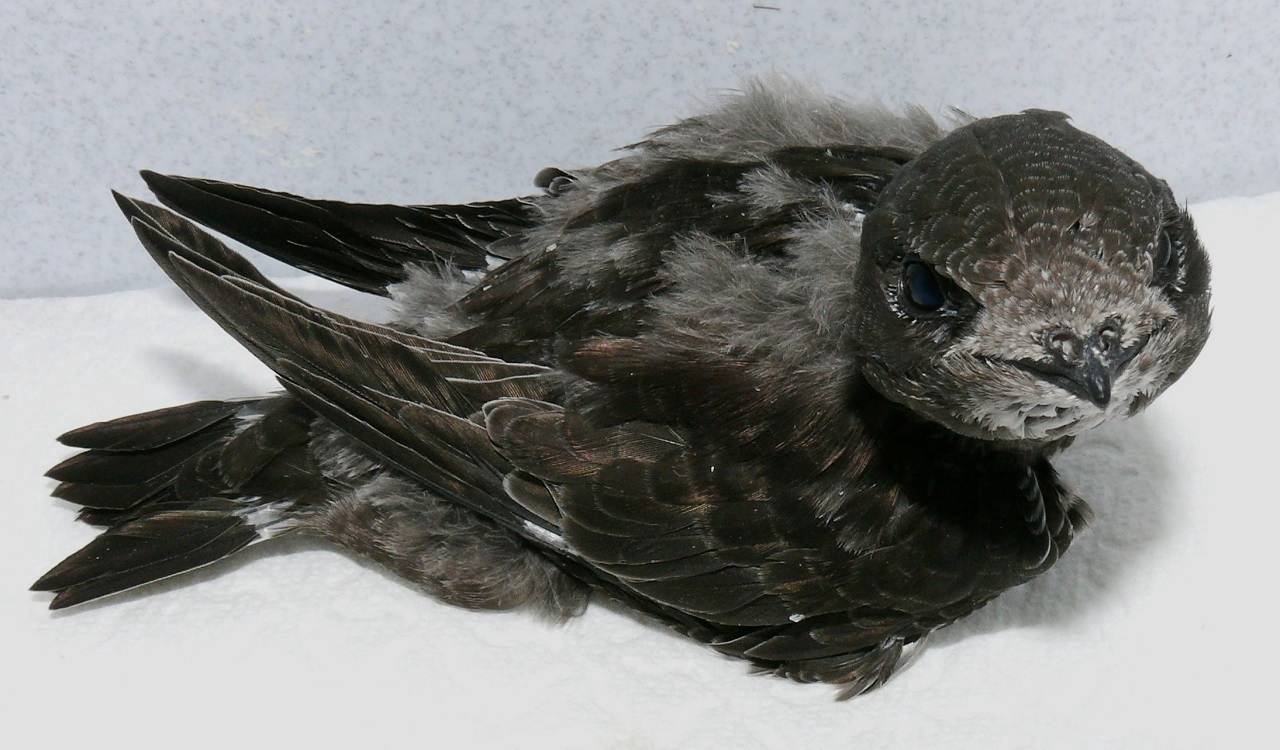
Tag 22
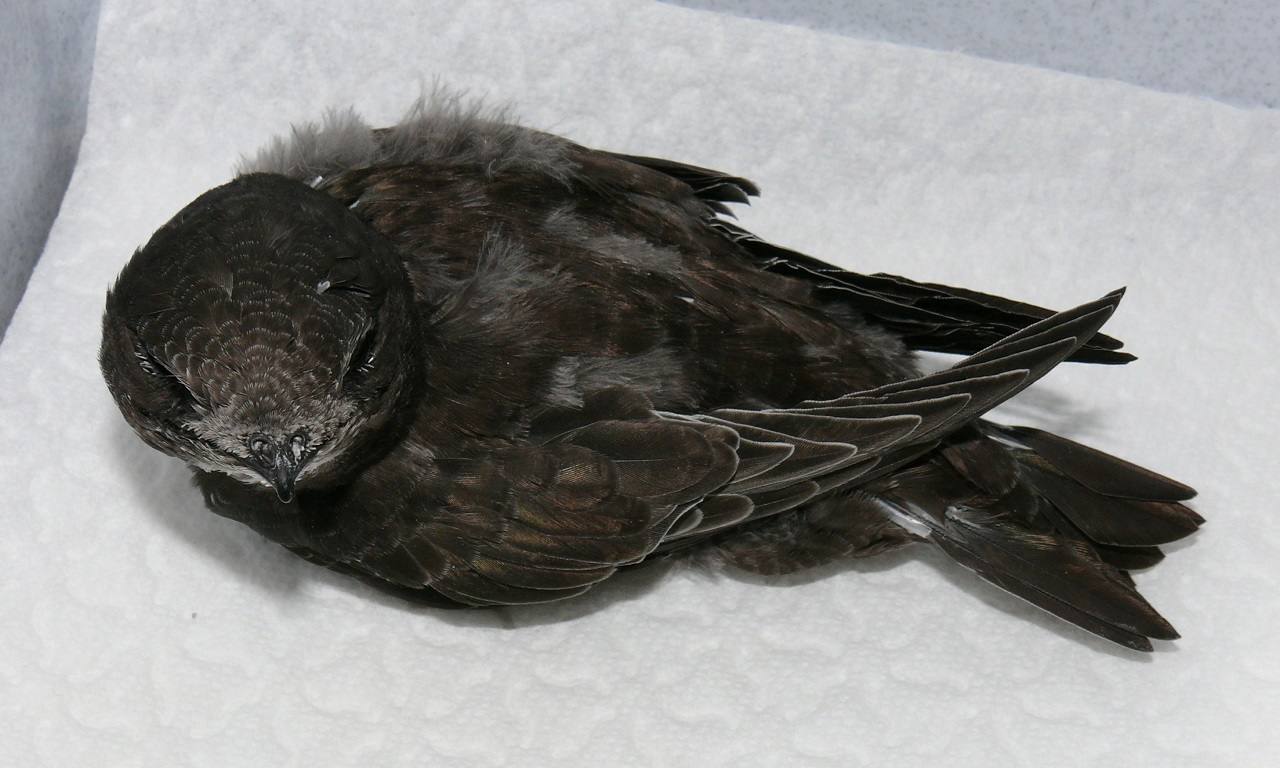
Tag 23
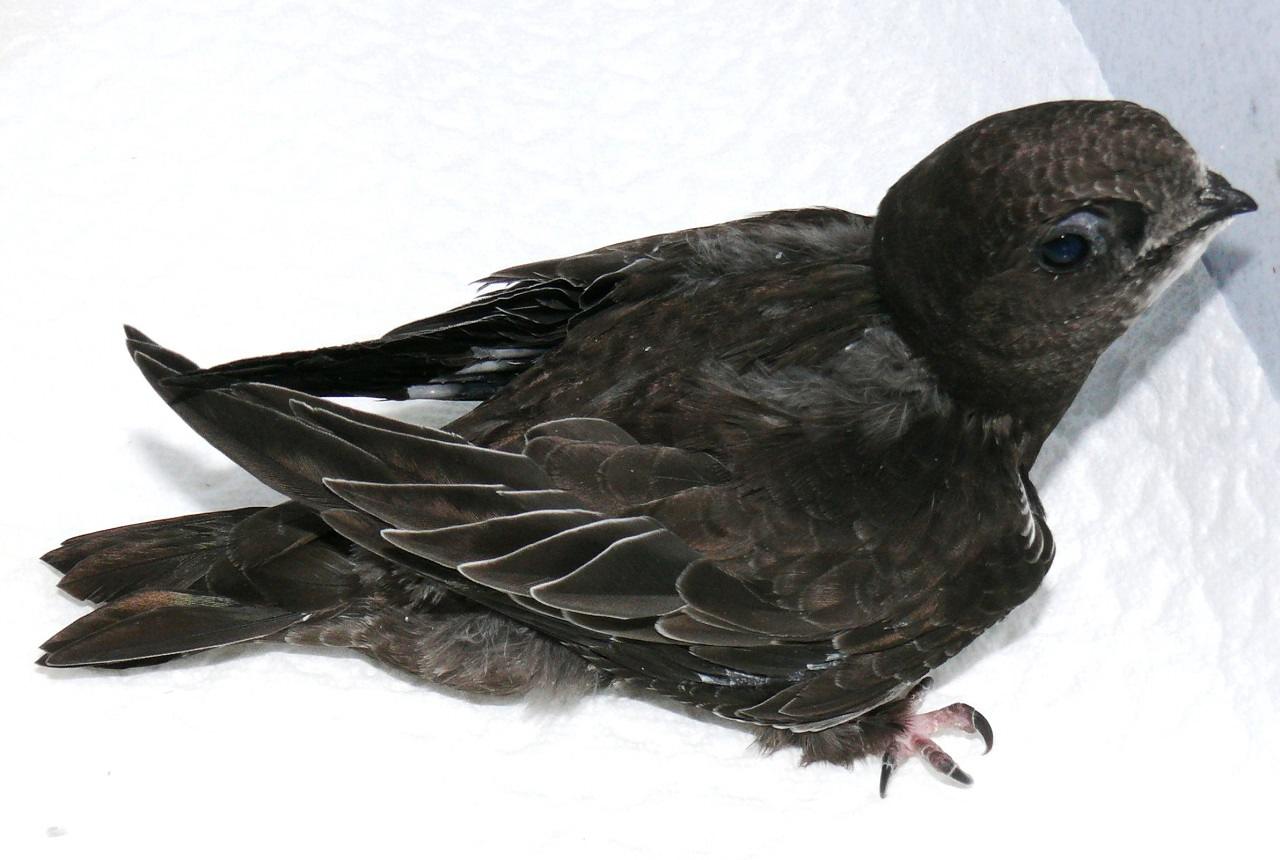
Tag 24
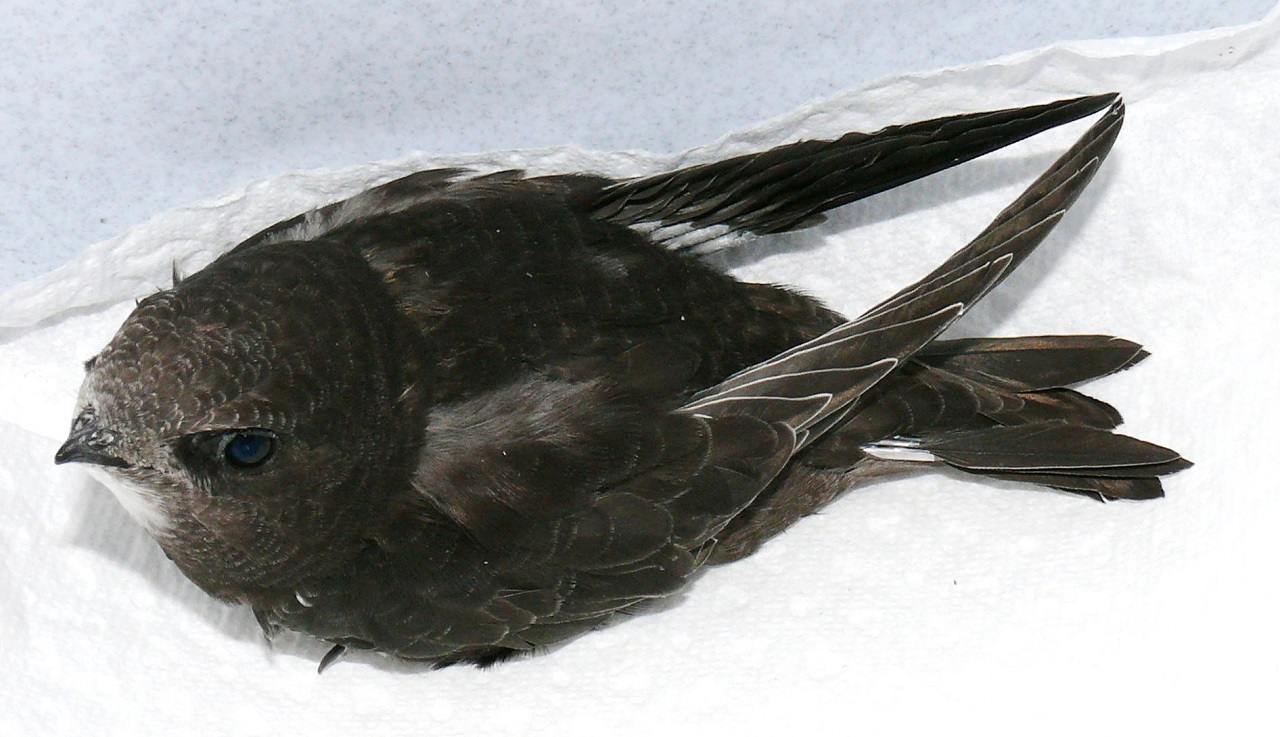
Tag 26 © E. Brendel
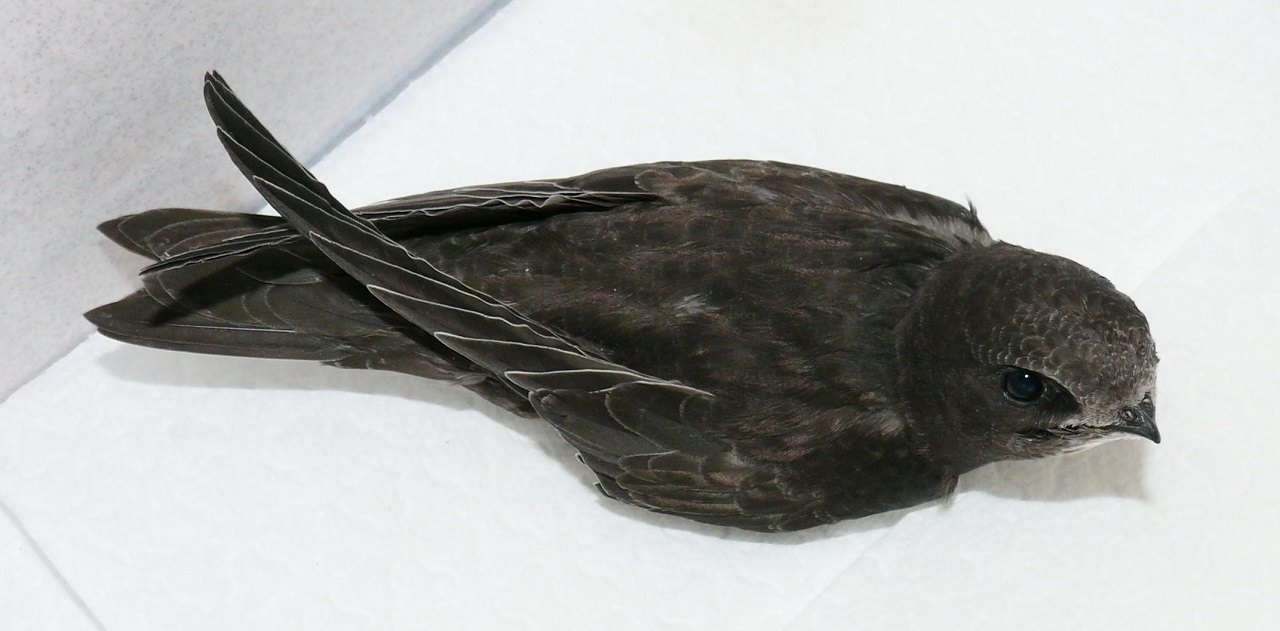
Tag 29 © E. Brendel
zwischen 20 und 30 Tage alter Mauersegler
Handhabung: Wärmequelle nur nötig bei stark ausgehungerten und geschwächten Tieren
Sie müssen alle 2 bis 2,5 Stunden mit mittelgroßen subadulten Heimchen von morgens ca. 7.00 Uhr bis abends 22.00 Uhr gefüttert und kontrolliert werden.
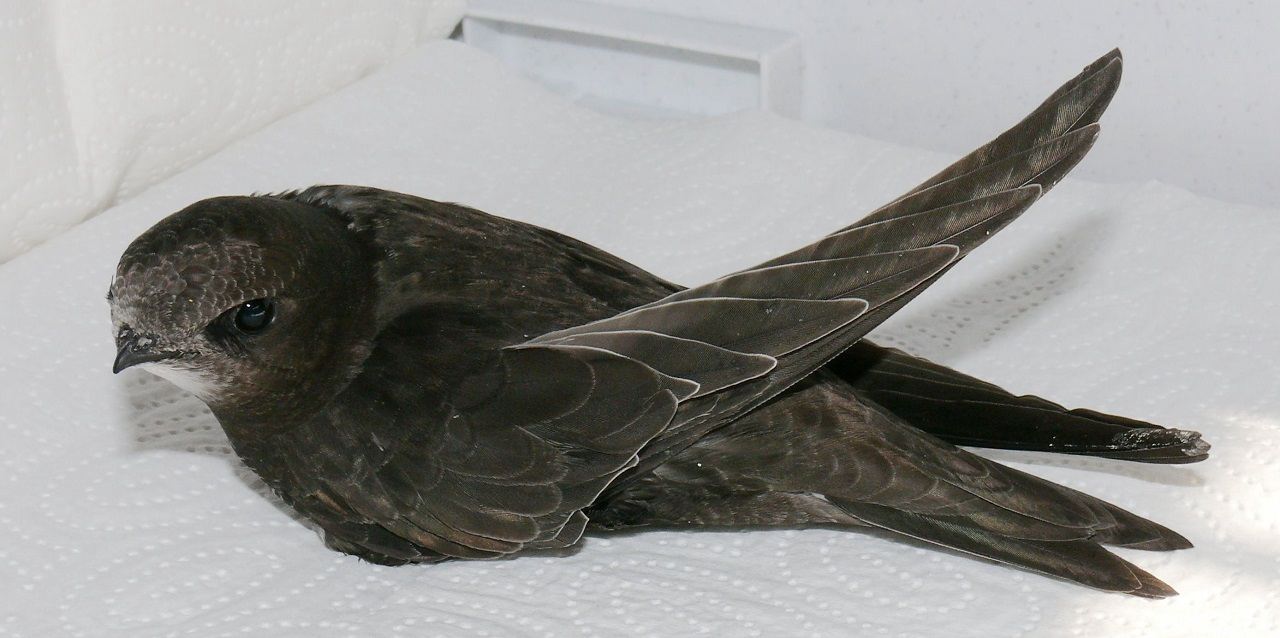
Tag 31 © E. Brendel
30 Tage alter Mauersegler
Sie müssen alle 2,5 Stunden mit mittelgroßen subadulten Heimchen von morgens ca. 7.00 Uhr bis abends 22.00 Uhr gefüttert und kontrolliert werden.
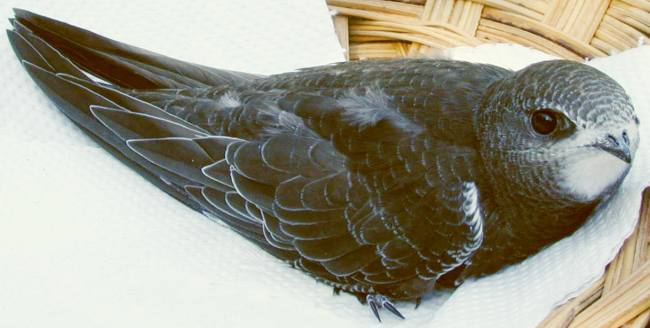
© Dr. A. Pauliny
32 Tage alter Mauersegler
Sie müssen alle 2,5 Stunden mit mittelgroßen subadulten Heimchen von morgens ca. 7.00 Uhr bis abends 22.00 Uhr gefüttert und kontrolliert werden.
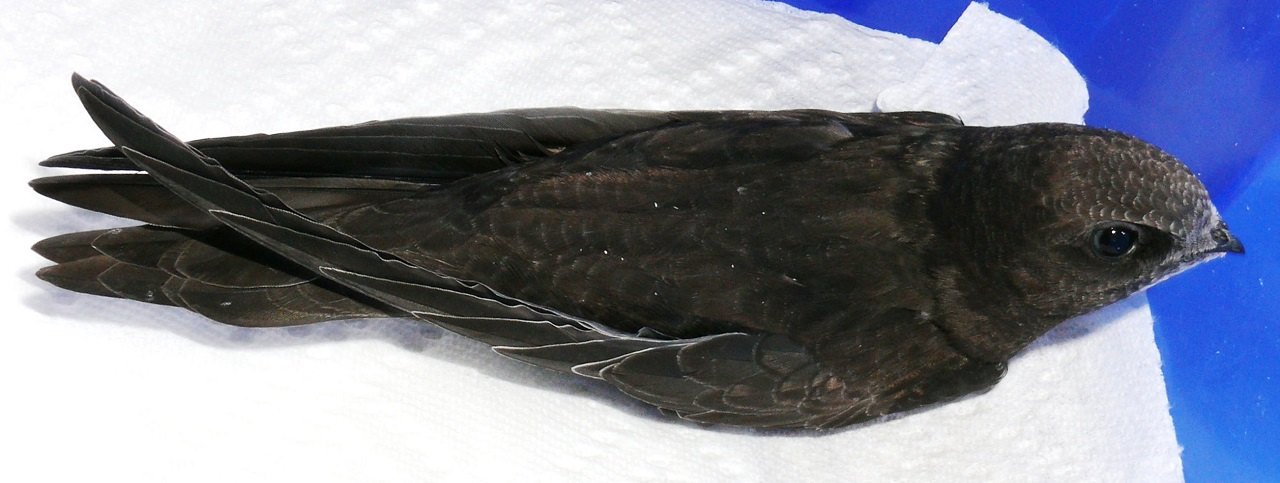
Tag 34 © E. Brendel
34 Tage alter Mauersegler
Sie müssen alle 2-3 Stunden mit mittelgroßen subadulten Heimchen von morgens ca. 7.00 Uhr bis abends 22.00 Uhr gefüttert und kontrolliert werden.
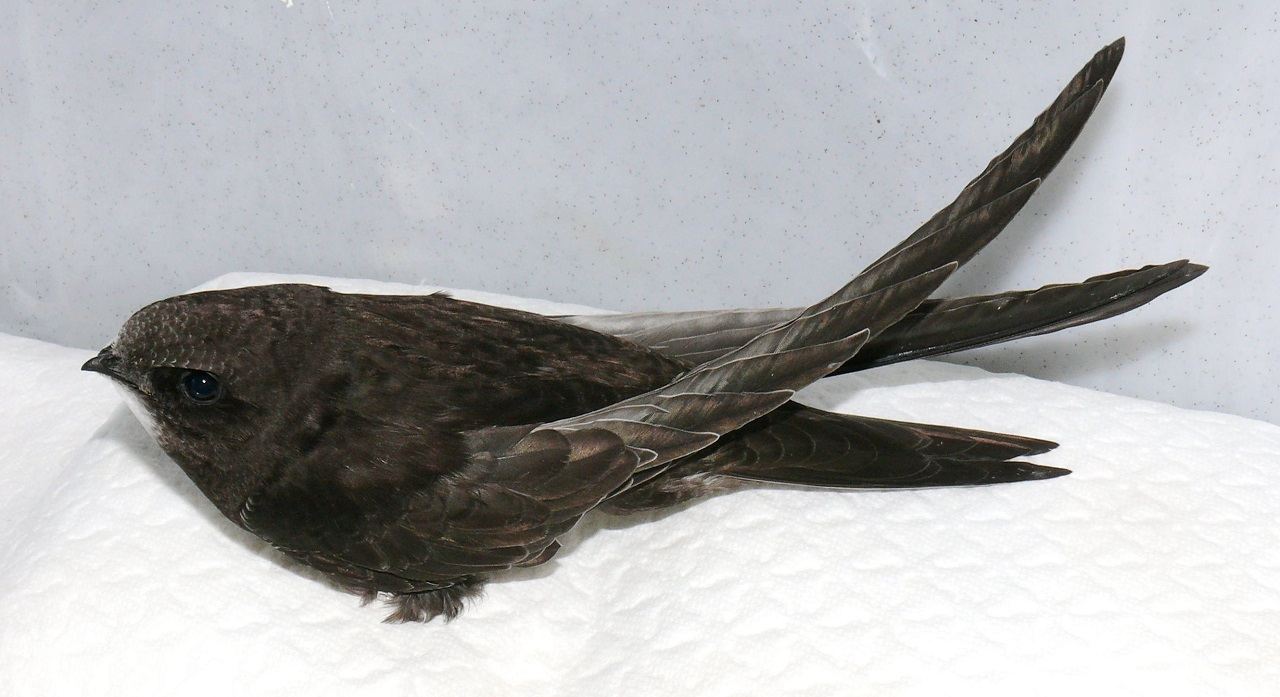
Tag 40 © E. Brendel
40 Tage alter Mauersegler
Sie müssen alle 2-3 Stunden mit mittelgroßen subadulten Heimchen von morgens ca. 7.00 Uhr bis abends 22.00 Uhr gefüttert und kontrolliert werden.
Schwere Jungsegler reduzieren nun möglicherweise ihr Gewicht durch zunehmende Futterverweigerung, um ihr optimales Fluggewicht zu erzielen.
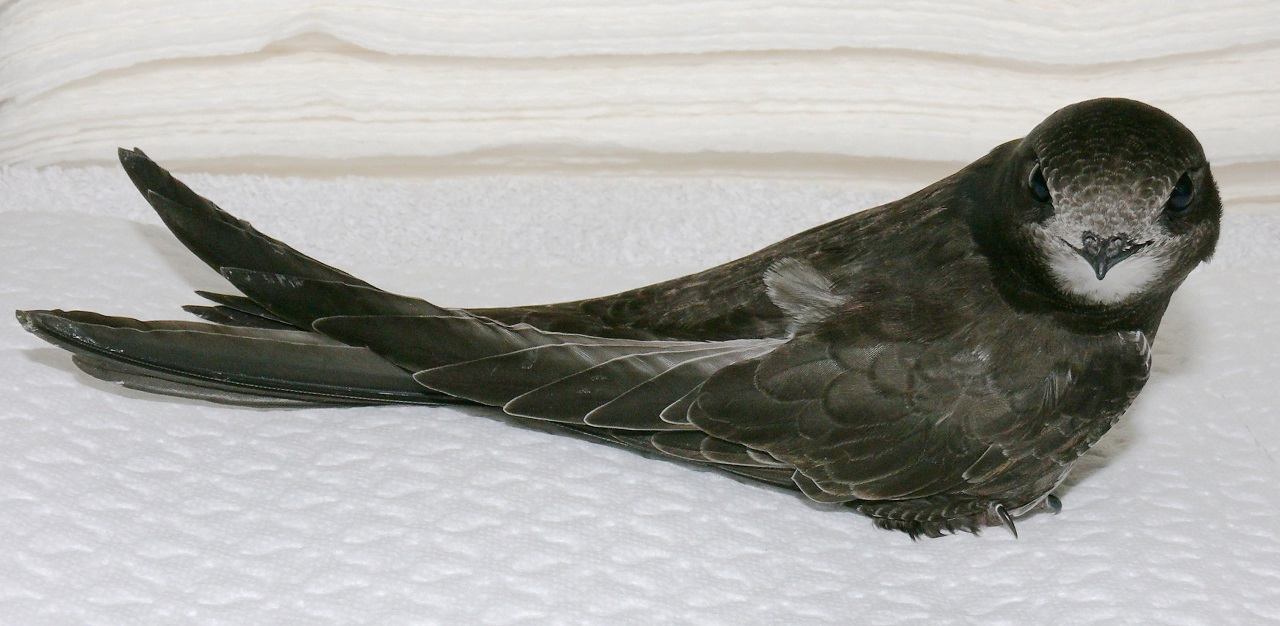
Tag 43 © E. Brendel
42/43 Tage alter Mauersegler
Sie müssen alle 2-3 Stunden mit mittelgroßen subadulten Heimchen von morgens ca. 7.00 Uhr bis abends 22.00 Uhr gefüttert und kontrolliert werden.
Das Ausfluggewicht kann je nach Körpergröße und Schwingenlänge variieren zwischen 37 g und 45 g. Der Vogel wird solange weiter betreut, bis das Federkleid völlig ausgebildet ist, keine einzige Federspule mehr sichtbar ist und er durch sein unruhiges Verhalten zeigt, dass er ausfliegen will. Vor Freilassung ist noch eine letzte Verabreichung von Vitamin B Komplex nötig, sofern die letzte länger als 4 Tage zurückliegt.
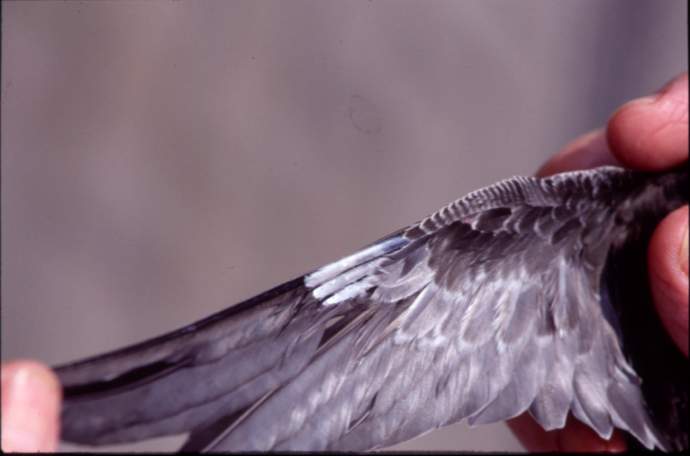
© I. Polaschek
Federspulen an der Flügelunterseite
Ausschlaggebend für die Freilassung ist ein Gewicht von ca. 38-40g und immer die völlige Ausbildung des Federkleides: Mauersegler sind flügge, wenn keine Federspulen (kleine grauweiße Röhrchen, aus denen die Federn rauswachsen s. Bild) an den Schwungfedern der Flügelunterseite sichtbar sind.
Hier: Federspulen sichtbar - Vogel noch nicht flügge!
Gewichtsentwicklung des Mauersegler-Nestlings
Bitte orientieren Sie sich unbedingt an der untenstehenden Fütterungstabelle, da die Fütterungsmenge (normalerweise ca. 2-3 gr mittelgroße subadulte Heimchen pro Mahlzeit pro Segler) alters- und größenabhängig schwanken kann.
Wie beim Menschen, gibt es auch beim Mauersegler große und kleine Tiere. Zudem können Umwelteinflüsse zu Entwicklungsverzögerungen führen. Daher kann die Beziehung zwischen Alter und Körpergewicht variieren, ohne dass dies zwingend ein Problem darstellt. Prüfen Sie bei Fundvögeln auch die Angemessenheit der Futtermenge ("Fundvogel => Füttern => Richtig füttern").
Die untenstehende Tabelle zeigt die Gewichtsentwicklung des Mauerseglers "Jakob", der in der Saison 2012 in der Mauerseglerklinik ausgebrütet, per Hand aufgezogen und erfolgreich freigelassen wurde. Die Werte stellen daher keine repräsentativen Mittelwerte dar. Sie dienen der Orientierung und sollen illustrieren, dass die Gewichtszunahme durchaus unregelmäßig vor sich geht. So hat Jakob vom 15. bis zum 17. Tag und vom 19. bis zum 22. Tag kein Gewicht zugelegt. In der letzten Wachstumsphase, wenn der Segler nur noch Federn schiebt, verliert er zudem wieder an Gewicht. Dieser, bei Jakob ab dem 35. Tag erkennbare Effekt ist normal und kein Grund zur Beunruhigung.
| Tag | Gewicht in g | Tag | Gewicht in g | Bemerkung | |
|---|---|---|---|---|---|
| 1 | 2.4 | 23 | 40.6 | ||
| 2 | 3.3 | 24 | 40.7 | ||
| 3 | 4.4 | 25 | 41.7 | ||
| 4 | 6.7 | 26 | 43.8 | ||
| 5 | 8.1 | 27 | 42.2 | ||
| 6 | 10.6 | 28 | 43.7 | ||
| 7 | 13.7 | 29 | 43 | ||
| 8 | 17 | 30 | 46 | ||
| 9 | 20.7 | 31 | 43.2 | ||
| 10 | 22.9 | 32 | 45.7 | ||
| 11 | 26 | 33 | 45.2 | ||
| 12 | 29.4 | 34 | 46.3 | ||
| 13 | 31.8 | 35 | 44 | Freßlust läßt nach | |
| 14 | 34.6 | 36 | 43.8 | ||
| 15 | 36.4 | 37 | 44.4 | ||
| 16 | 36.5 | 38 | 43 | Gewichtsreduktion | |
| 17 | 36.6 | 39 | 42.6 | nimmt wenig Futter | |
| 18 | 37.7 | 40 | 42.2 | ||
| 19 | 38.4 | 41 | 43 | blickt zum Fenster | |
| 20 | 38.6 | 42 | 40.9 | krabbelt noch zurück | |
| 21 | 38.2 | 43 | 39.2 | wird unruhig | |
| 22 | 38.4 | 44 | 39 | geflogen !!! |
Jakob war ein zierlicher Mauersegler. Die hier angegebenen Werte sollten also eher als Untergrenze interpretiert werden.