Wer je einen Segler untersuchte, wird zustimmen, dass sowohl der Gattungsname Apus (griech. a-pous, fußlos) als auch die frühere Bezeichnung der Ordnung „Machrochires“ (griech. makros, groß und cheir, Hand) gut gewählt waren. Der Flügel ist augenfällig gekennzeichnet durch seine neun oder zehn langen Handschwingen (Primaries; 10 beim Mauersegler) und den komprimierten Block von acht bis elf sehr kurzen Armschwingen (Secondaries; 7 beim Mauersegler). Während bei den evolutionär konvergent entwickelten Schwalbenartigen die längste Handschwinge höchstens doppelt so lang wie die kürzeste Armschwinge ist, kann die Handschwinge beim Segler die dreifache Länge erreichen.
Primaries und Secondaries übertragen zusammen höchste Schubkraft. Zusätzlich liefern die Handschwungfedern abwärts gerichtete Kräfte, während die Armschwingen hauptsächlich das Aufsteigen bewirken. Diese spezielle Konfiguration verleiht den Seglern hohe Geschwindigkeit. Die einmalig lange und gebogene Flügelform ist gut für den Schlagflug geeignet, begünstigt jedoch den Segelflug. Der Gleit- und Segelflug reduziert die Notwendigkeit einer mächtigen Brustmuskulatur: energetische Perfektion!
Segler besitzen zehn Steuerfedern. Die Form des Schwanzes ist bei den Seglerartigen sehr variabel. Viele haben Gabelschwänze, die bei einigen Gattungen sehr lang und tief eingeschnitten sind. Bei den Salanganen kommen nur leicht gefurchte Schwänze vor. Die kurzen, gerade abgeschnittenen Schwänze der Stachelschwanzsegler enden in stacheligen „Spießen“.
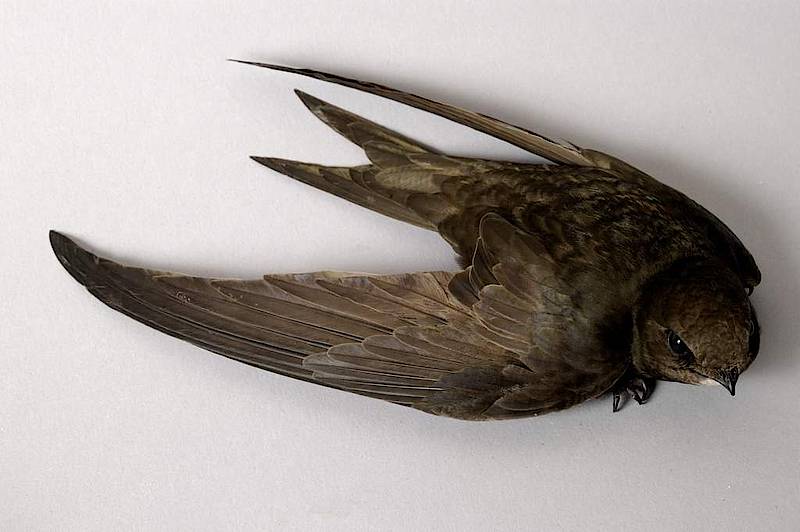
Das Gefieder der meisten Segler ist dunkel, so auch beim Mauersegler: Altvögel wirken bräunlich und zeigen bei Sonnenlicht aus der Nähe blauvioletten oder erzgrünen metallischen Glanz auf dem Gefieder. Die Kehle ist mattweiß. Ein vollständiges Dunengefieder gibt es beim Schlüpfling nicht. Er ist bis zum 3./4. Tag völlig nackt, dann erscheinen Nestlingsdunen als schwarze Punkte. Sie werden nur im Brust-, Schulter- und Rückenbereich ausgebildet und verschwinden um den 20. – 25. Tag unter dem Körpergefieder. Die Kiele des Großgefieders durchstoßen die Haut gewöhnlich am 7. Tag und brechen am 9. Tag auf (ernährungs- und wetterbedingt auch maximal 2 Tage eher oder bis 4 Tage später). Im Alter von 4 Wochen ist der Vogel vollständig befiedert, mit Ausnahme des Halses, dessen Federn erst nach etwa 25 Tagen zu sprießen beginnen und bis zum 35. Tag wachsen (WEITNAUER, 1980). Das Jugendkleid ist dunkler und matter als das des Altvogels, juvenile Mauersegler sind anthrazitgrau bis fast schwarz mit hell gesäumten Federrändern, auffallend weiß an den Schultern, der Stirn und der Kehle, die flächig reinweiß ist.
Der seltene Fall eines fast gänzlich weißen Mauerseglers konnte 2003 in der Mauerseglerstation in Frankfurt am Main dokumentiert werden. Der noch nicht ausgewachsene Jungvogel, aus dem Raum Gießen stammend, wies mit Ausnahme seiner bräunlich-grau melierten Hals- und Gesichtspartien und der hellgrau gefärbten Federsäume ein reinweißes Körper- und Großgefieder auf. Augen und Schnabel waren wie bei arttypisch gefärbten Mauerseglern dunkel pigmentiert.
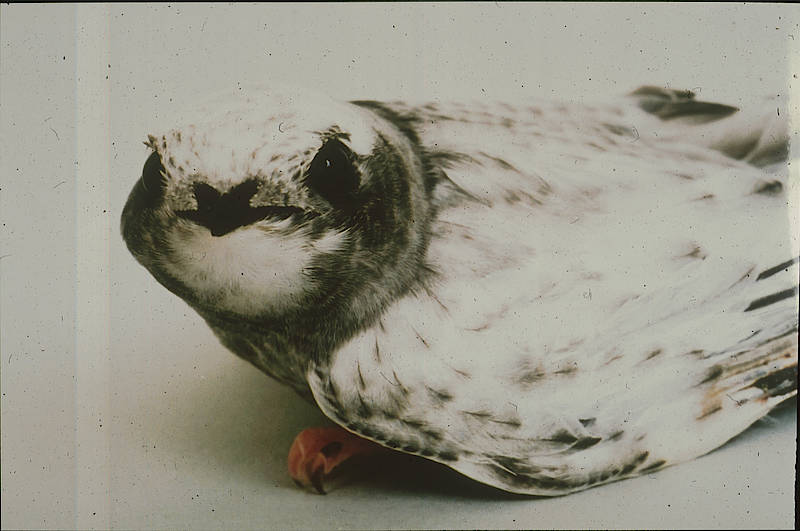
Wie bei vielen anderen Vogelarten kommen auch beim Mauersegler albinotische Farbabweichungen vor. Einzelne weiße Federn werden häufiger beobachtet und sind meist unregelmäßig im Gefieder verstreut. Im Flugbild können solche Farbabweichungen verwirrende Muster ergeben, die zu Verwechslungen partiell albinotischer Mauersegler mit Seglerarten führen können, die weiße Abzeichen tragen, wie z.B. Alpensegler, Kaffernsegler, Haussegler und Pazifiksegler (TENOVUO, 2003). In der Literatur finden sich vereinzelte Berichte über albinotische Mauersegler. GERBER (1958) berichtet über einen fast flüggen Mauersegler mit reinweißem Gefieder und roten Augen, also ein Totalalbino, der am 4. 9. 1951 in Leipzig als Totfund anfiel. Ferner nennt er „einen weißen Mauersegler über der Südvorstadt“ von Leipzig im Frühjahr 1944 (DATHE, mündl.) und einen teilalbinotischen Segler in Sempach (SCHIFFERLI, mündl., 1956) sowie als eigene Beobachtung einen partiell albinotischen Mauersegler, der dem Leipziger Museum am 4. 8. 1953 übergeben wurde. Bei dem Vogel waren die Spitzen der Steuerfedern und fast alle Flügelfedern weiß. Weitere Berichte über teilalbinotische Mauersegler stammen aus England (BRITTON, 1979; CATLEY und SHARROCK, 1978).
Mauser
In der Literatur wird angegeben, dass junge Mauersegler ihr Großgefieder (Handschwingen und Steuerfedern) erst im 2. Winter ihres Lebens mausern(WEITNAUER 1947 und 1977). Mit denselben Federn, mit denen sie ihr Nest verlassen, würden sie also dreimal die Strecke Europa-Südwestafrika bewältigen! Während ihrer zweiten Überwinterung würden die Jugendschwingen erneuert, zur gleichen Zeit werde der junge Mauersegler geschlechtsreif und kehre im 2. Frühjahr seines Lebens im Adultkleid nach Europa zurück.
Dem widersprechen jüngste Beobachtungen an überwinterten juvenilen Mauerseglern in der Mauerseglerklinik Frankfurt. Dort begannen 8 junge Mauersegler, im Juni gebürtig, ihre Handschwingenmauser fast synchron bereits Ende März des darauffolgenden Jahres. Bis Anfang Mai waren bereits die 1. bis 3. Handschwinge gewechselt. Eine Handschwingenmauser zu einem Zeitpunkt, zu dem die adulten Segler auf dem Rückflug zu ihren Brutgebieten sind und mit dem Brutgeschäft beginnen, könnte ein Indiz dafür sein, dass juvenile Mauersegler in ihrem ersten Lebensjahr gar nicht an ihren Geburtsort zurückkehren, sondern in Afrika bleiben und den Zug nach Norden erst im zweiten Lebensjahr antreten.
Die 10 Handschwingen werden von innen nach außen gemausert, die 7 Armschwungfedern von außen nach innen, ebenso die 10 Steuerfedern (DE ROO 1966). Im Abstand von ein oder zwei Tagen wird symmetrisch jeweils die entsprechende Feder am linken und am rechten Flügel abgeworfen und nachgeschoben, gleichzeitig mit den darüber liegenden Deckfedern. Das vollständige Nachwachsen einer großen Handschwungfeder dauert ca. 4 Wochen. Die nachfolgende Feder wird bereits abgeworfen, bevor die zuvor gemauserte komplett ausgewachsen ist.