Womit füttere ich einen Mauersegler?
Der Mauersegler ist ein reiner Insektenesser. Die Methode der Wahl - nämlich an der Natur orientiert! - ist daher, Insekten pur zu verfüttern.
Falsches Futter führt nicht nur zu schwerwiegenden und schmerzhaften Verdauungsstörungen, schlimmstenfalls mit Todesfolge, sondern auch zu Skelettdeformationen, Mangelerkrankungen, Leberschäden und zu verändertem, oft schwer geschädigtem Gefiederwachstum, Federdeformationen oder zum Federverlust!
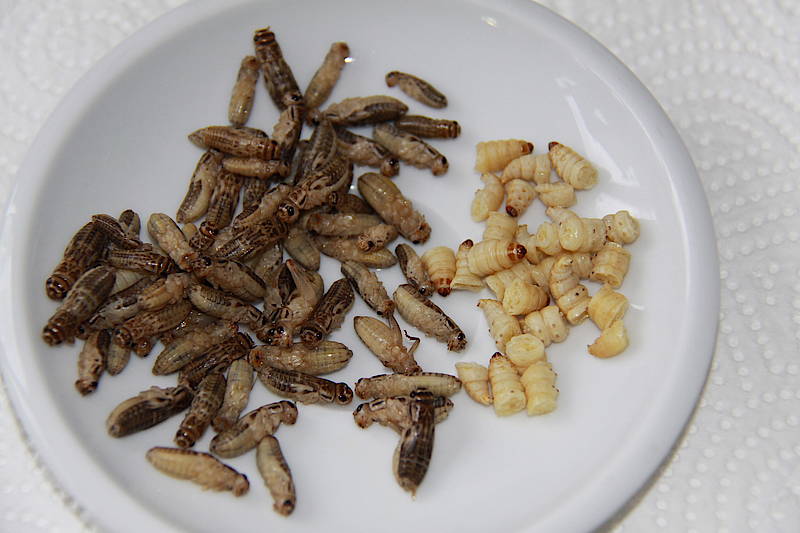
Das richtige Futter: Grillen; Wachsmottenlarven als Nachtisch. © I. Polaschek
Als Futtertiere eignen sich hervorragend subadulte unbeflügelte Heimchen und Steppengrillen aus dem Zoohandel oder aus Zuchtfarmen. Am besten sind Größen von 12-18 mm. Geflügelte Heimchen / Grillen zu verfüttern macht keinen Sinn. Die meisten haben bereits Legestachel, die sie als geschlechtsreife Weibchen erkennen lassen, und sind gefüllt mit Eipaketen. Mauersegler können diese Eipakete nicht verdauen und scheiden sie unverdaut wieder aus.
Kaufen Sie nie Zweifleckgrillen, die robuster sind als andere empfindlichere Grillenarten und daher von den Lieferanten gern angeboten werden. Mauersegler vertragen Zweifleckgrillen nicht und reagieren mit heftigem Durchfall, wenn man sie damit füttert. Bei anderen insektenessenden Wildvögeln wie z. B. Schwalben wird diese Unverträglichkeit nicht beobachtet.
Die Fütterung mit Heimchen und Steppengrillen entspricht von allem, was wir realisieren können, am ehesten der natürlichen Ernährung des Mauerseglers, wird von den Vögeln gut angenommen und gestattet eine problemlose Aufzucht. Segler, die mit Heimchen / Grillen aufgezogen werden, unterscheiden sich äußerlich nicht von solchen aus Naturbruten und entwickeln ein unversehrtes, glänzendes Gefieder. Nach heutigem Kenntnisstand scheint demnach die Fütterung mit Heimchen / Grillen die beste Methode zu sein und ist überdies für den Pfleger am einfachsten.
Junge Mauersegler nehmen Heimchen / Grillen im allgemeinen so gern an, daß sie meistens von selbst danach schnappen, sich am (gründlich desinfizierten) Finger des Pflegers festsaugen und sich den Hals mit Futter füllen lassen. Dies erleichtert die Fütterung ungemein und spart viel Zeit und Mühe. Halbwüchsige Segler (etwa 3. bis 5. Woche) verschlingen heißhungrig sogar 18-20 mm große Grillen. Mit zunehmendem Alter wird allerdings auch hier die Lust zu essen abnehmen. Man kommt dann aber gut mit kleineren, 10-15 mm großen Heimchen / Grillen weiter. Bei Mauerseglern, die kurz vor dem Ausfliegen nicht mehr gut essen wollen, hilft es, Beine, Flügeldecken und Vorderteil der Insekten zu entfernen und nur noch die weichen Hinterteile zu verfüttern.
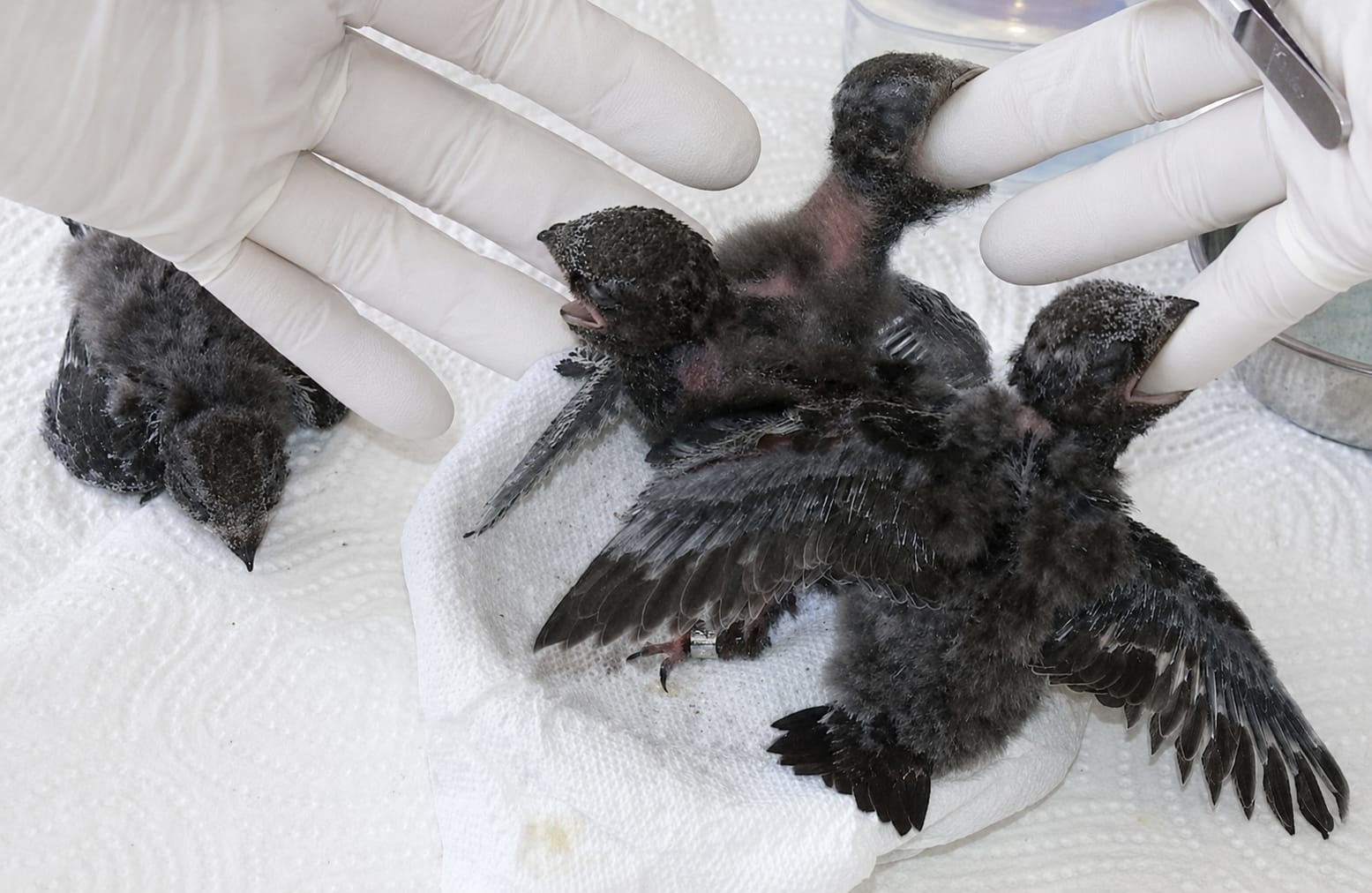
Hungrige Halbwüchsige...
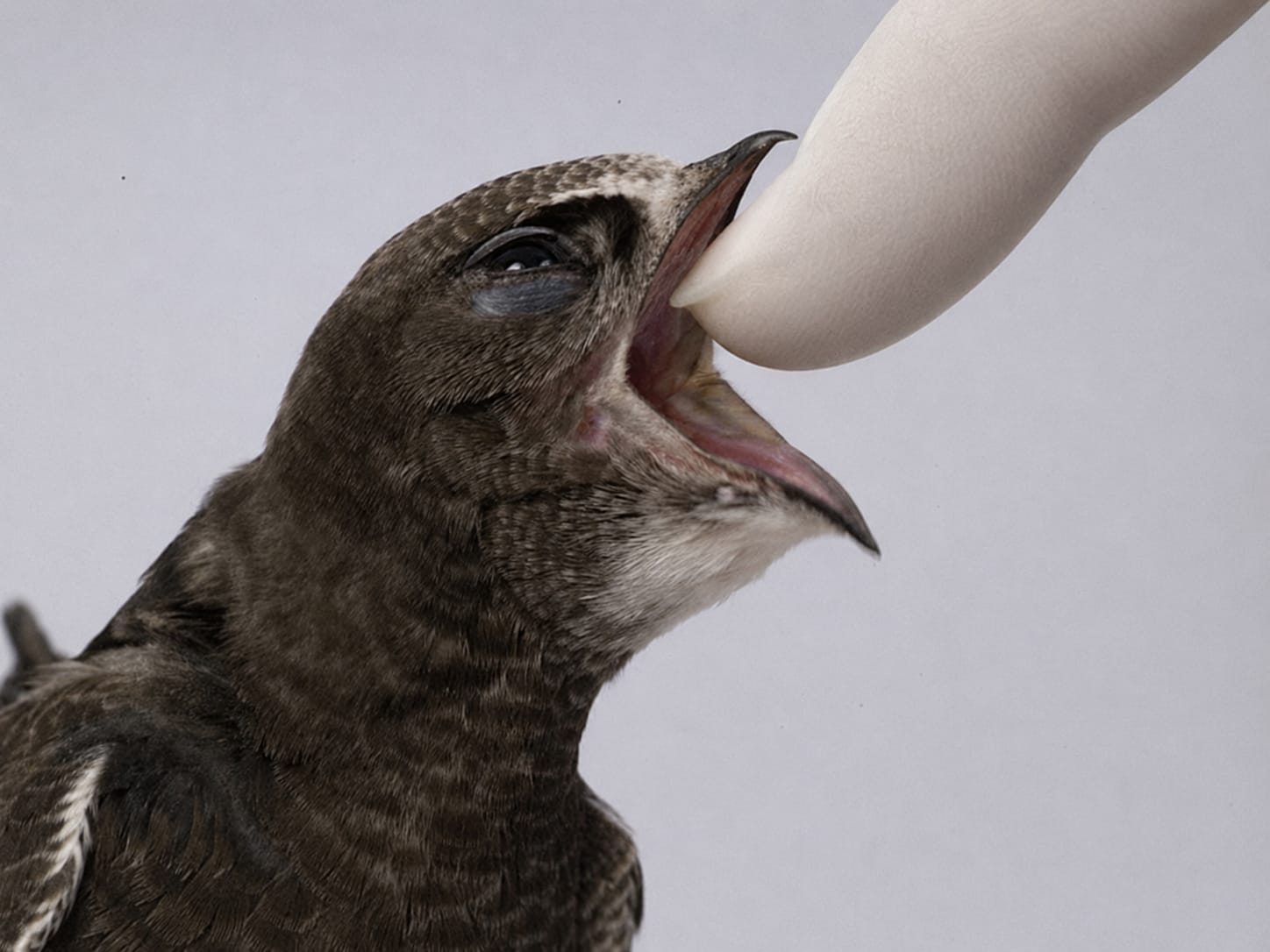
..."verschlingen" die Finger der Fütterungsperson.
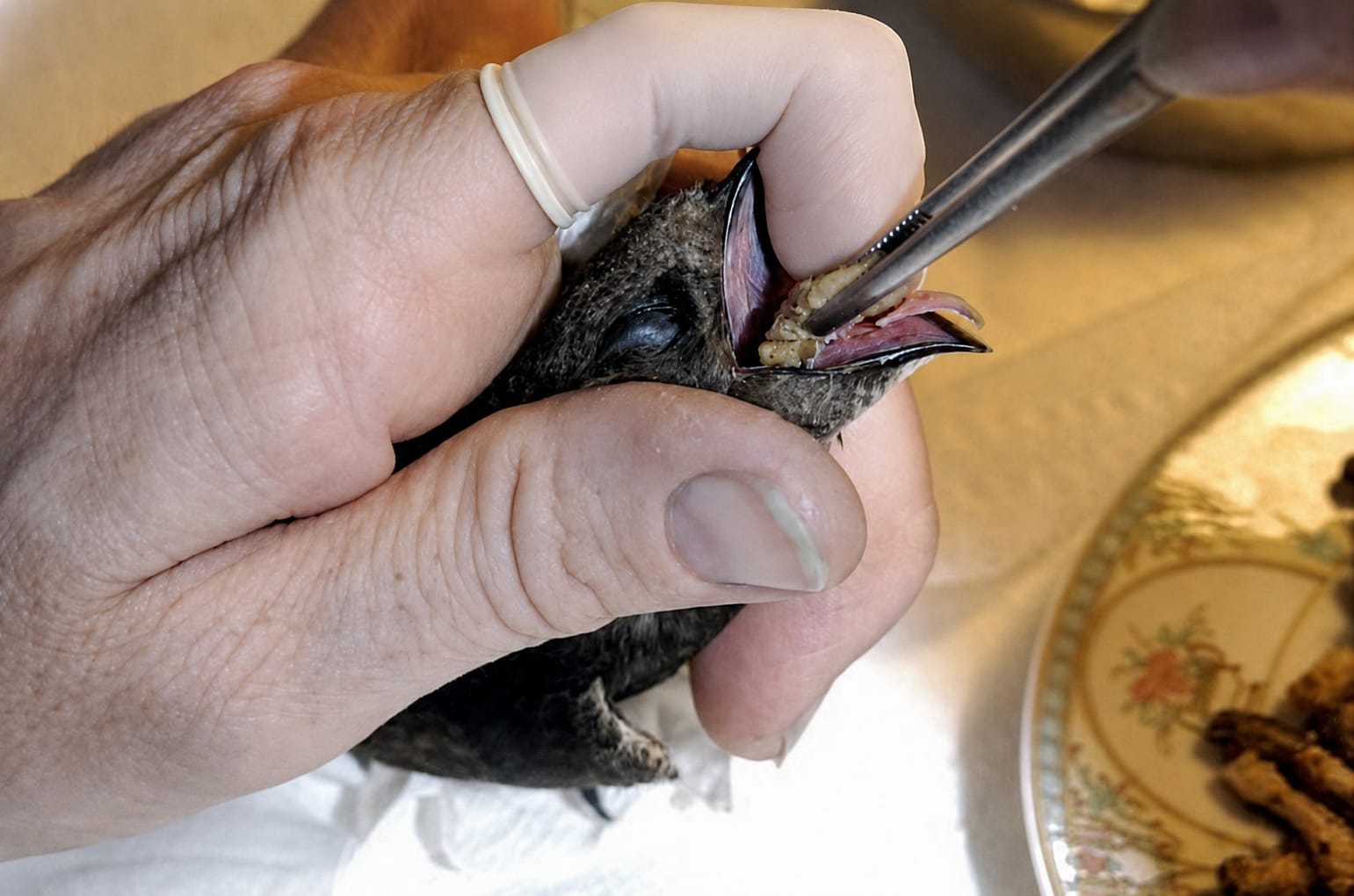
Nun "nur" noch die Grillen am Finger vorbei in den Schlund schieben!
Wieviele Futtertiere braucht man?
Um einen Mauersegler ca. 4 Wochen lang zu ernähren, sind ungefähr 500-600 Gramm Insekten nötig. Will man diese Menge im Zoogeschäft durch den Kauf handelsüblicher kleiner Plastikschachteln bestreiten, in denen eine halbe Handvoll Grillen an einem Stück Eierkarton herumkrabbelt, wird der Spaß ziemlich teuer. Die Bestellung bei einer Zuchtfarm lohnt sich.
Es ist schwierig, die Stückzahl von Heimchen / Grillen anzugeben, die ein Mauersegler pro Mahlzeit vertilgt, da sie abhängig von der Größe des Futtertieres sowie von Alter und Entwicklungsstufe des Vogels stark variieren kann. Am ehesten kann die täglich zugeführte Masse an Futter, für verschiedene Altersstufen ausgewogen, als Richtwert dienen. Auch die satte Auswölbung der rechten Halsseite, die nach dem Füttern für kurze Zeit zu sehen ist, zeigt, dass der Pflegling genug Futter erhalten hat.
Unersättliche junge Mauersegler scheinen allerdings eine Art Schrottpresse im Hals zu betätigen, so dass schon wenige Minuten nach reichhaltigster Fütterung keine einzige Grille mehr im bodenlosen Schlund zu finden ist und der kleine Lügner bettelt, als habe er tagelang gehungert.
Anhaltspunkte zur Bestimmung der optimalen Futtermenge:
Alter des Seglers (in Tagen) | Gewicht des Seglers (in g) | Menge Grillen/Tag (in g) | Menge Grillen/Tag (in % des Körpergewichtes) | Menge Grillen (in g) pro Fütterung bei 6 Fütterungen/Tag |
|---|---|---|---|---|
20 | 37.70 | 15.90 | 42.20 | 2.65 |
32 | 37.90 | 16.50 | 43.50 | 2.75 |
38 | 42.90 | 12.60 | 29.40 | 2.10 |
adult | 40.40 | 13.80 | 34.20 | 2.30 |
Füttere ich genug?
Wiegen Sie den Mauersegler täglich vor und nach jeder Fütterung mit einer Waage, die auf eine Stelle hinter dem Komma tariert ist.
Unter Mauersegler -> Identifikation -> Altersstufen finden Sie eine Tabelle, die Ihnen die Gewichte eines zierlichen Jungvogels für den 1.-44. Tag angibt. Kräftigere Exemplare können vor der Phase der Gewichtsreduktion (ca. 38. Tag) jedoch auch deutlich über 50g wiegen.
Wie werden die Futtertiere zubereitet?
In größerer Menge bestellt, werden die Heimchen / Grillen durch Tieffrieren abgetötet. Man kann dann jeweils bedarfsgerecht kleine Portionen in ein Handsieb füllen, in warmem Wasser auftauen, gründlich abtropfen und verfüttern. Gerade im Sommer muß man besonders darauf achten, daß die aufgetauten Futtertiere nicht verderben. Überzählige Insekten sollten gleich nach der Fütterung in den Kühlschrank gestellt und vor der nächsten Mahlzeit kurz in warmem Wasser angewärmt werden.
Verdorbene Heimchen / Grillen verfärben sich schwärzlich und dürfen keinesfalls noch verfüttert werden.
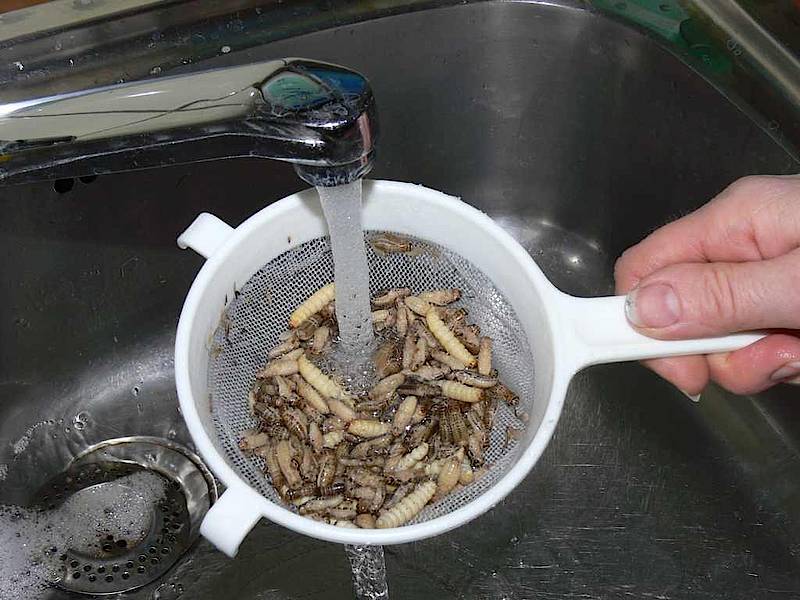
Auftauen und Abspülen der Futterinsekten unter warmem Wasser © E. Brendel
Bitte unbedingt beachten:
Da beim Tieffrieren der Futterinsekten die lebenswichtigen B-Vitamine zerstört werden, ist es unerlässlich, dem Fundvogel regelmäßig Vitamin B-Komplex zu verabreichen.
1. Am besten durch eine Injektion alle 8 Tage vom Tierarzt: 0,1 - 0,15
ml Vitamin-B-Komplex subkutan in die Kniefalte spritzen (nicht in den
Muskel – sehr schmerzhaft!).
oder
2. Alle 2 Tage bei einer Mahlzeit 3 - 4 Grillen mit Vitamin B-Komplex
präparieren (d. h. mit einer Spritze je 0,05 ml Vitamin B-Komplex in
den Hinterleib der Grille spritzen), dann die vitaminisierten Grillen
verfüttern.
Normale Vitaminpräparate (z.B. Korvimin) reichen nicht aus, um einem Vitamin-B-Mangel vorzubeugen! Die Verabreichung von Vitamin B-Komplex ist absolut notwendig! siehe: http://www.apusapus.net/infections.html
Welche Futtertiere kommen noch in Frage?
Drohnen
Die männlichen Stadien der europäischen Honigbiene (Apis apis) sind zwar als Alleinfutter für Mauersegler zu fetthaltig, als Beifutter jedoch gut geeignet und haben sich ferner als "Astronautennahrung" für stark geschwächte Pfleglinge während der ersten kritischen Tage bestens bewährt.
Kontakte zu örtlichen Imkern können also sehr wertvoll sein. Sind Vogelfreunde darunter, kann man einige Waben mit den nahrhaften Insektenlarven vielleicht sogar umsonst bekommen.
Aufpassen: Nur Drohnen aus giftfreien Bienenstöcken beziehen! Wenn der Imker jedoch seine Bienen mit Pestiziden (z. B. gegen die Varroa-Milbe) behandelt, sind die Drohnen nicht zum Verfüttern geeignet.
In den Waben befinden sich meist sehr unterschiedliche Entwicklungsstadien der Drohnen von der schneeweißen Larve bis hin zum fast schlupffertigen Insekt. Es empfiehlt sich, sie tiefzufrieren. Nur in gefrorenem Zustand kann man sie ohne allzu große Mühe aus den Waben pulen. Dann sollte man sie in kochendem Wasser für 1-2 Minuten blanchieren, was die Haltbarkeit der Futtertiere erheblich erhöht, und nach dem Abkühlen zur Lagerung wieder einfrieren. Man kann nun die jeweils benötigte Futterportion entnehmen und verfüttern.
Unblanchiert sind die Larvenstadien der Drohnen nicht zu verfüttern, da sie fast flüssig sind und sofort verderben. Erst beigebraune Stadien bis hin zur fast fertigen Drohne (die wie eine Biene aussieht, aber keinen Stachel hat) können auch ohne Blanchieren gefüttert werden. Niemals weibliche Bienen füttern! Sie haben Stachel und enthalten hochwirksames Gift!
Wachsmottenlarven
Wachsmotten (Pyralidae) sind Bienenschädlinge. Ihre weichen, sich seidig anfühlenden Larven, die wie kurze dicke weiße Würmer aussehen, kann man lebend in Angelgeschäften oder in blanchiertem Zustand bei Futtertierfarmen kaufen. Sie sind in geringer Menge als Beifutter für Mauersegler geeignet. Pro Futterportion sollte nicht mehr als eine Wachsmottenlarve an den Segler verfüttert werden. Die Larven sind sehr fett und können in größerer Menge beim Mauersegler zur Grünfärbung des Kots und zu Verdauungsstörungen führen.
Die weichen lebenden Larven können in einem Stück gefüttert werden.
Blanchiert werden sie härter und gummiartig und müssen zum Verfüttern unbedingt in mehrere Stückchen zerschnitten werden.
"Wiesenplankton"
Natürlich kann man in die freie Natur ausschwärmen, mit Kescher und viel Enthusiasmus auf die Suche nach Mücken, Fliegen, Faltern und all den geflügelten Plagegeistern gehen, die einem an heißen Sommertagen draußen das Leben schwer machen und daher die beste, gesündeste und willkommenste Vogelnahrung sind. Doch wo sind sie hin, wenn man sie einmal braucht? Wer je versucht hat, auch nur eine Mahlzeit für einen höllisch hungrigen jungen Mauersegler zusammenzufangen, wird künftig voller Ehrfurcht für die Leistung von Vogeleltern sein. Und letztlich doch lieber die Fahrt zum Zoogeschäft in Kauf nehmen, als mit drei zerdrückten Blattläusen zu seinem Pflegling zurückzukehren.
Falls Sie sich wider Erwarten doch als Kammerjäger unter freiem Himmel bewähren: Niemals Insekten mit auffälligen Farben, Stacheln, Borsten o.ä. verfüttern! Sie wären sehr wahrscheinlich giftig für Ihren Mauersegler.
Was ist von "Futtermischungen" zu halten?
In vielen Pflegestellen und Aufzuchtstationen werden Mauersegler mit Futtermischungen unterschiedlichster und oft abenteuerlicher Zusammensetzung aufgezogen.
Strikt abzulehnen sind Mischungen, die zum überwiegenden Teil aus Fleisch (Tartar, Hackfleisch, Herzfleisch) bestehen. Als insektenessender Vogel ist der Mauersegler nicht auf Fleischnahrung eingerichtet. Niemand käme auf die Idee, einen Pflanzenesser - z.B. ein Pferd - mit Fleisch zu füttern, warum also hält sich so hartnäckig die Fehlinformation, man solle einem Insektenesser Fleisch verabreichen?
Orientieren Sie sich an der Natur, an dem, was der Vogel dort zu sich nimmt, - dann dürfte Ihnen die Fleischfütterung auch sehr widersinnig vorkommen.
Einige erfahrene Vogelpfleger stellen spezielle Mischungen her, deren überwiegender Anteil aus reinem und hochwertigem Insektenfutter sowie aus "Beoperlen" besteht, und denen bestes, frisches, mageres Rindertartar nur soweit zugegeben wird, als es nötig ist, um den krümeligen Insektenschrot zu einer formbaren Masse zu verkleben und erbsengroße Kügelchen zum Verfüttern formen zu können. Dazu wird gern das Insektenfutter der Firma "aleckwa" oder "Type IV blau" der Firma "Claus" verwendet. Diese Marken enthalten Insekten pur und nicht wie alle anderen im Handel angebotenen Fertigfutter Bäckereierzeugnisse wie z. B. Waffelbruch, die bei jungen Mauerseglern und Singvögeln zu Verdauungsstörungen mit eventuell lebensgefährlichen Folgen führen können!
Die DGfM lehnt Futtermischungen, auch diese hochwertigen, kategorisch ab, in der Frankfurter Mauerseglerklinik werden sie nicht verwendet und ratsuchenden Findern nicht empfohlen.
Zwar konnten bei der Aufzucht von Mauerseglern mit der speziellen Futtermischung mit "aleckwa" oder "Claus blau Type IV" durch erfahrene Pfleger in der Vergangenheit keine Gefieder- oder sonstigen Schäden beobachtet werden, wie sie bei den minderwertigen Mischungen regelmäßig auftreten. Jedoch verlangt es langjährige Erfahrung, viel Geschicklichkeit und peinlichste Hygiene, solche Mischungen herzustellen und zu verfüttern.
Personen, die zum ersten Mal einen Mauersegler aufziehen, sind damit überfordert und haben es mit Heimchen / Grillen wesentlich einfacher. Eine Futtermischung kann gerade im Sommer rasend schnell verderben, ohne dass man es sieht. Tartar, Bestandteil der Mischung, wird binnen kürzester Zeit zum Nährboden von Keimen wie z. B. Staphylokokken und Salmonellen. Ferner erfordert es sehr viel Übung, die kleinen klebrigen Kügelchen in den Schlund eines Mauerseglers zu bugsieren, ohne den Vogel im Schnabel- und Halsbereich rettungslos zu verschmieren. Dies aber muss unbedingt vermieden werden. Schlimmstenfalls könnten ungeübte Personen den Mauersegler ungewollt ersticken, wenn sie versuchen, ihm die Futtermasse in den Hals zu stopfen - ein qualvoller Tod. So etwas ist leider schon vorgekommen!
Fleisch - Rindfleisch! - könnte noch in einer ganz anderen Hinsicht bedenklich sein:
Hinsichtlich der BSE-Problematik existieren, die Vogelernährung betreffend, keinerlei Erkenntnisse. Solange mögliche Infektionsrisiken noch nicht geklärt sind, ist kritische Vorsicht angeraten! Wir wollen doch unserem Findling kein Danaergeschenk mit auf den Weg geben, wenn wir ihn zu seiner freilebenden Population zurückschicken!
Früher hat man doch...
...aber inzwischen gibt es viele neue Erkenntnisse, und wir sind zum Glück klüger!
Gewiss, früher hat man vieles anders gemacht, und es war üblich, jeden Wildvogelfindling mit Brot oder Hackfleisch umzubringen...pardon: zu füttern. Es ist sicher aufschlussreich, dass aus diesen Zeiten auch die weitverbreitete Ansicht stammt, dass man verwaiste Wildvögel "sowieso nicht groß bekommt". Doch in Wirklichkeit bereitet eine Handaufzucht mit dem richtigen und artgerechten Futter kaum Probleme. Eine falsche Fütterung hingegen kann schon nach kürzester Zeit fatale Folgen haben!
Küchenreste und Verdorbenes haben nichts auf dem Speiseplan eines jungen Mauerseglers zu suchen, und alle Experimente, etwa mit Milch, rohem Eigelb, Nudeln, Quark, Brot, Haferflocken usw. sollten tunlichst unterlassen werden. Erfindungsreichtum ist hier nicht gefragt, eher der aufmerksame Blick aus dem Fenster: Wer würde eine Amsel mit Fischstäbchen füttern, wenn er ihre Artgenossen Regenwürmer aus dem Rasen ziehen sieht?
Wobei das traurige Beispiel mit den Fischstäbchen von jemandem stammt, der leider nicht aus dem Fenster geschaut hat...
Wann und wie oft wird gefüttert?
Bei gut genährten Mauerseglern genügen im allgemeinen 6 Fütterungen am Tag, alle zwei bis zweieinhalb Stunden. Man beginnt morgens um sieben oder acht Uhr und beendet den Tag des Mauersegler-Pfleglings um 21 oder 22 Uhr. Nachts nicht füttern, der arme Vogel möchte irgendwann genau wie Sie seine Ruhe haben und schlafen!
Ein stark unterernährter Mauersegler hingegen braucht anfangs Infusionen und Intensivbetreuung. Beginnt er, sich etwas zu erholen, füttert man etwa alle halbe Stunde einige kleine Grillen - am besten zunächst nur die weichen Hinterteile - (oder vorzugsweise blanchierte Drohnen) und beobachtet, ob der Vogel Kot absetzt. Dies ist äußerst wichtig! Halb verhungerte Mauersegler, insbesondere Jungvögel, zeigen zwar oft Heißhunger und würden am liebsten den ganzen Finger ihres Pflegers verschlingen, sind aber noch viel zu schwach, um Futter zu verdauen. Bei einem wild bettelnden Segler ist die Versuchung groß, soviel Nahrung zu geben, wie das Tier nur will.
Ganz schnell kommt es dann aber nach anfänglicher Besserung zu einer lebensgefährlichen Magenüberladung, oft mit Todesfolge. Warnende Anzeichen sind Gewichtszunahmen von mehreren Gramm in wenigen Stunden.
Prüfen Sie regelmäßig durch vorsichtiges Betasten, ob der Leib des Vogels gut gefüllt, aber doch weich und nachgiebig ist! Ein harter, sich wie eine Murmel kugelrund vorwölbender Bauch bedeutet höchste Alarmstufe (dann sofort die Fütterung erst einmal aussetzen und am besten vom Tierarzt eine weitere Infusion mit Aufbaupräparaten vornehmen lassen).
Einen hochgradig abgemagerten Jungsegler zu stabilisieren kann mehrere Tage dauern. In dieser Zeit kann sich auch bei vorsichtiger Fütterung der Bauch immer wieder einmal hart anfühlen, doch wenn man sich eisern daran hält, in kurzen Abständen kleine und leicht verdauliche Futtermengen zu verabreichen, wird es kaum zur oben beschriebenen Notsituation kommen.
Das die Verdauung fördernde Präparat "Pankreon", in Apotheken als Granulat erhältlich, hat sich bei solchen Pfleglingen als sinnvolle Beigabe erwiesen: 3-4 mal pro Tag zerdrückt man 1-2 Kügelchen, tupft das entstandene Pulver mit einer Grille auf und verabreicht es dem Patienten für die Dauer von 1-2 Tagen.
Bis der Patient "über den Berg" ist, sollte die nächtliche Fütterungspause nicht länger als 4-5 Stunden sein. Danach kann man zur normalen Fütterung übergehen und hat sich auch seine gewohnte Nachtruhe redlich verdient.
Wie füttere ich einen Mauersegler?
Im Gegensatz zu jungen Singvögeln "sperren" Mauerseglernestlinge in menschlicher Obhut nicht, d.h. sie betteln nicht mit aufgerissenem Schnabel um Nahrung. Und ein erwachsener Mauersegler, der es gewohnt ist, sein Insektenmenü in rasanten Flugmanövern am Himmel zu jagen, denkt schon mal gar nicht daran, freiwillig den Schnabel zu öffnen. Es ist schon vorgekommen, dass Mauerseglerfindlinge fast verhungerten, da sie sich nicht aus dem zuvorkommend hingestellten Futternapf bedienten, oder dass Nestlinge nicht gefüttert wurden, da man sie aufgrund des ausbleibenden Sperrens für satt hielt und meinte, wenn sie Hunger hätten, würden sie schon betteln.
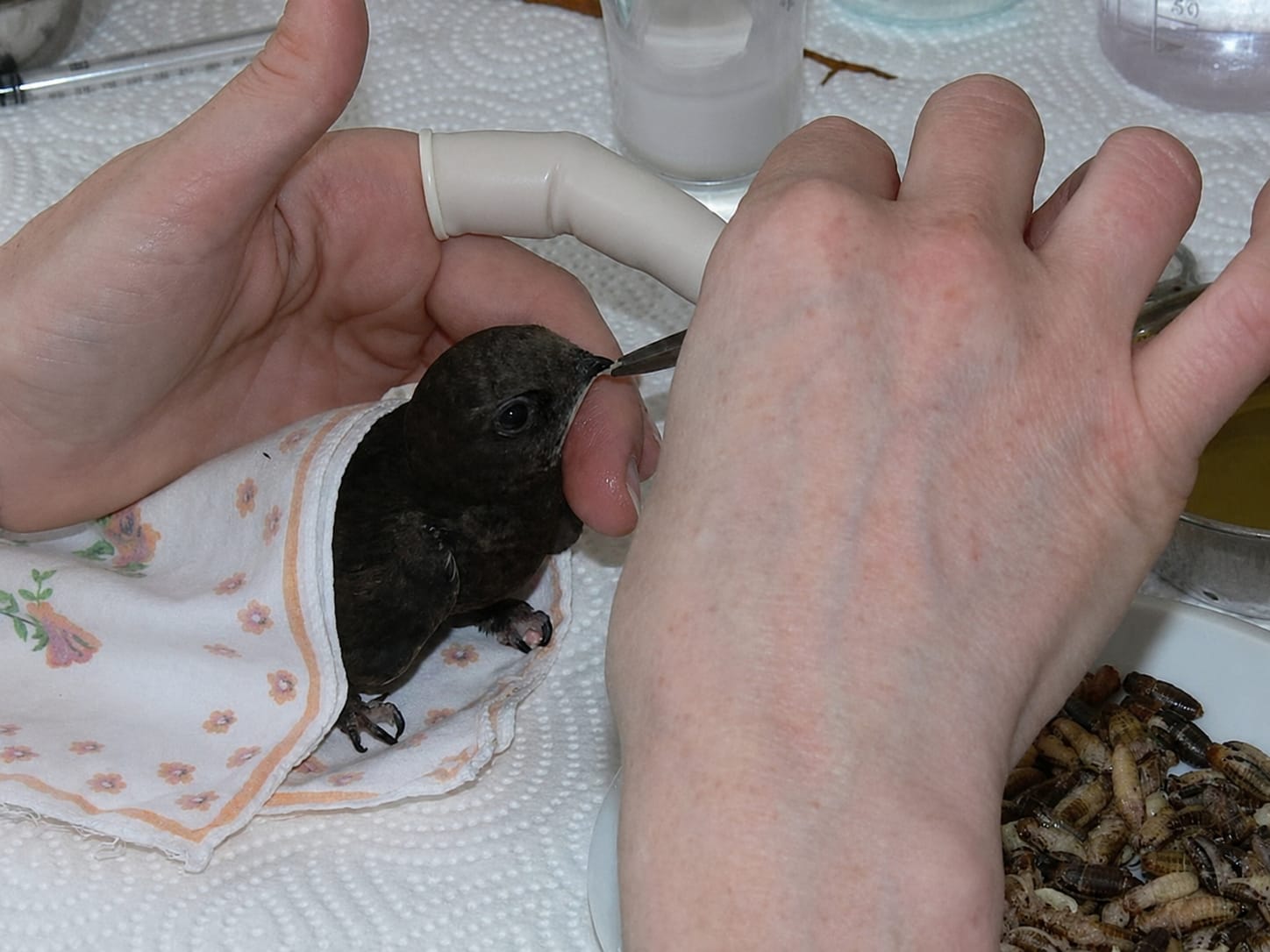
Dabei lässt sich ein vergleichbarer Reflex ganz leicht auslösen, indem man zart mit dem (gründlich gewaschenen und desinfizierten) Finger an den linken Schnabelrand des jungen Mauerseglers tippt (siehe auch: Fütterungsvideos). Sofern der Vogel nicht verängstigt, im Schock oder zu sehr geschwächt ist, wird er daraufhin blitzartig seinen Schnabel über Ihren Finger stülpen und heftig zu rütteln und zu saugen beginnen. Er erwartet nun auf der Stelle die Übergabe des Futterballens, den der Altvogel (für dessen Kopf er den Finger hält!) ihm in den Schlund würgen würde.
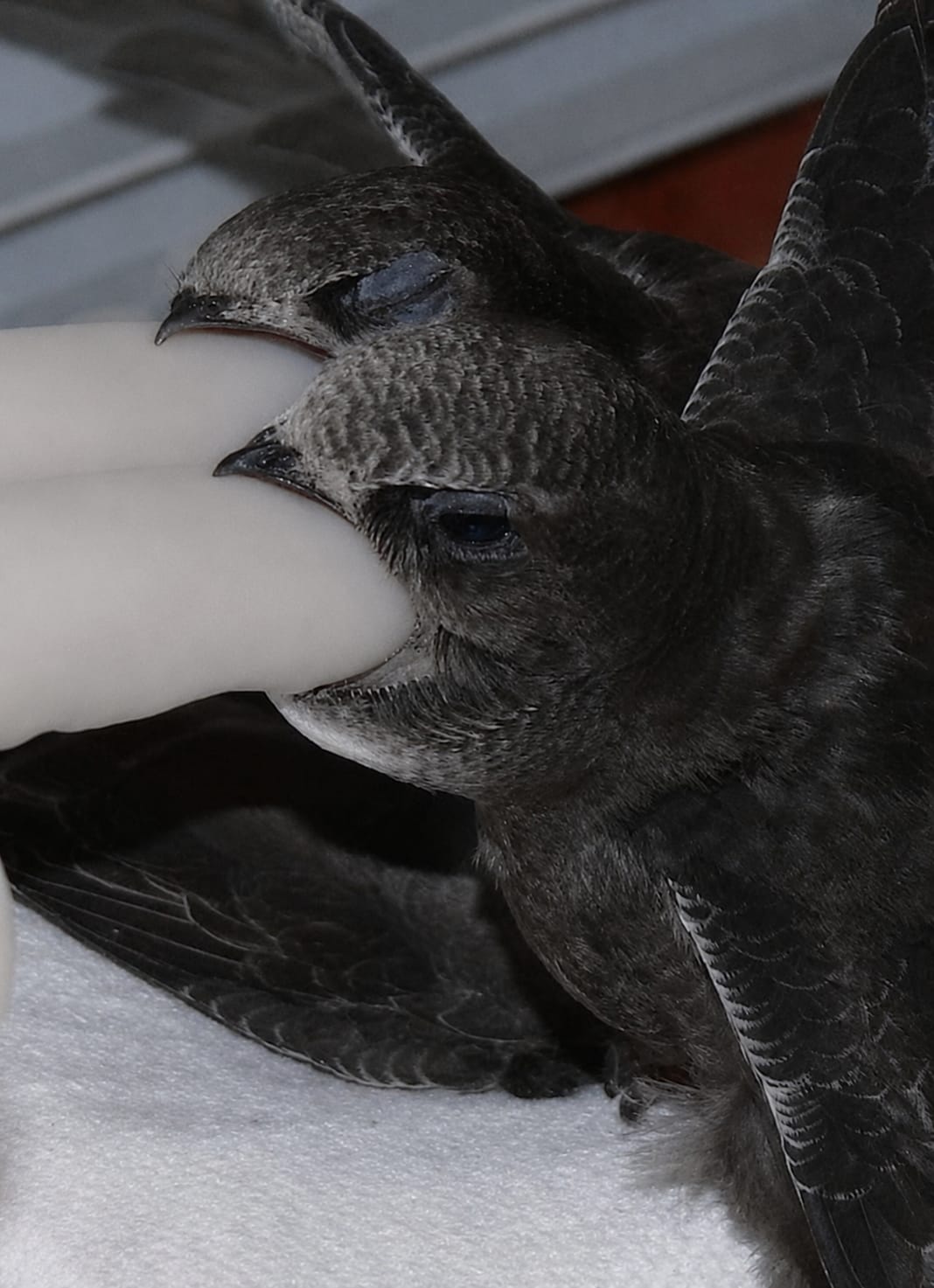
Jungsegler beim "Andocken" - Hilfe, wie jetzt füttern!?
Diesen Reflex kann man sich zunutze machen und nun mit einer Pinzette die Futterinsekten flink und in rascher Folge am Finger vorbei in den Rachen des Nestlings schieben. Hört sich einfach an, ist aber äußerst kompliziert! Denn der junge Mauersegler hat wenig Geduld mit uns. Bei ihm läuft eine vorprogrammierte Reflexkette ab: Altvogel kommt mit Futter - Schnabel über seinen Kopf - Futterballen übernehmen. Wird diese Reflexkette unterbrochen, z. B. weil der Finger des ungeübten Pflegers mehrfach aus dem Schnabel rutscht oder die Grillen nicht schnell genug hineingeschoben werden, dann ist der junge Mauersegler irritiert, ersucht es noch ein oder zweimal und streikt dann. Er wird den Schnabel dann nicht mehr freiwillig öffnen, egal wie hungrig er ist. Der ungeschickte Mensch hat sich so dumm angestellt, dass er ängstlich und misstrauisch geworden ist.
Und nun hat man es richtig schwer. Denn nun muss "zwangs"gefüttert werden, aber so, dass es nicht in eine Tortur ausartet, sondern sanft und gewaltfrei. Der Schnabel eines Mauerseglers ist eine äußerst filigrane, hochempfindliche Konstruktion. Will man ihn öffnen, braucht man viel Fingerspitzengefühl, sonst kann man ihn beschädigen, schlimme Druckstellen verursachen, ihn verbiegen oder gar brechen.Setzen Sie sich während der Fütterung bequem an einen Tisch, auf den Sie zuvor ein sauberes Handtuch gelegt haben, und plazieren Sie den Pflegling darauf. Fixieren Sie ihn vorsichtig mit der linken Hand. Dabei muß der Rumpf des Tieres mit einem kleinen Tuch (Stofftaschentuch) bedeckt werden, damit das Fett der menschlichen Haut nicht auf das Gefieder gelangt. Deckt man das Gefieder nicht ab, sieht der Vogel nach einiger Zeit unweigerlich "fettig" aus; vor allem wird die Isolierfähigkeit des Körpergefieders beeinträchtigt, auf die der Segler, der später in großen Höhen fliegt, zum Überleben dringend angewiesen ist.
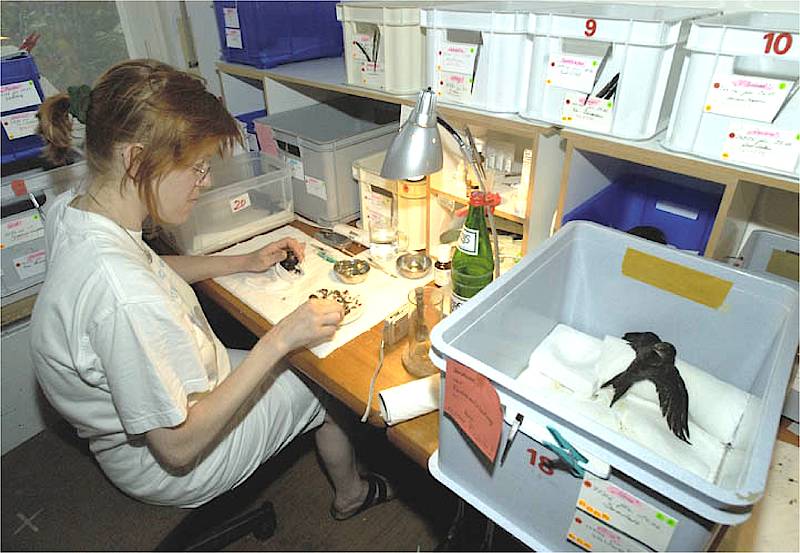
Ein Fütterungsplatz in der Mauerseglerklinik
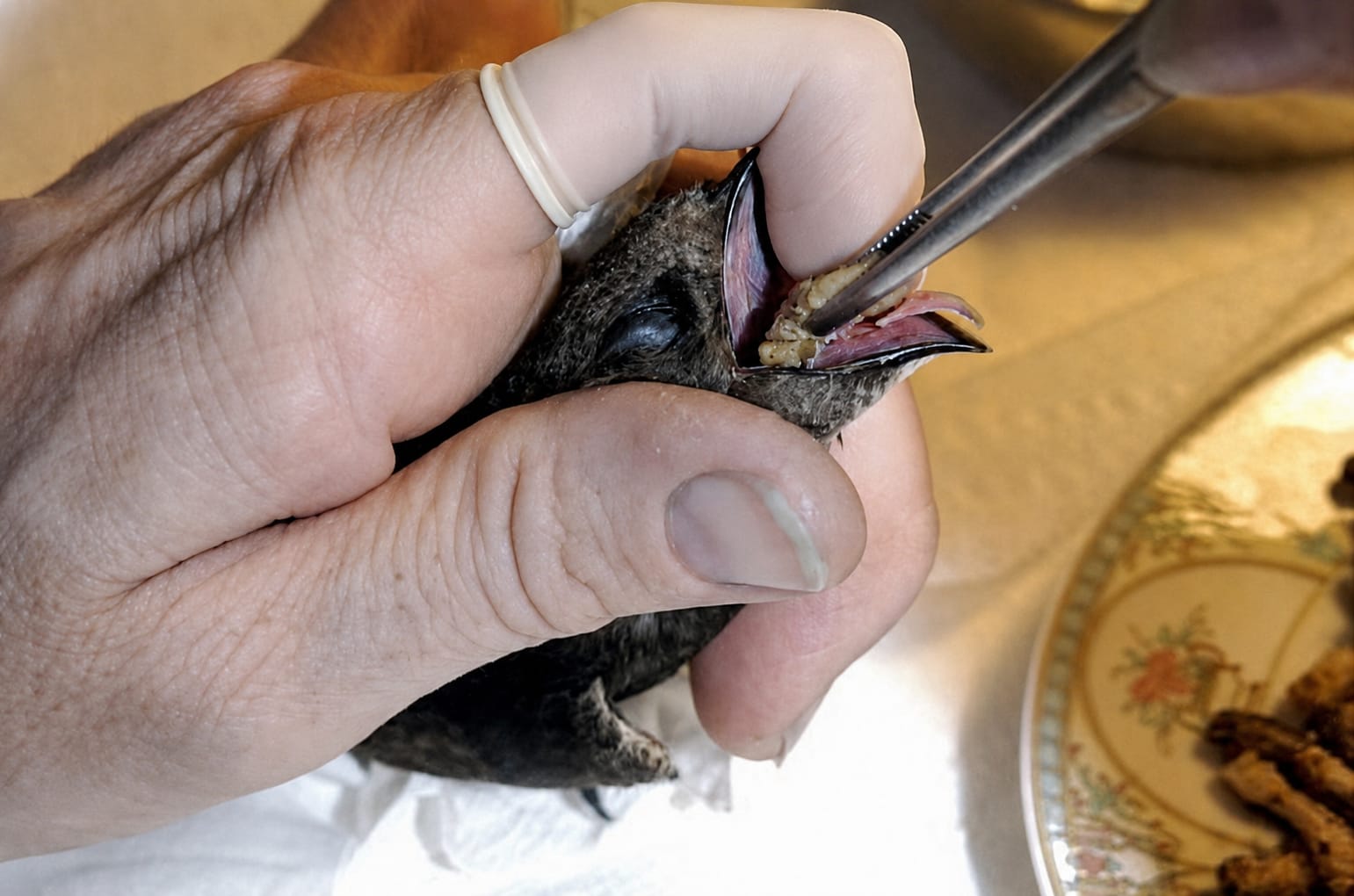
Mit der Pinzette werden die Grillen am Finger vorbei in die Kehle platziert.
Der Mauersegler sollte nie länger und mehr, als unbedingt notwendig ist, festgehalten werden. Auf Zwangsmaßnahmen wird er instinktiv mit Gegenwehr und Ausweichmanövern reagieren. Dazu gehört auch die irritierende Angewohnheit, sich beim Füttern unter der Hand und dem Taschentuch hinweg rückwärts nach hinten zu schieben, so dass der ungeübte Pfleger oft schon schweißgebadet ist, bevor er die erste Grille in den Rachen seines Schützlings bugsieren konnte.
Halten Sie den Vogel also zart, aber sicher, fixieren Sie den Kopf und öffnen Sie nun mit der rechten Hand äußerst behutsam den zerbrechlichen Schnabel, indem Sie ganz sanft und ohne Druck den Fingernagel zwischen Ober- und Unterschnabel schieben. Mit dem Zeigefinger der linken Hand, die den Segler fixiert, hält man den Schnabel vorsichtig ein kleines Stück geöffnet.
Nun muss das Futtertier sehr achtsam mit einer stumpfen, vorn abgerundeten Pinzette (Briefmarkenpinzette, anatomische Pinzette) weit hinten in den Schlund - über und hinter die Zunge - geschoben und der Schnabel geschlossen werden. Dann streicht man sanft von außen an der Kehle entlang nach unten, um den Schluckreflex auszulösen. Kehlchen kraulen fördert die Freundschaft und wird vom Mauersegler als vertrauensbildende Maßnahme eingestuft!
Manchmal rutscht die Grille besser, wenn man sie kurz in etwas Wasser taucht.
Seien Sie darauf gefaßt, dass Ihr Pflegling unter Umständen das Futter oft und gern wieder ausspuckt, bis Sie "den richtigen Bogen" raushaben! Hier sind Geduld und Einfühlungsvermögen, Fingerspitzengefühl und Verständnis notwendig: Natürlich ist diese Fütterungsmethode für den Segler ungewohnt und eine Zumutung, er wird sich nicht leicht daran gewöhnen! Mit Ungeduld und lautem Schimpfen würden Sie das Tier nur umso mehr verängstigen, und falls dann auch noch ein aus Unachtsamkeit gebrochener Schnabel und Schmerzen hinzukämen, würde die Fütterung zur Tortur, welcher sich der Segler mit allen Kräften verweigerte.
Je jünger der Mauerseglerpflegling ist, desto eher werden Sie es schaffen, ihn zum "Andocken" an Ihren Finger zu veranlassen, durch leichte Rüttelbewegungen den Kopf des fütternden Elternvogels zu imitieren und die Grillen am Finger vorbei in seinen Schlund zu schieben. Manchmal gelingt dies sogar bei sehr ausgehungerten erwachsenen Mauerseglern. Es gibt sogar Altsegler, die es nach einigen geduldigen Versuchen lernen, die Futterinsekten, die man ihnen vorhält, von der Pinzette oder vom Finger zu schnappen! Doch das ist nicht die Regel. Meistens muss man erwachsenen Mauerseglern wie auch älteren, fast flüggen Jungseglern den Schnabel auf die beschriebene Weise öffnen, um sie zu füttern.
Muss ich dem Mauersegler außer dem Futter auch Wasser geben?
Bieten Sie dem Mauersegler vor Beginn des Fütterung immer einige Tropfen frisches Wasser an, das Sie mit der Pinzette an seinen Schnabelrand streichen. Dann sehen Sie selbst, ob er durstig trinkt oder das Wasser unwillig wegschüttelt. Der Flüssigkeitsbedarf des Pfleglings ist im allgemeinen durch die Nahrung gedeckt. Grillen enthalten viel Feuchtigkeit, und wenn man sie zudem in lauwarmem Wasser aufgetaut hat, wird der Segler nicht unbedingt zusätzlich etwas zum Trinken brauchen.
Aber abhängig von der Tageszeit und vom Wetter kann das variieren. Nach der Nacht oder an besonders heißen Tagen können Mauersegler viel Durst haben. Die Schleimhäute seines Rachens sollten immer schön feucht und rosig sein. Trockene Schleimhäute sind Eintrittspforten für Keime, die gefährliche Rachenentzündungen verursachen können.
Mauersegler bekommt Wasser per Pinzette.
Selten, aber möglich: Erwachsener Mauersegler, selbst essend und trinkend.
Kotabsatz
Ein sicheres Indiz für eine gute Ernährung ist der Kot des Mauerseglers. Er sollte von mittelfester Konsistenz sein, dunkel mit weißem Häubchen und von einem elastischen Häutchen umgeben. Flüssiger, stinkender oder fadenförmiger schwarz-grünlicher Kot verrät Ernährungsfehler durch falsches oder verdorbenes Futter.
Entfernen Sie den Kot möglichst immer gleich aus der Seglerbehausung, oder decken Sie kleine Stückchen Küchenpapier über die Kleckse, erneuern Sie gegebenenfalls die Unterlagen, damit der Mauersegler sich nicht sein Gefieder beschmutzt. In der Naturbrut beseitigen die Altvögel die Kotballen ihrer Jungen, so dass es keine beschmierten Federn gibt. Hat sich Ihr Pflegling dennoch einmal "eingesaut", können Sie kotverschmutzte Gefiederstellen vorsichtig mit lauwarmem Wasser säubern.
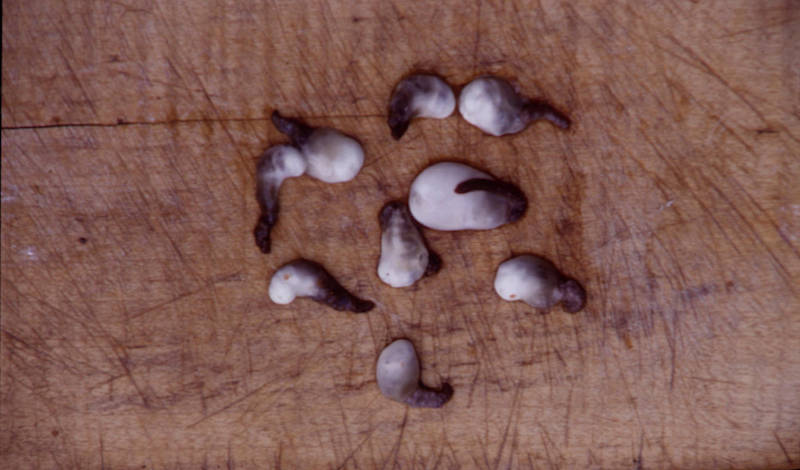
Kotbällchen eines gesunden Jungsegler, mit Insekten gefüttert. © I. Polaschek
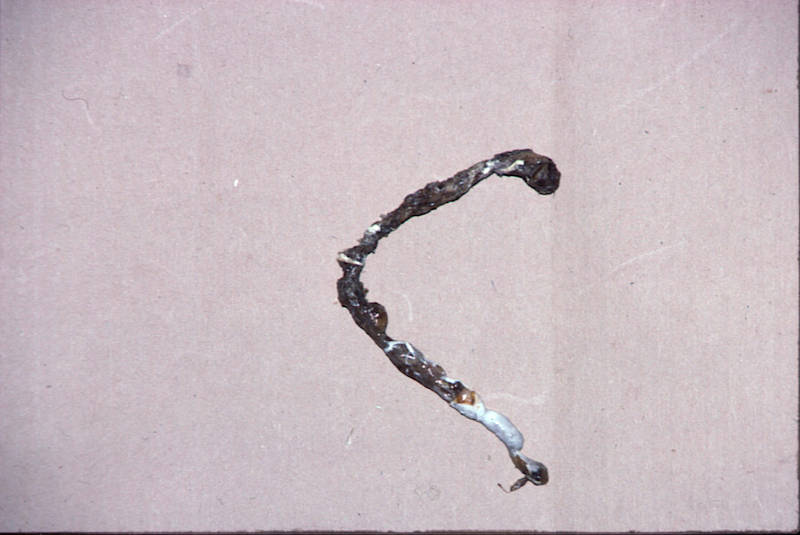
stinkender Kot eines kranken, mit Hackfleisch gefütterten Seglers. © I. Polaschek