Sie werden den Mauersegler als einen liebenswerten, zutraulichen und kaum ängstlichen Gast kennenlernen, der lebhaft Anteil an allem nimmt, was um ihn herum geschieht. Ein einziger seelenvoller Blick aus riesengroßen runden Augen, und schon hat dieses hinreißend schöne Geschöpf Ihr Herz erobert und alle Ihre Mutter-, Vater- und sonstigen Schutzinstinkte aktiviert. Dieser hilflose kleine Vogel ist so zahm, so zutraulich, - er liebt Sie jetzt schon ... - Fehlinterpretiert!! Denn Mauersegler, sofern sie nicht Böses durch Menschen erfahren haben oder unter Schock stehen (z.B. Unfall- oder Katzenopfer), reagieren von Natur aus zumeist angstlos. Von zahm oder zutraulich kann keine Rede sein. Da diese luftgebundene Vogelart den Menschen nie als Feind kennengelernt hat (erst durch moderne Waffen ist auch der Mauersegler zur Zielscheibe für die Vogelmörder im Mittelmeerraum geworden), fehlt ihr die Scheu, die wir von anderen Wildvögeln kennen, und könnte dazu verführen, den Pflegling wie ein Haustier zu behandeln.
Tun Sie das nicht ! Mauersegler sind keine Haustiere und sollten außer zum Füttern und Saubermachen in ihrem Behältnis hauptsächlich sich selbst überlassen werden. Sind sie zu zweit oder gar zu mehreren, reduziert sich die Rolle des Menschen ohnehin auf die notwendigen Pflegemaßnahmen. Wird ein Mauersegler allein betreut, darf es schon auch etwas mehr Kontakt sein, sofern dies dem Vogel willkommen ist. Keinesfalls jedoch darf man mit Mauerseglern herumspielen, sie durch die Gegend tragen, allen Freunden und Bekannten zeigen oder sie sonst in irgendeiner Weise stören und beunruhigen. Dauerndes Anfassen und Streicheln ist zu vermeiden, weil das Fett der menschlichen Hände ans Gefieder gelangt. Die einzige Gesellschaft, die Mauersegler wirklich brauchen, ist die von Artgenossen!
Verhalten junger Mauersegler
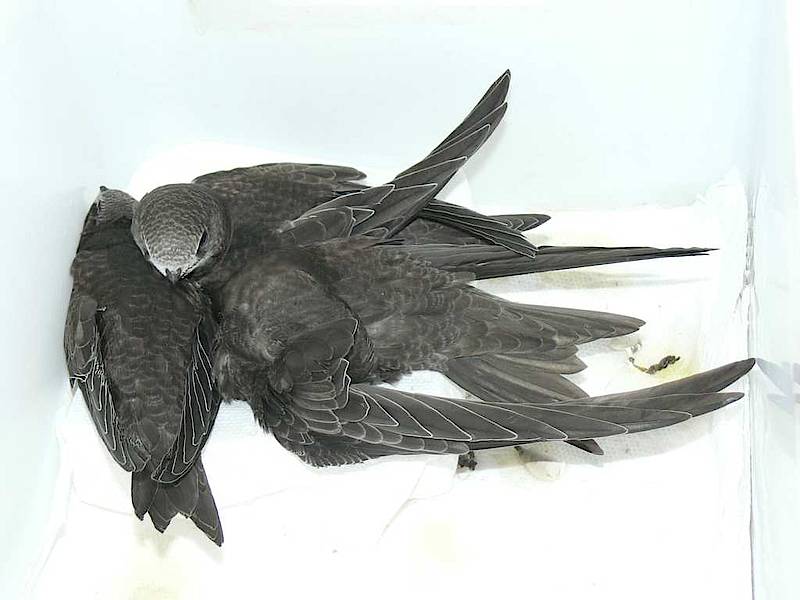
Bereits frisch geschlüpfte Mauersegler schlagen bei Berührung oder Geräuschen heftig mit den Flügeln. Sie greifen mit ihren Füßen kräftig zu und streben auf einer schrägen Ebene aufwärts. Schon im Alter von 3–4 Tagen können sie sich an den Fingern eines Menschen emporhangeln. Mit 10–12 Tagen klettern sie umher, mit 2–3 Wochen hopsen sie schon flatternd, alle paar Sekunden ausruhend und in "Tiefschlaf" verfallend, der allerdings nie lange dauert. Dösen und gemütlich Rumhängen mögen Nestlinge in fast jedem Alter, - als wüssten sie, dass es ein "Relaxen" später in der Luft nie wieder für sie geben wird!
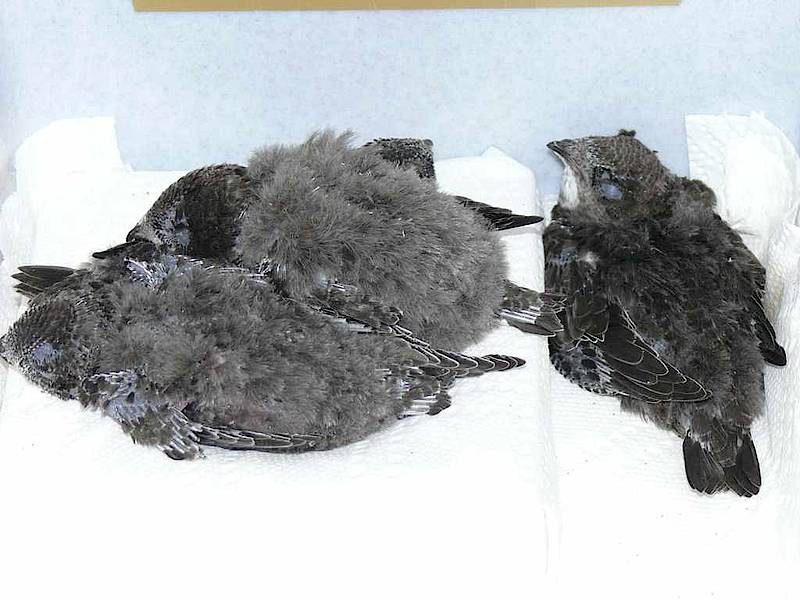
Dösende Nestlinge © E. Brendel
Etwa im Alter von 4 Wochen beginnen sie mit der „Fluggymnastik“: Sie pressen sich mit gefächertem Schwanz senkrecht an der Wand empor. Sie stemmen mit gestreckten Flügeln ihren Körper so hoch, daß selbst die Füße abheben, anfangs nur kurz, später oft 10 Sekunden und länger. Sie schlagen mit den Schwingen und flattern kräftig, geradezu fieberhaft und wie besessen. Diese Übungen sind notwendig, da der Jungvogel seine Flugmuskulatur stärken muß. In seinem Behältnis sollte immer genügend Platz für das Training sein.
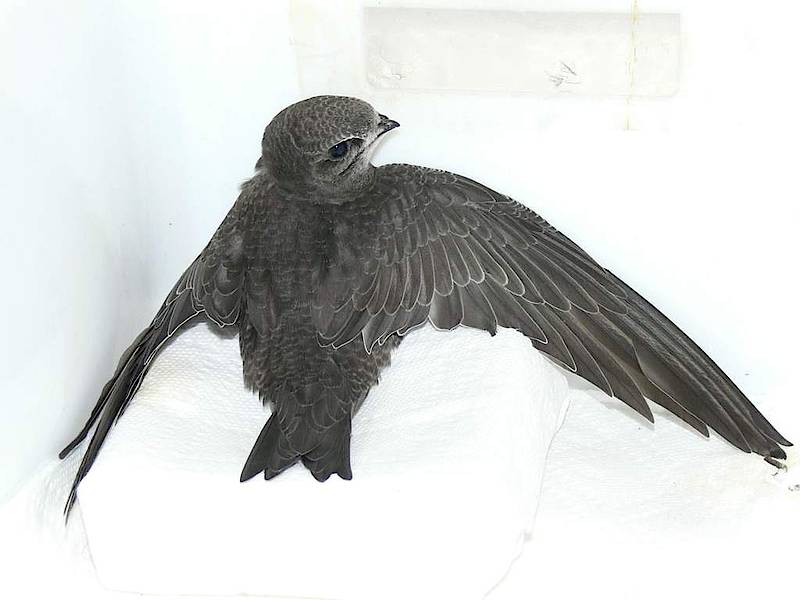
Jungsegler macht "Liegestütze" © E. Brendel
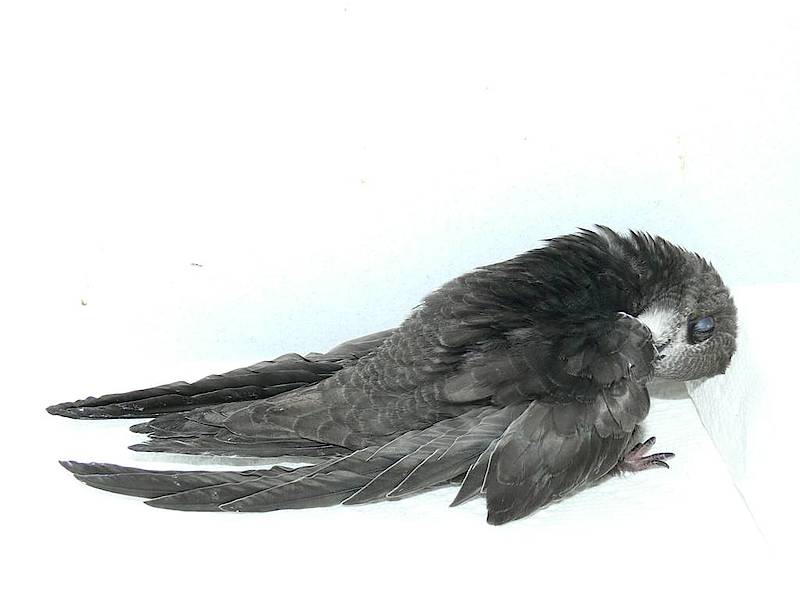
Ansonsten zeigt der junge Segler wenig Bewegungsdrang, krabbelt höchstens hin und wieder einige Schritte umher, wobei der später so wendige Hochleistungsflieger sehr unbeholfen wirkt. Die meiste Zeit verbringt er damit, intensiv und ausdauernd sein Gefieder zu pflegen.
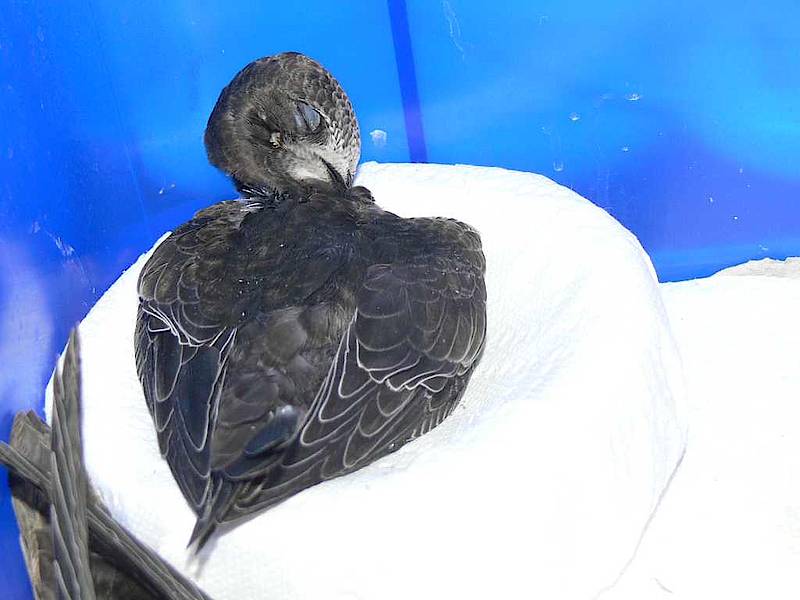
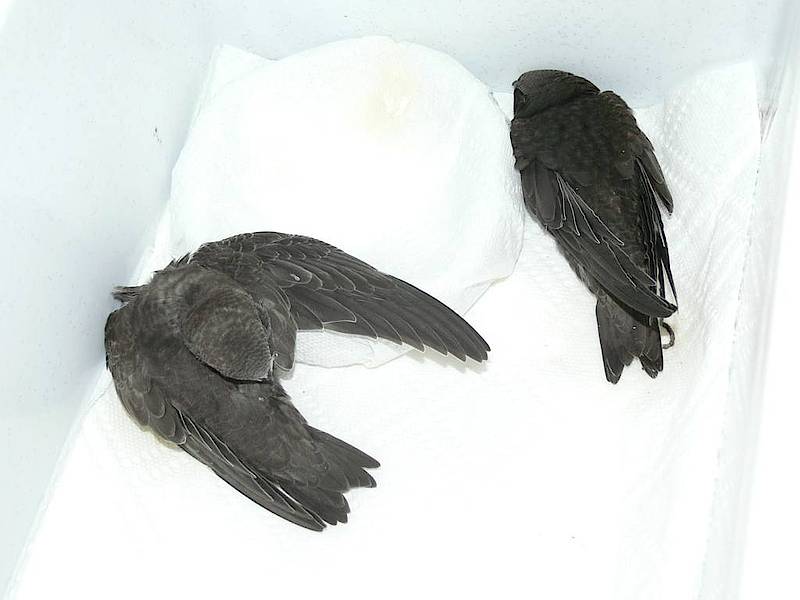
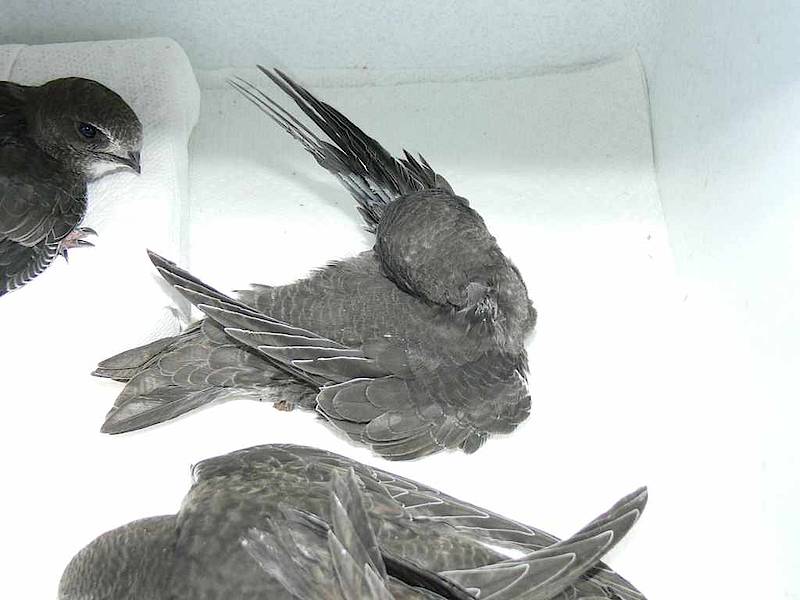
Komfort- und Sozialverhalten: Man putzt sich selbst... © E. Brendel
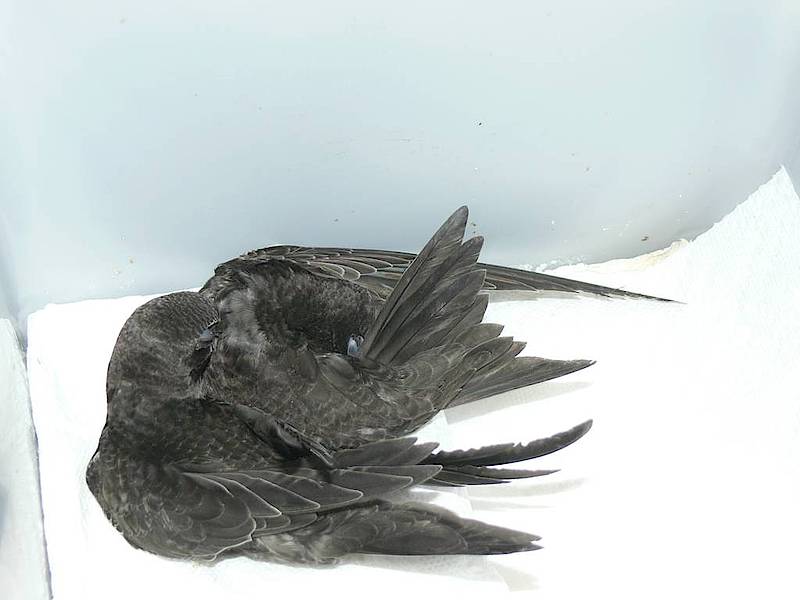
Untereinander verhalten sich junge Mauersegler verträglich. Falls Sie mehrere Segler aufzuziehen haben, sollten Sie diese zwar möglichst wie in der Natur zu zweit oder dritt unterbringen, doch erfahrungsgemäß kann man auch sechs oder acht in einem (genügend großen) Kasten zusammensetzen. Meist bilden sie kleine Grüppchen und kuscheln sich zusammen, fast ausgewachsene Vögel sondern sich gern ab, und ganz kleine werden oft von älteren in die Mitte genommen. Die Tiere putzen sich gegenseitig, ruhen und schlafen dicht aneinandergeschmiegt und scheinen sich in ihrer ganz eigenen Sprache zu unterhalten. Sie lassen als anhaltenden Kontaktlaut ein weiches Schwirren oder Singen ertönen, das wie »pijj-pijj« klingt, in ein rollendes oder zirpendes »zjirr« übergeht, wenn sie Hunger haben, und bei Unmut oder Angst bis zum gellenden »zjierrr-zjierrr« gesteigert werden kann. Besondere Aktivität lassen junge Mauersegler in den Morgenstunden und vor allem abends mit Einbruch der Dämmerung erkennen. Fast flügge Vögel, die zu spüren scheinen, wie nahe das Ende der beengten Nestlingszeit ist, trainieren dann mit geradezu verbissener Ausdauer.
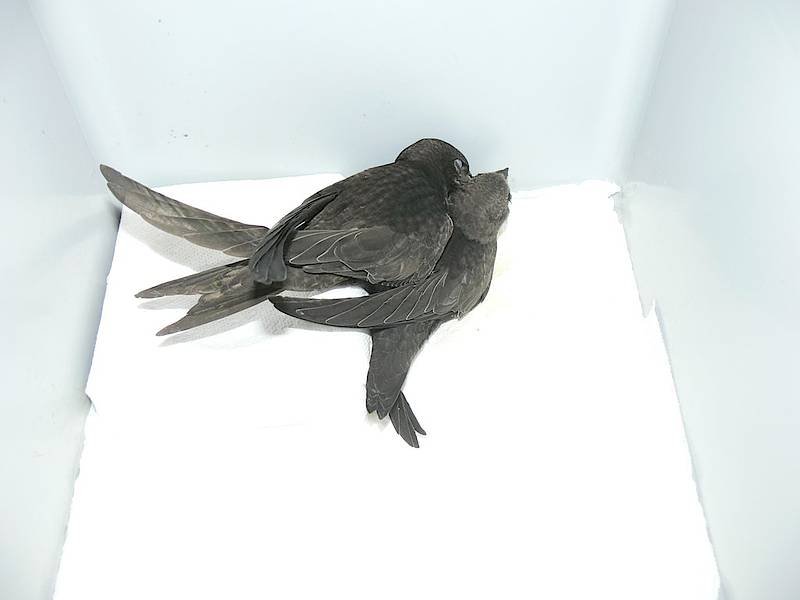
... und andere © E. Brendel
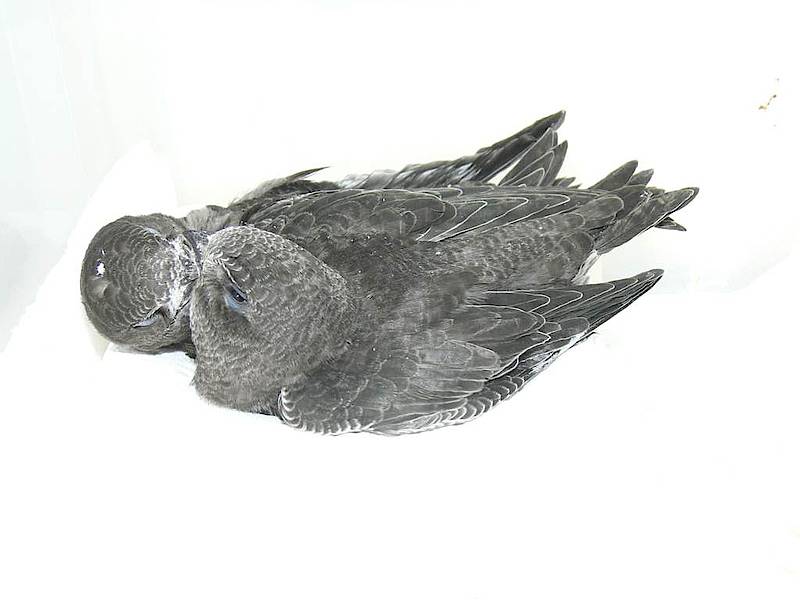
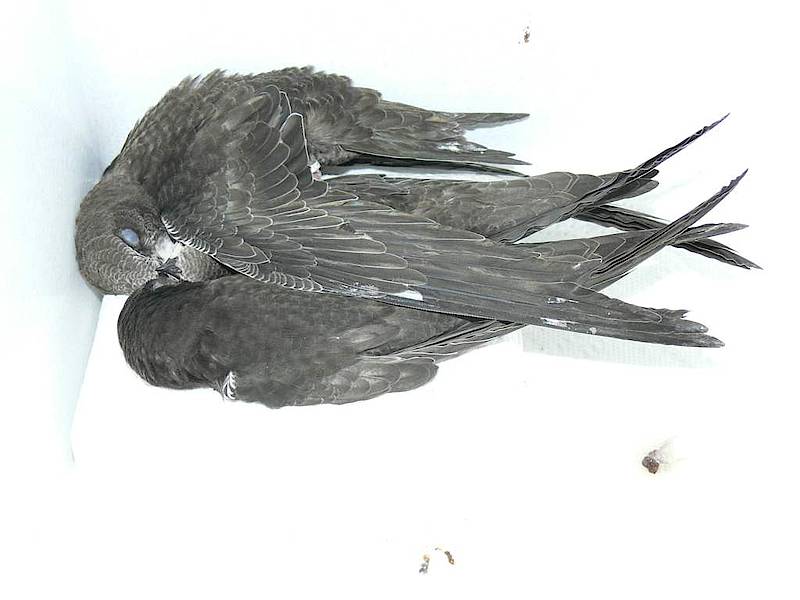
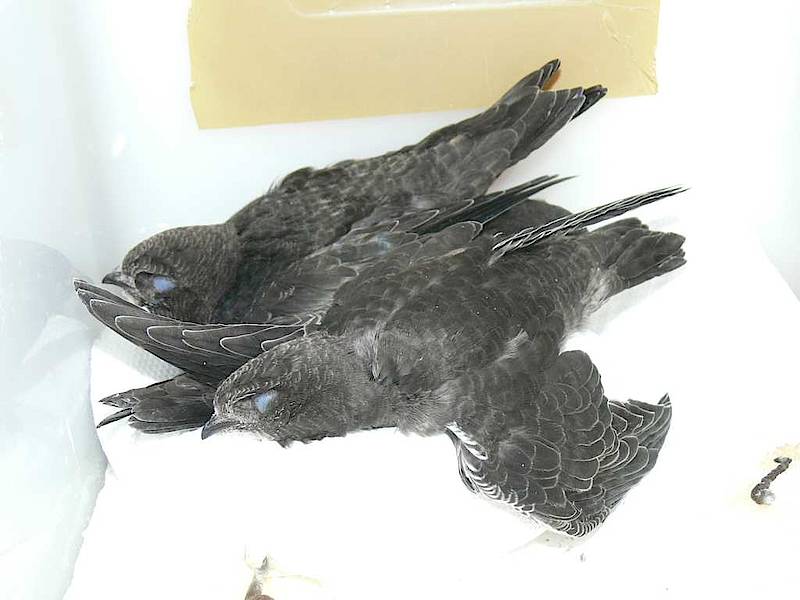
Kraulen
Mauersegler reagieren schreckhaft auf eine von oben nahende Hand und Berührungen ihres Kopfes und Rückens. Sie genießen es jedoch sehr, wenn man nach der Fütterung mit dem Fingernagel zart ihre Kehle krault. Futterzeit ist auch Zeit für Kontakt und leise sanfte Worte. Sie legen dann behaglich den Kopf zurück und schließen die Augen. Manche sind regelrechte "Schmuser", verdrehen den Kopf in alle nur erdenklichen Richtungen, damit man jede kleinste Stelle zum Kraulen erreicht. Fast vermeint man, sie müssten gleich zu schnurren anfangen wie eine Katze. Andere sind eher gleichgültig oder gar abweisend gegen den menschlichen Pfleger. Duckt sich der Mauersegler weg und weicht Ihrer Berührung aus, hat er keine Lust auf Streicheleinheiten. Lassen Sie ihm seine Ruhe. Mauersegler sind große Individualisten, keiner ist wie der andere!
Krallen
Wenn Sie unerfahren mit Mauerseglern sind, kann Ihnen Ihr Pflegling gewisse Schwierigkeiten mit seinen Krallen bereiten. Die kurzen, außerordentlich kräftigen Seglerfüße sind zum Klettern und Festklammern an steilen Wänden und Gestein konzipiert. 4 Zehen sind wie die Finger einer gespreizten Hand halb seitlich und nach vorn angeordnet. Ein Sitzen auf Zweigen ist so gut wie unmöglich. Besonders beim Füttern, falls er rückwärts fortzukrabbeln versucht, kann sich Ihr Pflegling in Kleidern, Handtuch, Polstermöbeln verhaken, und es ist nicht einfach, seinen äußerst kraftvollen Zangengriff, der sogar schmerzhaft sein kann, zu lösen. Wenden Sie niemals Gewalt an, sondern lösen Sie gefühlvoll Kralle für Kralle!
"Trockenübungen"
Im Gegensatz zu jungen Singvogelpfleglingen, die zum Ende der Aufzucht ein Volií¨renstadium zur Auswilderung brauchen, verbringt der junge Mauersegler seine gesamte Nestlingszeit in der Nisthöhle oder, jetzt bei Ihnen, in seinem Behältnis. Solange er noch nicht flügge ist, wird er die meiste Zeit träge dösend und sich putzend in seinem Nest liegen und auf die nächste Fütterung warten. Gelegentlich macht er "Trockenübungen": stemmt sich hoch und flattert intensiv mit den Flügeln. Herausspringen und durchs Zimmer fliegen wird er als Nestling nicht. Erst nach Flüggewerden, wenn er ausfliegen will, kann er von einem Moment zum anderen fieberhaft unruhig werden und Ausbruchversuche unternehmen: Dann ist für den gesunden Mauersegler mit unversehrtem, fertig ausgebildetem Gefieder die Zeit zum Freilassen gekommen. Die Nahrungsaufnahme muss er nicht lernen, er weiß instinktiv wie man Insekten fängt. Er weiß auch wie man fliegt! Flugübungen müssen und dürfen Sie mit ihm keinesfalls anstellen! Er würde sich ängstigen und vielleicht sogar verletzen. Für das notwendige Muskeltraining sorgt der junge Segler mit seinen "Trockenübungen" selbst, und von dem Moment an, da er ausfliegt, ist er völlig selbständig, fängt sein Futter und fliegt perfekt. Eine Bindung an die Eltern gibt es nie wieder.
Achtung - Gefieder!
Ganz besonders achtsam - darauf kann nicht oft genug hingewiesen werden! - müssen Sie sein Gefieder behandeln, denn von ihm hängt sein Leben ab. Gebrochene oder abgeknickte Schwungfedern können für einen Mauersegler das Todesurteil bedeuten! Wie bereits dargestellt, kommt es vor, dass aufgrund falscher Fütterung oder anderer, noch unbekannter Ursachen ein Jungsegler eine oder mehrere Schwungfedern abwirft. Meist wachsen diese Federn nach, doch muss man sich darüber im klaren sein, dass es ca. fünf bis sechs Wochen dauert, bis eine Schwungfeder ihre volle Länge erreicht hat, und dass man mit dieser langen Wartezeit sowohl dem Segler als auch sich selbst viel zumutet. Unbedingt muss man den Vogel mehrmals täglich trainieren, sobald die normale Nestlingszeit von 6 bis 7 Wochen überschritten wird. Nicht jeder Segler steht diese Strapaze durch, mancher gibt mittendrin auf, verweigert die Nahrungsaufnahme, wird apathisch oder krank.
Entwickelt Ihr Mauersegler ein Befiederungsproblem, nehmen Sie unbedingt Kontakt zur Mauerseglerlinik der DGfM in Frankfurt / Main auf. Es gibt bestimmt einen Weg, den Vogel dorthin zu überweisen, wo er in Gesellschaft von Artgenossen und unter tierärztlicher Betreuung seinen Gefiederschaden auskurieren kann.
Dasselbe gilt für jede Art von Gefiederschäden, die nicht in absehbarer Zeit behoben werden können. Der junge Mauersegler mausert das Großgefieder der Schwingen erst im zweiten Winter seines Lebens. Das Gefieder, mit dem Sie ihn in die Freiheit entlassen, muss ihn mindestens die nächsten zwei Jahre tragen, fast unablässig in der Luft! Bedenken Sie dies und wagen Sie im Interesse des Vogels keine Experimente: Ein Jungsegler mit nicht vollständigen Schwungfedern oder anderen, vielleicht ernährungsbedingten massiven Schäden insbesondere des Großgefieders kann den Ansprüchen des Dauerfluges niemals gewachsen sein und ist, wenn die Defekte nicht behoben werden können, ein Todeskandidat.