Kontrolle der Gewichtsentwicklung
Wer einen jungen Mauersegler aufzieht, muss täglich das Gewicht des heranwachsenden Pfleglings kontrollieren. Dazu eignet sich eine Diät-, Brief- oder Präzisionswaage.
Ein Mauersegler wiegt beim Schlüpfen 2-3 Gramm und erreicht während der 40-45 Tage dauernden Nestlingszeit ein Gewicht von 45-55 Gramm, es sind sogar kurzfristige Spitzenwerte von über 60 Gramm bekannt. Gegen Ende der Nestlingszeit fällt das Gewicht um einige Gramm ab. Die jungen Segler verweigern immer öfter vehement die Nahrung, "specken ab" und wandeln Fett in Muskelmasse um. Durch ausgiebige "Liegestütze" ermitteln sie instinktiv ihr Idealgewicht aus dem Verhältnis ihrer Flügelspannweite zum Körpergewicht (WRIGHT et al., 2006). Man sollte also keinesfalls nervös werden oder zu "Zwangsmaßnahmen" greifen, wenn der fast flügge Jungsegler plötzlich nicht mehr richtig essen will! Das "Abspecken" hat seinen Sinn: Ein Schwergewicht von 48-50 Gramm hätte beim Start erhebliche Schwierigkeiten, in die Luft zu kommen.
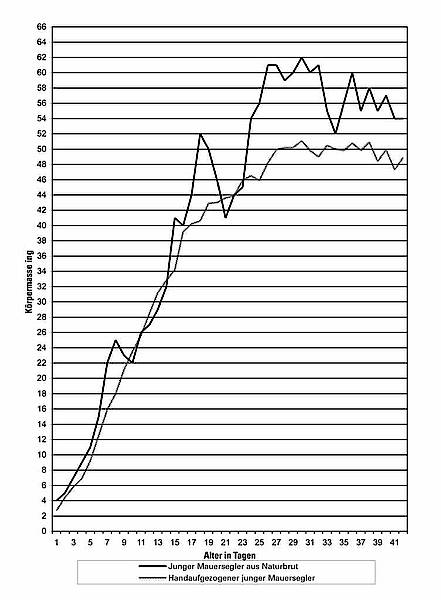
Neueren Studien zufolge legen junge Mauersegler dieses Verhalten auch ihren Eltern gegenüber an den Tag. Nicht die Altvögel reduzieren die Fütterung ihrer gegen Ende der Nestlingszeit wohlgenährten Sprösslinge, wie man bisher glaubte, sondern diese lehnen die elterlichen Fütterungsversuche ab, was wiederum die Altvögel veranlasst, seltener Futter zum Nest zu bringen. Ihre Nisthöhle verlassen die flüggen Jungsegler erst, wenn sie das richtige Verhältnis zwischen Flügelspannweite und Körpergewicht erreicht haben. Diese Verhaltensweisen greifen natürlich nur bei guten Wetterverhältnissen und ausreichendem Nahrungsangebot!
Freilich, weniger als 40 Gramm sollte ein handaufgezogener Mauersegler am Tag seiner Freilassung möglichst nicht wiegen, damit er über ausreichende Reserven verfügt. Wichtig ist, dass Sie auf eine kontinuierliche Gewichtsentwicklung des Seglers achten und regelmäßig seinen Ernährungszustand durch Abtasten des Brustbeins überprüfen.
Beachte: Es gibt extrem kleine und extrem große Mauersegler. Daher sind alle Gewichtsvorgaben nur relativ. Ein sehr zierlicher kleiner Segler kann mit 35 Gramm gut genährt sein und eine wohlgerundete Brust aufweisen, während ein sehr großer Vogel mit demselben Gewicht schon am Rande des Hungertodes wäre und Infusionen benötigte.
Wann ist der junge Mauersegler flügge ?
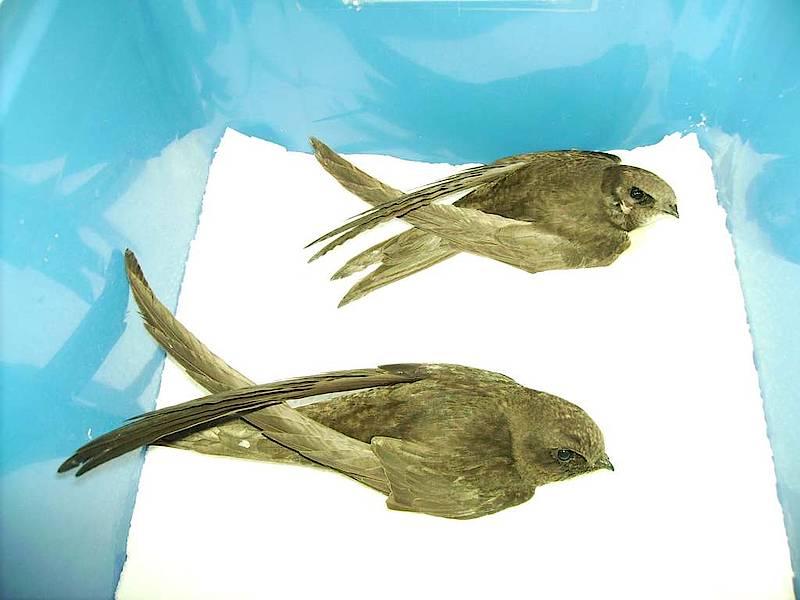
Außer dem Gewicht weisen bestimmte Anzeichen mit ziemlicher Sicherheit darauf hin, dass ein Jungsegler bereit zum Ausfliegen ist:
- Er verhält sich sehr unruhig und trainiert besonders angestrengt seine Flugmuskulatur. Besonders in den Abendstunden ist er fieberhaft aktiv.
- Er würgt das Futter immer öfter aus und verweigert die Nahrungsaufnahme schließlich ganz.
- Durch intensive „Liegestütze“ ermittelt er selbst aus dem Verhältnis zwischen seinem Körpergewicht und der Länge seiner Schwingen sein ideales Fluggewicht.
- Er putzt sich fieberhaft und zieht immer wieder die langen Schwungfedern durch den Schnabel.
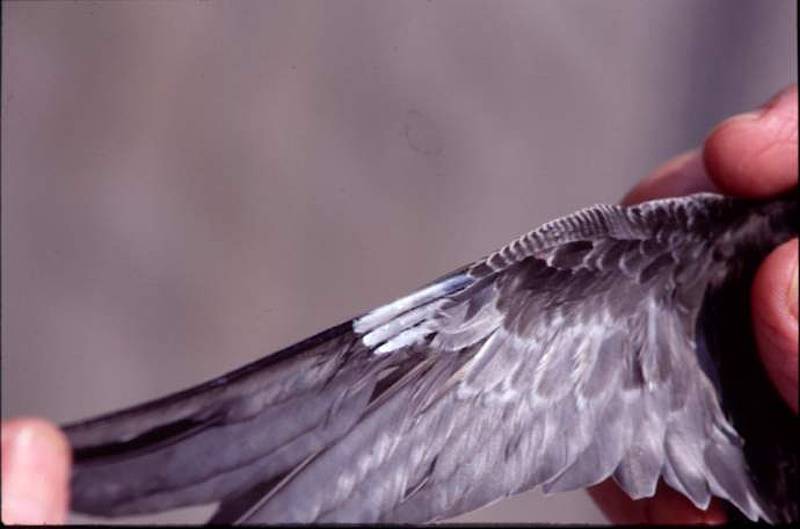
- Das verläßlichste Merkmal ist das Gefieder: Sehen Sie sich dazu die Unterseite der Schwingen an und pusten Sie die Deckfedern zur Seite: Deutlich erkennen Sie die grauweißen, an kleine Röhrchen erinnernden Federspulen, aus denen die Schwungfedern herauswachsen. Erst wenn keine dieser Spulen mehr zu sehen ist, sind die Federn voll ausgebildet.
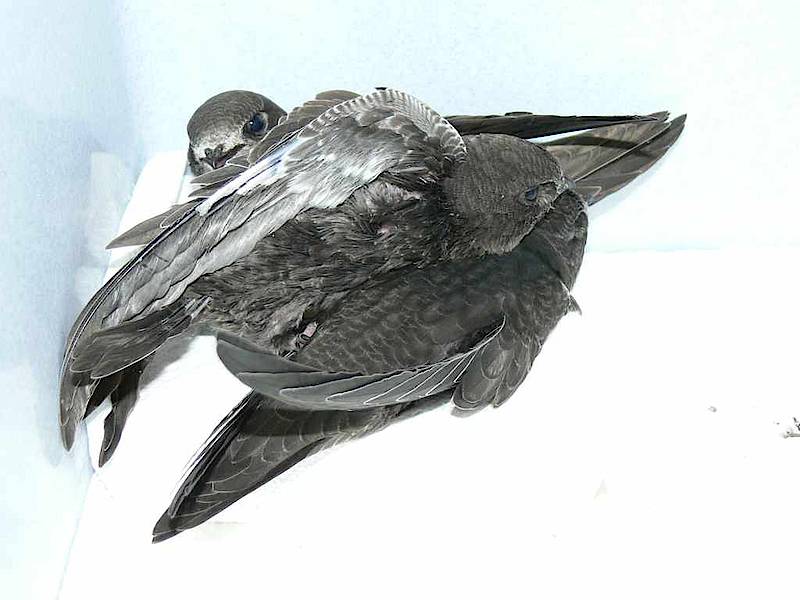
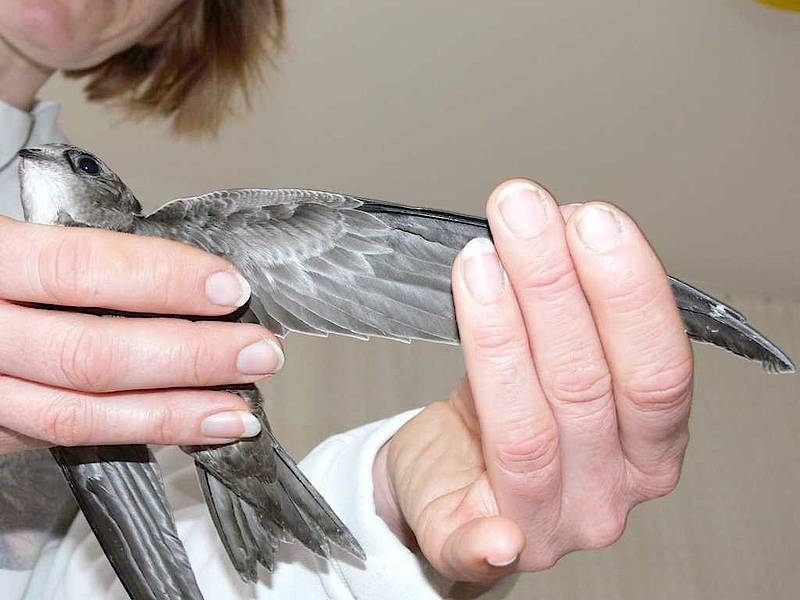
Läßt Ihr Mauersegler also diese Verhaltensweisen erkennen, und ist sein Gefieder ausgewachsen, ist er bereit, die Kinderstube zu verlassen. In der freien Natur würde er nun stundenlang, tagelang am Flugloch sitzen, nach draußen sehen, schließlich immer öfter den Kopf hinausstrecken und mit einemmal den Sprung ins Nichts wagen. Bei wildlebenden Seglern geschieht dies meist unmittelbar nach Sonnenuntergang.
Hier sollten wir aber ausnahmsweise von der Natur abweichen und den Start des Pfleglings bei Tageslicht ansetzen. Denn gerade der noch unerfahrene Mauerseglerfreund kann sich schon einmal im richtigen Zeitpunkt täuschen, oder der Vogel ist aus irgendeinem Grund noch nicht bereit auszufliegen oder nicht in der Lage dazu, weil vielleicht eine Behinderung, Verletzung oder ein anderes Handicap bislang nicht zu erkennen war. Wenn es dann zu einer Bruchlandung kommt, wird man bei Tageslicht einen abgestürzten Segler eher wiederfinden als in der Dämmerung.
Aus demselben Grund sollte eine Freilassung nicht über hoher Vegetation, z. B. in der Nähe eines Getreidefeldes oder dergleichen stattfinden, und es ist immer ratsam, zwei oder drei Hilfspersonen an übersichtlichen Plätzen in der Nähe zu postieren, um den Jungfernflug des Pflegekindes möglichst gut im Auge behalten zu können.
Wie geht das Freilassen vor sich?
Leider kursiert noch immer die falsche Information, man solle einen Mauersegler hoch in die Luft werfen, damit er fliege. Niemals! Wie oft hat das Hochwerfen von Seglern, die noch nicht flügge, die verletzt, geschwächt oder im Schock waren, schlimmste Folgen gehabt! Zwar ist mancher Jungsegler am Start so unruhig, dass er beim Abspringen von der Hand zunächst vor lauter Aufregung „auf die Nase“ fällt; dann darf sein Menschenfreund beim zweiten Versuch ein wenig Schwung geben. Solche Versuche sind jedoch sofort einzustellen, wenn der Vogel auch beim zweiten und vielleicht dritten Versuch abstürzt, denn dann liegt der dringende Verdacht auf eine zuvor nicht erkannte Behinderung nahe (vielleicht der Bruch eines Knochens oder ein Sehnenabriss), die röntgenologisch abgeklärt werden muss.
Normalerweise fliegen Alt- wie Jungsegler ab, indem sie sich von einem erhöhten Standort fallen lassen und dann sofort hoch in den Luftraum aufsteigen. Entgegen landläufiger Meinung kann allerdings jeder ausgewachsene, gesunde und kräftige Mauersegler auch vom Erdboden auffliegen, sofern er eine ebene, unbewachsene „Startbahn“ von 2-3 m Länge vor sich hat.
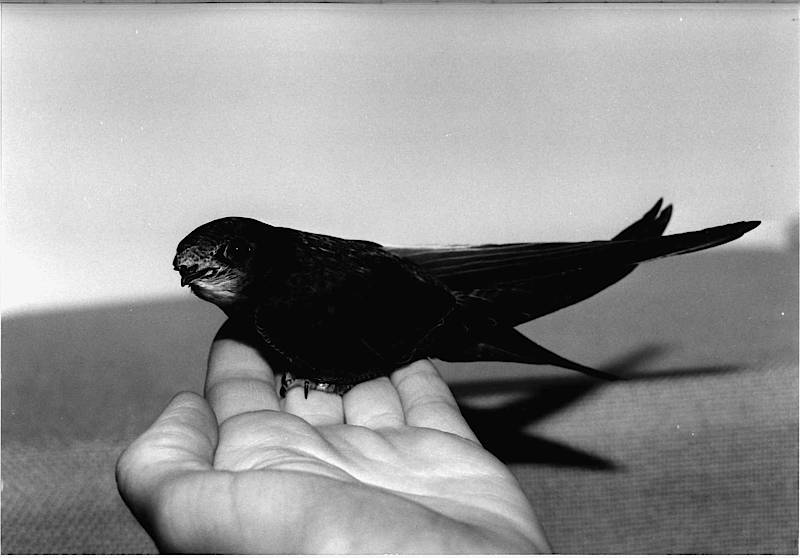
Was muß ich beim Start meines Pfleglings beachten?
Wählen Sie eine übersichtliche Fläche, z.B. eine verkehrsberuhigte, gut einsehbare Seitenstraße oder ein kleines Sportgelände. Zu großen Freiflächen wie Feldern oder Wiesen ist nicht unbedingt zu raten, da der Start des Mauerseglers hier sehr ungeschützt und isoliert erfolgt und er zum leichten Opfer für einen Beutegreifer (z. B. Falke oder Sperber) werden könnte. In einer Straßenschlucht hingegen hat ein startender Mauersegler zunächst Deckung durch die Häuserreihen, ebenso wie beim Abflug aus seiner natürlichen Nisthöhle.
Achten Sie besonders auf Falken! Zwar sind die vogeljagenden Baumfalken und Wanderfalken selten, doch die häufig vorkommenden Turmfalken, die sich vor allem im städtischen Siedlungsraum stark vermehren und zunehmend Vögel jagen , können dem anfangs noch unsicheren Jungfernflug eines jungen Mauerseglers ein blutiges Ende bereiten.
Sitzt oder kreist in der Nähe des Startplatzes ein Falke, müssen Sie den Start Ihres Pfleglings verschieben oder einen anderen Ort suchen. Kommt der Angriff des Greifvogels hingegen „aus heiterem Himmel“, ohne daß Sie ihn vorher gesehen haben, läßt sich der Jäger manchmal durch lautes Schreien und Händeklatschen irritieren und vertreiben. Erst wenn der Segler die ersten paar hundert Meter Flug hinter sich hat, an Sicherheit und Höhe gewinnt, hat ein angreifender Turmfalke kaum noch Chancen, den wendigen Hochleistungsflieger zu schlagen.
Stellen Sie sich auf dem Startplatz, den Sie ausgewählt haben, gegen den Wind auf, damit Ihr Pflegling beim Absprung gleich genügend Auftrieb hat. Setzen Sie den Segler in die flache Hand, heben Sie ihn hoch über Ihren Kopf – und haben Sie Geduld! Bedenken Sie, welches einschneidende Ereignis in seinem Leben ihm jetzt bevorsteht! Drängen oder schubsen Sie ihn deshalb nicht, wenn er eine Weile zögert. Sollte er gar ängstlich rückwärts krabbeln oder sich wie frierend aufplustern, brechen Sie den Start ab und versuchen Sie es ein oder zwei Tage später noch einmal – denn dann ist er einfach noch nicht bereit, „Hotel Mama“ zu verlassen.
Meistens aber wird ein junger Segler Sie nicht lange warten lassen. Neugierig, aufgeregt wird er umherblicken, in ihm streitet die Furcht vor dem großen Sprung mit dem unbändigen Drang zu fliegen. Am besten ist es, wenn über ihm am Himmel andere Mauersegler kreisen und schreien: Das verlockt ihn nur umso mehr. Und mit einemmal wird er heftig zu zittern beginnen, sich durchkrümmen, noch einmal Kot absetzen – und jäh von Ihrer Hand springen ...
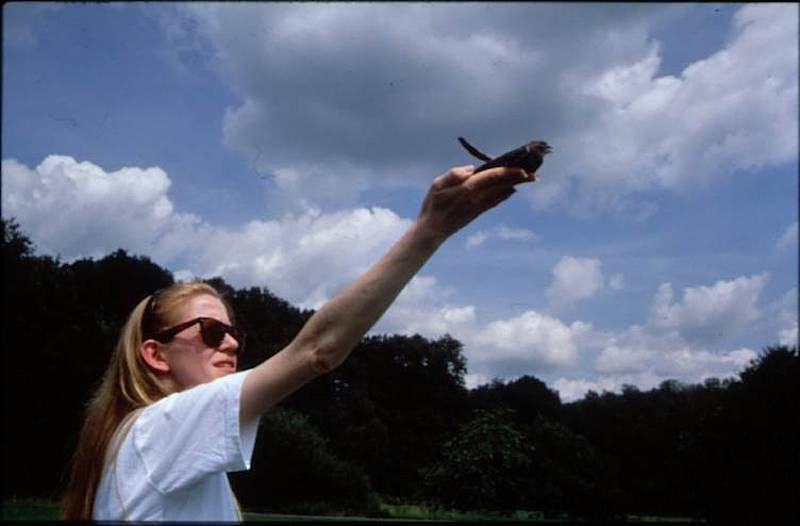
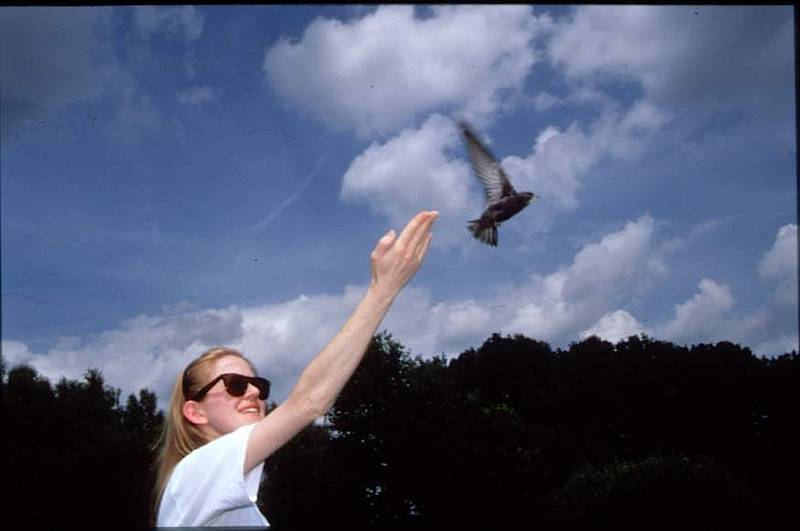
Es ist ein atemberaubender Moment und bereitet Herzklopfen, mitzuerleben, wie der junge Vogel erst ein wenig unsicher durchsackt, dann aber mit kräftigen Flügelschlägen aufsteigt, in verblüffender Geschwindigkeit Höhe gewinnt und sofort mit wirbelnden Flugspielen und dem Insektenfang beginnt, als habe er sein Lebtag nichts anderes getan. Und man muss auch immer wieder staunen, wie schnell ein Trupp von anderen Mauerseglern zur Stelle ist und den Neuen umgibt, um ihn in die rasenden Flüge miteinzubeziehen. Manchmal scheinen sie ihn regelrecht zu bedrängen, als müsse er erstmal beweisen, dass er ein „echter“ Mauersegler ist!
Komplikationen beim Start
Freilich, oft sorgt ein Pflegling auch dafür, dass sein erster Flug für Sie zum nervenzerfetzenden Krimi wird, indem er z.B. unerwartet von der frei vor ihm liegenden Startschneise abschwenkt, geradewegs zwischen Häuser, Bäume oder frontal auf irgendwelche Hindernisse zuschießt. Meistens schafft es dieser wendigste Flugkünstler unter den Vögeln zwar, noch rechtzeitig abzudrehen und in die Höhe zu steigen, doch nicht immer werden Sie völlige Gewissheit darüber haben. Wer je Segler großgezogen und freigelassen hat, der kennt auch die bangen Stunden und Tage des Suchens in undurchdringlichem Gestrüpp, reichbepflanzten Gärten und endlosen Feldern! Und es ist kaum zu glauben, wie rasch man den Vogel vor einem dunklen Hintergrund, z.B. Bäumen, aus den Augen verlieren kann.
Und natürlich – es kann auch schief gehen. Startende Mauersegler sind schon aus nicht nachvollziehbaren Gründen an Hauswände geprallt, mit Hochspannungsleitungen kollidiert, in Autos oder Glasscheiben geflogen, von Falken geschlagen worden oder – am allerschlimmsten! - irgendwo niedergegangen und nie wiedergefunden worden. Das ist wohl das furchtbarste Ende, das die Betreuung eines Mauerseglers finden kann.
Wird der handaufgezogene Segler in der Freiheit zurechtkommen?
Ja, das wird er! Auch die jungen Mauersegler, die von ihren eigenen Eltern aufgezogen wurden und erstmals den Nistplatz verlassen, sind sofort auf sich selbst gestellt und haben keinen Kontakt mehr zu Vater und Mutter. Sie können fliegen, jagen, kennen den Weg ins Winterquartier und wissen instinktiv, worauf sie achten und wie sie sich verhalten müssen. Eine Führungsphase wie bei den Singvögeln gibt es bei ihnen nicht, und so müssen auch Handaufzuchten nicht ausgewildert werden wie etwa eine von Menschen aufgezogene Meise oder Amsel.
Steigt also Ihr Mauersegler in die Lüfte empor, seiner natürlichen Bestimmung entgegen, können Sie ihn getrost sich selbst überlassen und brauchen sich keine Gedanken über sein Wohlergehen zu machen. Alles, was er zum Überleben benötigt, ist ihm angeboren, jetzt braucht er keine Hilfe mehr und wird zwei oder drei Jahre fast ununterbrochen in der Luft bleiben. Nächstes Jahr wird er, wenn ihm nichts zustößt, in die Gegend zurückkehren, aus der er erstmals abgeflogen ist, um hier vielleicht schon nach einem Nistplatz Ausschau zu halten.
Späte Freilassung? Verfrachtung? Überwinterung?
Oft kommt es vor – gerade bei aus Spätbruten stammenden Pfleglingen –, dass die übrigen Mauersegler bereits aus der Gegend abgezogen sind. Wird Ihr Pflegling erst im September oder noch später flügge, können Sie ihn dennoch ohne Bedenken fliegen lassen, müssen allerdings einen warmen, sonnigen Tag wählen. Es ist unbedingt ratsam, die Wetterberichte für Deutschland, Frankreich, Spanien und die Alpenregion abzuhören, damit man nicht den Segler nichtsahnend in eine weiter südlich gelegene Schlechtwetterfront entlässt.
Es gilt als erwiesen, dass die Mauersegler der westeuropäischen Populationen über Süddeutschland, Frankreich, Spanien und Gibraltar nach Afrika ziehen, doch gibt es auch eine südöstliche Zugroute, die über die Alpen führt. Seine Route ins Winterquartier ist dem jungen Segler angeboren, und da man gelegentlich sogar im Oktober und November noch vereinzelte durchziehende Mauersegler aus nordischen Breiten beobachtet hat, kann es gut sein, daß er unterwegs Anschluss findet. Es ist davon abzuraten, Jungsegler später als maximal in der ersten oder zweiten Oktoberwoche fliegen zu lassen oder auch, wenn bereits im September generell und andauernd schlechte, d.h. kalte, regnerische, stürmische Witterung herrscht. Dann muss man nach einem Weg suchen, den Spätling in Richtung Süden und in besseres Wetter zu transportieren, per Auto, Bahn oder Flugzeug!
Einen gesunden, flugfähigen Mauersegler jedoch aus falsch verstandener Fürsorge überwintern zu wollen, nur weil man meint, es gäbe keine andere Möglichkeit, wäre wahrscheinlich sein sicherer Tod. Seine Flugmuskulatur würde sich zurückbilden, er würde körperlich und seelisch krank werden und verkümmern, allein in Gefangenschaft, ohne seine Artgenossen. Auch ist die Anatomie eines Tieres, das für die Dauerbelastung des Non-Stop-Fluges geschaffen wurde, nicht auf längerandauerndes Liegen oder Hängen in einem Kasten eingerichtet. Gefiederschäden, Liegeschwielen, Atmungsprobleme und vieles mehr wären die Folgen, nicht zuletzt auch eine rasch zunehmende Anfälligkeit für Infektionen mit Bakterien und Pilzen, da die Immunabwehr eines Seglers in Gefangenschaft rapide sinkt.
Haben Sie einen späten Pflegling, kontaktieren Sie unbedingt die DGfM. In der Mauerseglerklinik ist man auf Langzeit-Patienten eingerichtet, hat viel Erfahrungen im Umgang mit ihnen, und die tiermedizinische Versorgung ist gewährleistet. Außerdem finden im Herbst und Winter regelmäßig Verfrachtungen nach Süden statt, die einem Mauersegler, der den Anschluss verpasst hat, den Start in Sonne und Freiheit doch noch ermöglichen können.
Wenn es keine Rettung mehr gibt...
Der Mauersegler ist ein Geschöpf des Himmels, und wer diese Vögel je beobachtet hat, die freien, wilden Flüge der Altvögel und die offenkundige Sehnsucht der Jungsegler nach der Weite des Luftraums, der weiß, dass es kein anderes Leben für sie geben kann. Einen Mauersegler in Gefangenschaft halten zu wollen wäre - ganz abgesehen davon, dass es laut Naturschutzgesetz strengstens verboten ist und bestraft wird - unverantwortliche Tierquälerei. Es sei aber deswegen erwähnt, weil es immer wieder vorkommt, dass ein Mauersegler aus einem der zuvor genannten Gründe nicht flugfähig ist. In solchen Fällen wird gerade von Tierfreunden, die mit viel Mühe und Einsatz einen solchen Vogel aufgezogen, gepflegt und liebgewonnen haben, oft die Frage gestellt, ob das ansonsten gesunde Tier nicht wenigstens in Gefangenschaft leben könne.
Die Antwort muss lauten: NEIN !
Rufen Sie sich die Lebensweise eines Mauerseglers in Erinnerung. Es wäre unsagbar grausam, diesem Dauerflieger die unermessliche Freiheit und die Flüge mit den Artgenossen zu verwehren. Ein solches Dasein, eingesperrt und zwangsgefüttert, ist für einen Mauersegler schlimmer als der Tod, und wenn Sie das Verhalten Ihres Pfleglings beobachtet haben, werden Sie wissen, warum.
Distanzieren Sie sich von einer falsch verstandenen, sentimentalen "Tierliebe", die sich in Wahrheit nur nicht von ihrem Objekt trennen will und reiner Egoismus ist! Denn der Vogel spürt nichts von dem Mitleid, das Sie für ihn empfinden, und weiß nur, dass er leiden muss. Und so sollte ein Mauersegler, ob Alt- oder Jungvogel, der sein artgerechtes Leben in Freiheit nicht mehr führen kann, vom Tierarzt in Narkose gelegt und dann schmerzlos eingeschläfert werden. In einem solchen Fall ist dies die größte Gnade und das einzige, was Sie für Ihren gefiederten Freund noch tun können, denn - Leben ist nicht immer das Beste. Nicht, wenn es für diesen ganz besonderen Vogel kein Leben mehr ist. Freilich, es ist nicht leicht, - besonders, wenn man sich lange und aufopfernd um ein Tier gekümmert und es ins Herz geschlossen hat. Doch gerade deshalb:
Denken Sie bei dieser Entscheidung nicht an sich, sondern an "Ihren" Segler, und muten Sie ihm nicht die Quälerei des einsamen und unwürdigen Dahinvegetierens in Gefangenschaft zu!