Haltung in Curverboxen
Am besten bringt man Mauersegler in einem Plastikcurver oder einem Karton mit hohen, glatten Wänden unter. Schon ganz kleine Nestlinge sind in der Lage, ausgezeichnet zu klettern, und könnten aus jedem noch so hohen Korb, jeder Holzkiste entfliehen. Schon mancher Finder, der gerade am Telefon Ratschläge einholte oder mit der Beschaffung des richtigen Futters beschäftigt war, fiel aus allen Wolken, wenn sein Mauerseglerkind – kurz zuvor liebevoll in ein warmes Nestchen gebettet – ihm plötzlich im Flur oder sonstwo entgegenkrabbelte. Und schlimmstenfalls kann so etwas auch mit einem versehentlich totgetretenen Mauersegler ausgehen, oder mit dem spurlosen Verschwinden des Findlings, den man dann Wochen später vertrocknet hinter irgendeinem Regal findet. Das ist leider kein Scherz, sondern alles schon vorgekommen.
Nie darf ein Mauersegler in einen Vogelkäfig, ein Flexarium oder hinter Draht gesetzt werden! Zwar scheint das nahezuliegen: Es ist nur zu verständlich, an einen Vogelkäfig zu denken, wenn man plötzlich einen Vogelfindling beherbergen muss. Leider hat das beim Mauersegler fatale Folgen. Meistens wird er sich an den Gitterstäben seine Schwungfedern und den Schwanz derartig zerstoßen, dass er später nicht mehr fliegen kann. Es ist auch schon passiert, dass ein Segler beim Herumklettern mit einem Flügel zwischen die Gitterstäbe geriet und ihn sich so schlimm verdrehte, dass er eingeschläfert werden musste. Ein Mauersegler gehört also nicht "hinter Gitter" oder in irgendein anderes Behältnis mit rauhen Wänden, das beschaffen ist, die Federn zu beschädigen oder Verletzungen hervorzurufen!
Die ideale Mauerseglerbehausung von erwachsenen oder fast flüggen jungen Seglern sollte eine Grundfläche von mindestens 30x40 cm haben, damit der Vogel seine Schwingen ausstrecken und Fluggymnastik betreiben kann, und zur Hälfte mit einem Tuch abgedeckt werden, um die gewohnte, dämmerige Höhlenatmosphäre zu imitieren. Babies und sehr junge Nestlinge können auch in kleineren Curvern untergebracht werden, sollten später dann aber "umziehen", wenn sie heranwachsen.
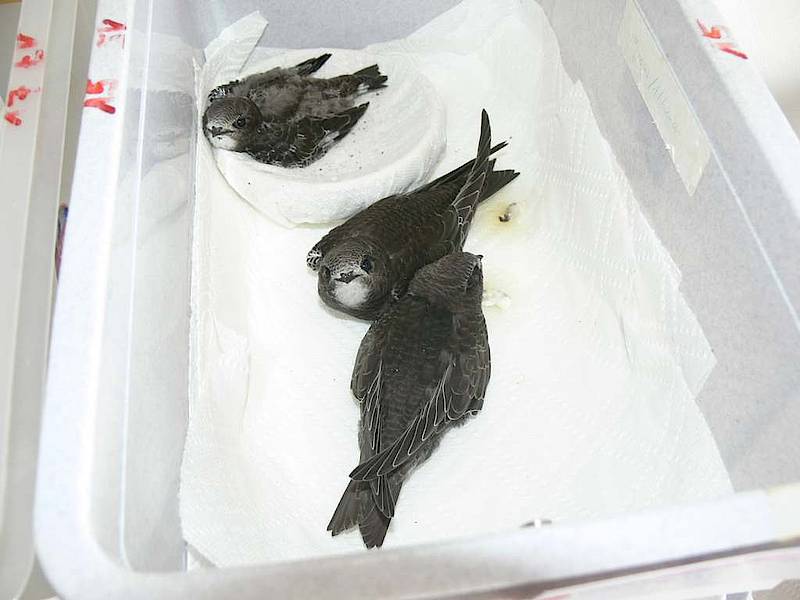
Unterbringung gruppenweise...
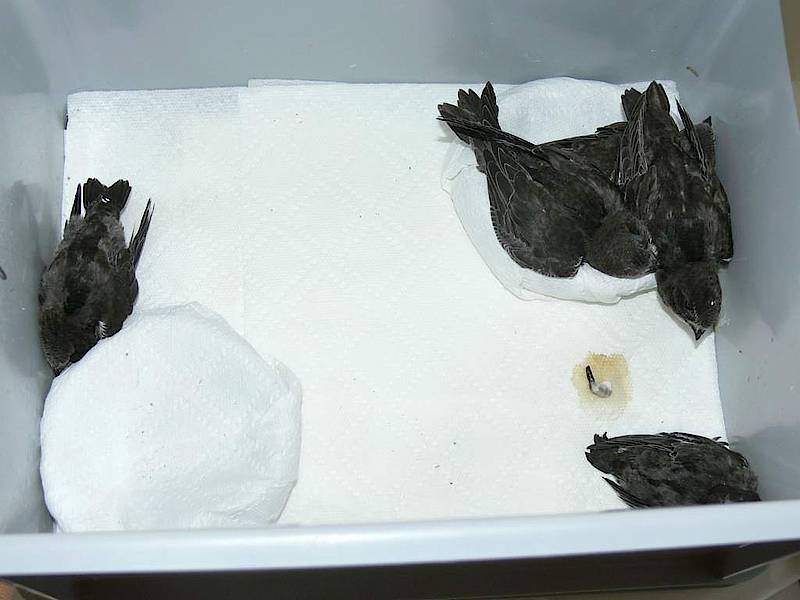
in Curver-Box © E. Brendel
Ausstattung, Zubehör und Reinigung
Kleiden Sie den Kasten mit einer weichen Matratze aus mehreren Lagen Küchenpapier aus. Sie können auch ein Handtuch auf den Boden der Box legen und es mit Küchenpapier bedecken. Zeitungspapier, Stroh, Nagerstreu o.ä. sind absolut ungeeignet als Einlage für die Mauerseglerbox!Entfernen Sie Kotballen möglichst gleich und wechseln Sie beschmutzte obere Küchenpapierlagen bei jeder Fütterung. Es kann zu Gefiederschäden kommen, wenn das Behältnis des Seglerpfleglings nicht peinlich saubergehalten wird, oder wenn es zu klein und eng ist. Verbogene, abgeknickte und abgestoßene Schwung- und Schwanzfedern, kotverschmiertes und verkrustetes Gefieder, kahle Flecken und Druckstellen müssen und dürfen nicht auftreten! 1-2mal pro Woche sollten Sie die gesamte Box mit warmem Wasser gründlich auswaschen, dem Sie ein mildes Spülmittel zufügen können (niemals scharfe Putzmittel verwenden!), und die Einlagen komplett erneuern. Eine zusätzliche Desinfektion der Box ist nicht nötig.
In eine Ecke des Kastens plazieren Sie ein Nest (flache kleine Schale oder Aschenbecher, mit Küchenpapier umhüllt). Für ältere Jungvögel und erwachsene Mauersegler empfiehlt sich eine Rolle, die aus einem Handtuch gewickelt und mit Küchenpapier umspannt wird. Mauersegler setzen sich gern etwas erhöht oder krallen sich halb hängend an der Rolle fest.
Besonderer Luxus ist die Einrichtung einer "Kletterwand", die man leicht mittels einer kurzen Gardinenstange und zweier Klebehaken an der Wand der Box installieren kann. Ein kleines Handtuch (Schlaufe zum Aufhängen abschneiden, ein Mauersegler könnte sich darin strangulieren!) wird mit 2 Wäscheklammern an der Gardinenstange festgeklemmt. Man wird staunen, wie gern ein Mauersegler sich senkrecht am Handtuch festkrallt und dort sogar übernachtet! Die senkrechte Haltung wird offenbar als sehr angenehm und entlastend empfunden. Man muss nur aufpassen, dass ein genügender Abstand zwischen der Gardinenstange und der Oberkante der Box bleibt bzw. ein Deckel oder Brett darüber gelegt wird, denn sonst wird die "Kletterwand" zum erstklassigen Fluchtweg!
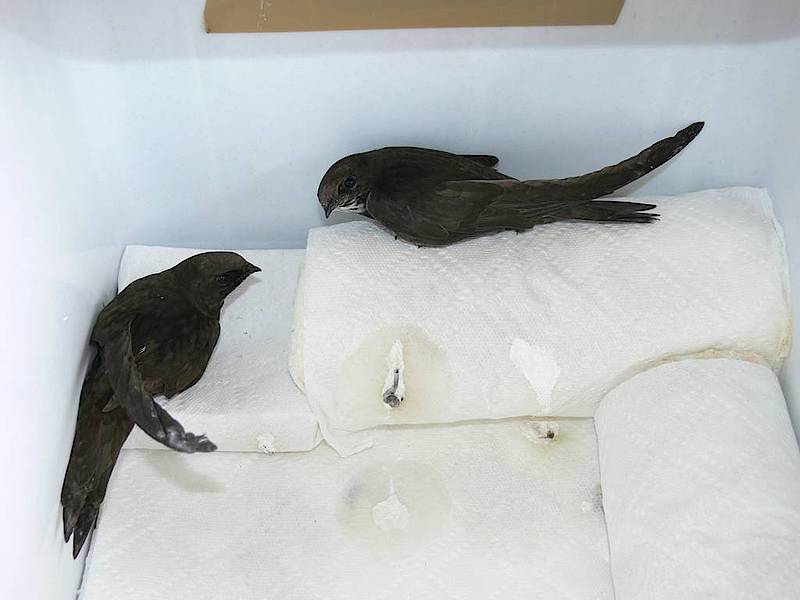
Einrichtung der Curver-Boxen: Nester und Kletterrollen sind beliebt © E. Brendel
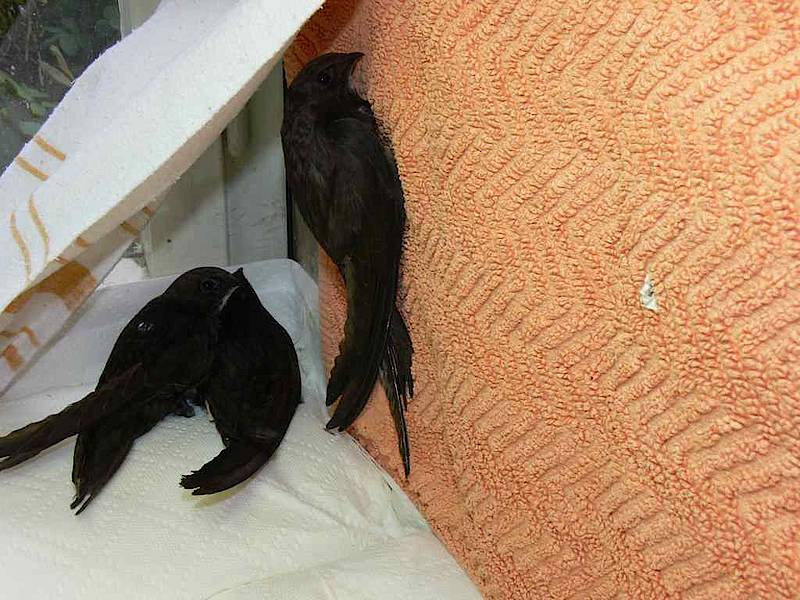
Höhlen und Kletterwände werden von Mauersegler-Patienten gern genutzt © E. Brendel
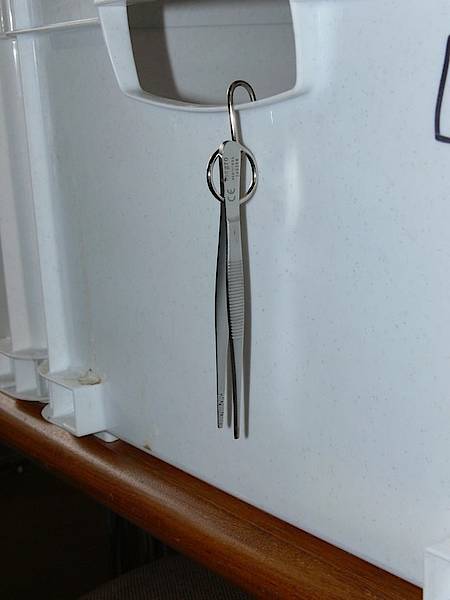
Pinzettenhaken: Hygienische Aufhängung der Futterpinzette zwischen den Fütterungen © E. Brendel
Noch nackte oder wenig befiederte Nestlinge sowie Intensivpatienten brauchen unbedingt eine Wärmequelle. Beste Dienste leistet ein Heizkissen, das über mindestens 12 Stunden Betriebsdauer und eine mehrstufige Temperaturregelung verfügen sollte. Für einen Mauersegler ist aufgrund seiner liegenden Körperhaltung sanfte Wärme von unten am besten geeignet. Man kann jedoch auch einen Infrarot-Dunkelstrahler verwenden, der kein Licht, sondern nur Wärme abgibt und daher auch über Nacht eingeschaltet bleiben kann (zur Not auch ein Infrarotlicht, wie man es für medizinische Zwecke benutzt). Die Temperatur im Nest sollte 32°-35° C betragen und muss regelmäßig kontrolliert werden. Eine Ausweichmöglichkeit für das Tier muss bestehen. In keinem Fall darf ein Ultraviolettstrahler verwendet werden, da er schwere Verbrennungen hervorruft. Eine Wärmequelle gleich welcher Art darf man niemals unbeaufsichtigt lassen – Brandgefahr!
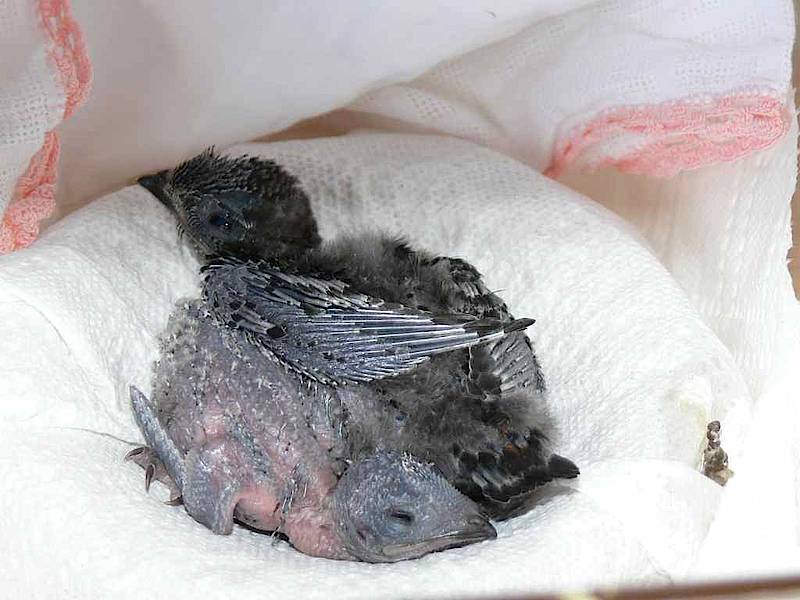
Die kleinsten natürlich auf Wärmedecke © E. Brendel
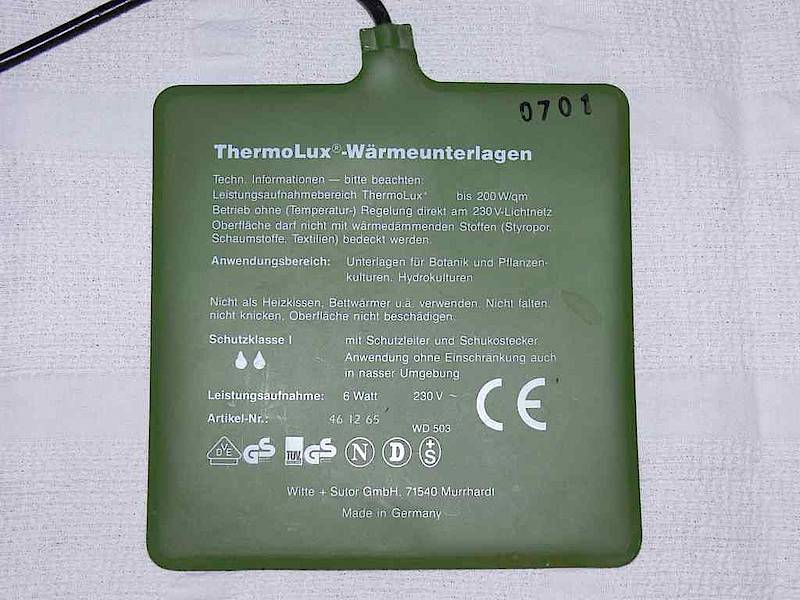
Gut geeignete Wärmeunterlage © E. Brendel
Standort
Der Standort sollte ruhig, trocken und zugfrei sein und nicht in der Nähe des Fernsehers, Radios oder Kinderzimmers liegen, auch nicht in der Küche (stark erhitzes Teflon kann tödlich für Vögel sein!). Mauersegler sind äußerst sensible, lärmempfindliche, anspruchsvolle und komplizierte Pfleglinge, Kinder wären mit ihrer Aufzucht überfordert, und ein Spielzeug sind sie erst recht nicht! Andere Tiere wie Hunde, Katzen, Ratten, Papageien etc. dürfen keinen Zugang zum Vogelpflegling haben. Nie darf in der Nähe eines Vogels geraucht werden! Starke Gerüche, z. B. intensiv duftende Blumen, sind zu vermeiden. Bringen Sie den Mauersegler nie in einem feuchten muffigen Raum unter und vermeiden Sie Staubentwicklung (Gefahr einer Aspergillose)!
Einzel- / Gruppenhaltung
Mauersegler sind sehr gesellig. Es ist vorteilhafter, zwei Segler zusammen als nur einen aufzuziehen. Zwar ist die Gefahr einer Prägung auf den Menschen bei dieser Vogelart eher gering, doch fühlt sich der Vogel sichtlich wohler, wenn er nicht allein, sondern in Gesellschaft eines Artgenossen ist. Selbst ein sehr verängstigter oder unruhiger Jungsegler beruhigt sich fast schlagartig, wenn man ihn zu einem oder mehreren Artgenossen setzt. Sogar Altvögel, die extrem wild, wehrhaft und unzugänglich sein können, finden sich in Gesellschaft anderer Mauersegler viel eher mit einer zeitweiligen Gefangenschaft und den völlig ungewohnten Fütterungsbedingungen ab. Sie liegen zufrieden paarweise oder in der Gruppe beieinander, pflegen ihr Gefieder und das des Nachbarn, und man hat den Eindruck, dass es zu regelrechten Freundschaften kommt. Sogar innige Paarbindungen sind nicht selten.
Handaufgezogene junge Mauersegler beschäftigen sich wie ihre natürlich aufwachsenden Artgenossen viel miteinander, kraulen und putzen sich gegenseitig mit Hingabe, unterhalten sich und liegen gern Seite an Seite. Auch in der Natur gibt es meist Zweier- oder Dreiergelege. "Einzelkinder" sind eher selten.
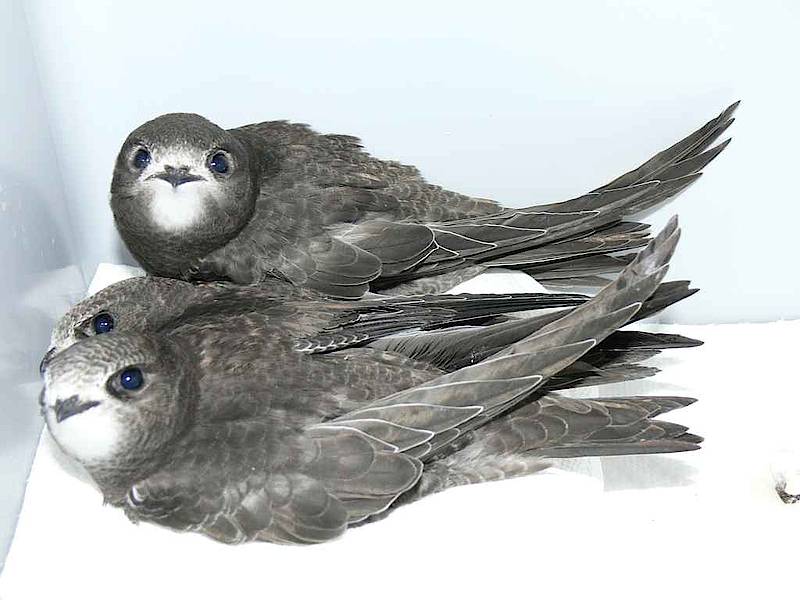
Halbwüchsige junge Mauersegler in ihrer Curver-Box © E. Brendel
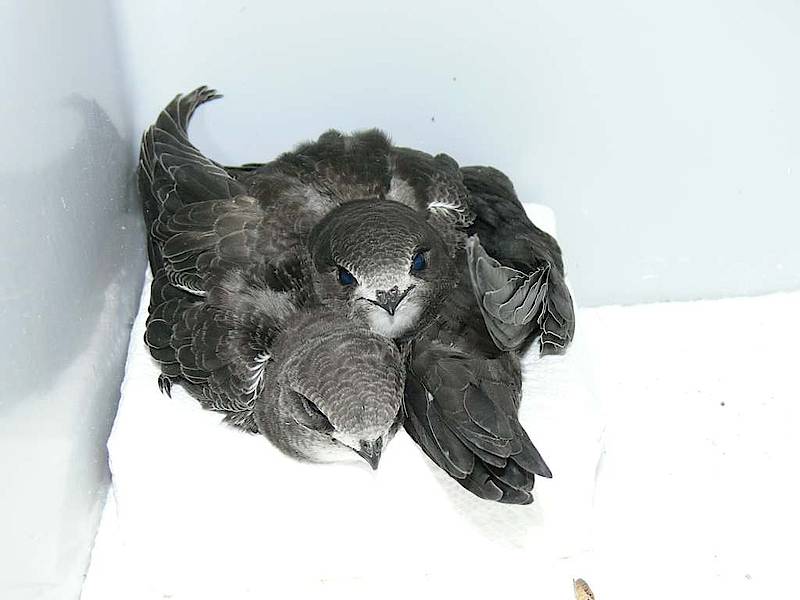
Wie daheim im Nest - Kuscheln ist das Größte! © E. Brendel
Haltung im Terrarium
In der Mauerseglerklinik werden Patienten oftmals über einen sehr langen Zeitraum betreut, z. B. wenn sie Gefiederschäden auskurieren müssen. Deshalb wurden hier besondere Haltungsformen erprobt und angewendet. Während ein junger Mauersegler, der nur seine Nestlingstage in Menschenhand verbringt, in einer an seine natürliche Nisthöhle erinnernden, halb abgedeckten Curverbox am besten untergebracht ist, wurde für Langzeitpatienten die Haltung in geräumigen, nach oben offenen Terrarien eingeführt, die fensternah gestellt werden und freien Ausblick nach draußen gewähren.
Die Terrarien werden aufwendig mit diversen Rollen, Nestern, Verstecken, Vorhängen und Kletterwänden eingerichtet. Die Mauersegler haben Rückzugs- und Klettermöglichkeiten. Sie werden je nach Größe des Terrariums in Vierer- bis Achtergruppen gehalten. Erstaunlich schnell gewöhnen sich die Vögel an die Glasscheiben und genießen von erhöhten Rollen und Sitzecken aus den Blick ins Freie. Kletterwände und höhlenartige Verstecke hinter / unter kleinen Handtüchern oder Fleece-Schals werden gern angenommen. Manchmal stapeln sich die Insassen wie Sardinen in einem Nest, manchmal hängen sie in Reih und Glied nebeneinander an einer Kletterwand und beobachten durch die Glasscheiben interessiert das Geschehen um sie herum.
Sinn des Ganzen ist, dass die Mauersegler das Gefühl für Himmel und Weite und den Anschluss nach draußen nicht verlieren. Dies ist für ihre spätere Freilassung sehr wichtig.
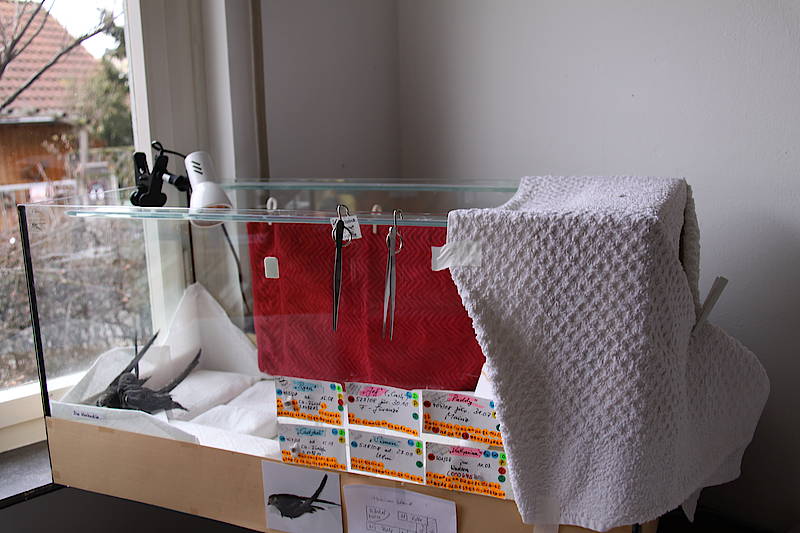
Mauersegler im Terrarium © I. Polaschek
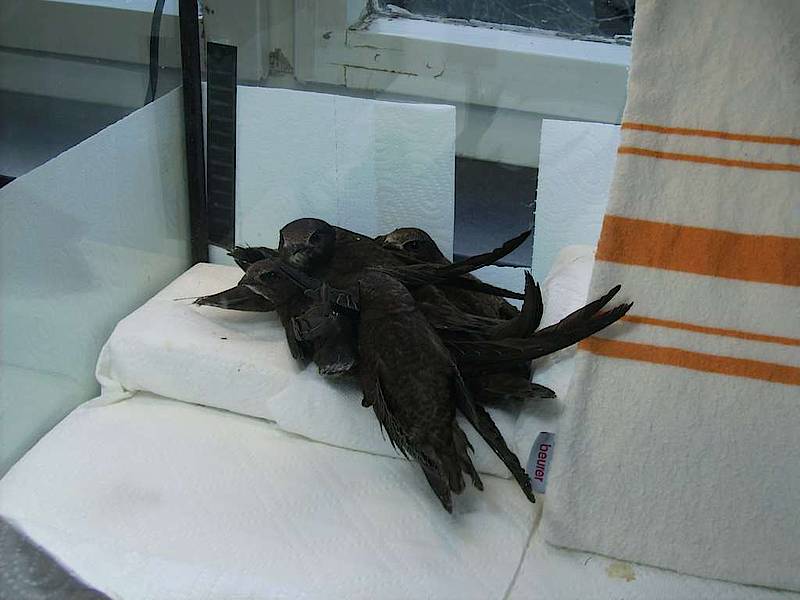
Dauerpatienten im Terrarium: Inneneinrichtung mit Nestern, Kletterrollen und Vorhängen © C. Haupt
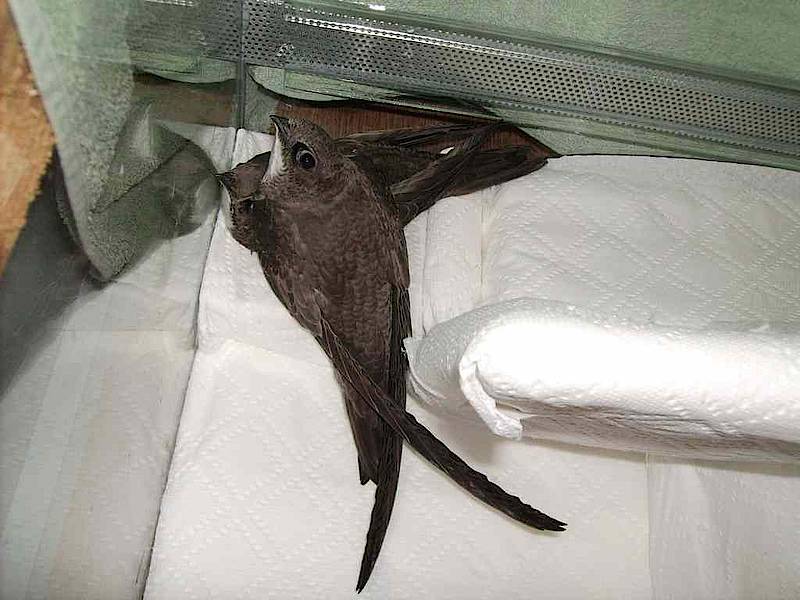
Alpensegler als Patienten im Terrarium © C. Haupt
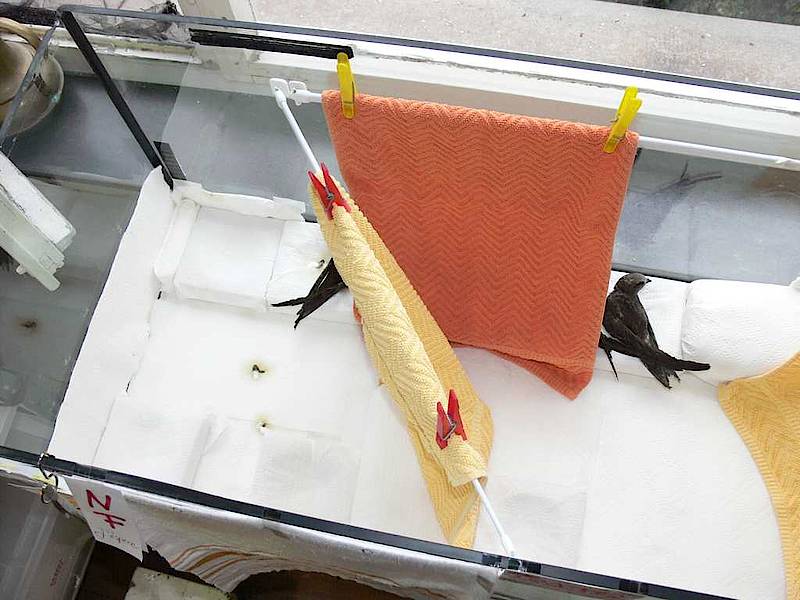
Terrarium von oben © E. Brendel
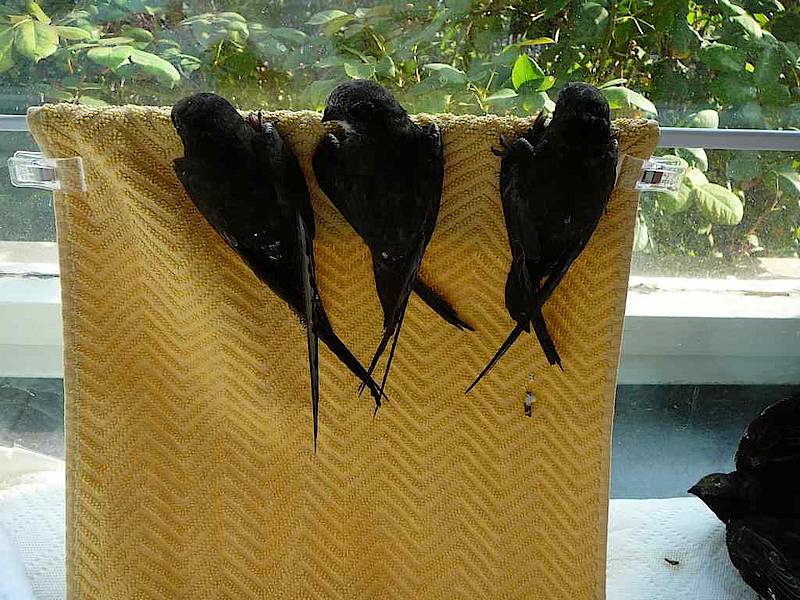
Dauerpatienten brauchen Blick nach draußen © A. Spliedt
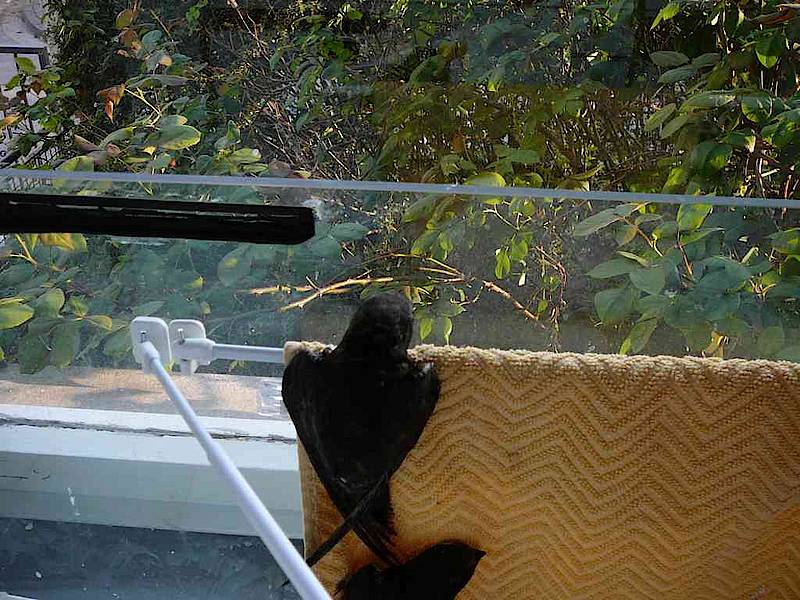
Befestigung von Kletterwänden mit Gardinenstangen und Haken © A. Spliedt
Lichttherapie
Es bekommt Langzeitpatienten wie Mauerseglern mit Gefiederschäden oder Federschiebern sehr gut, wenn man ihnen eine Lichtquelle mit natürlichem UV- und Tageslichtspektrum anbietet. In der Mauerseglerklinik wurde zu diesem Zweck über jedem Terrarium ein Top mit je 2 Kompakt-Lampen installiert, die sich in ihrem Lichtspektrum ergänzen ("Reptil Glo 10.0" und "Reptil Glo 2.0", Hersteller "Exo-Terra"). Die Strahlung der UV- und Tageslichtleuchten reicht bis 50 cm. Sie dürfen nicht auf eine Glasfläche gestellt werden, da die Strahlung dann unwirksam wäre. Unbedingt müssen die Vögel die Möglichkeit haben, sich aus dem Strahlungsbereich zurückzuziehen und Deckung vor dem Licht aufzusuchen.
Die kombinierte UV-/Tageslichtstrahlung hat einen günstigen Einfluss auf das Gefiederwachstum und die Psyche. Die Mauersegler sind deutlich munterer und aktiver, essen gut und suchen häufig Liegeplätze direkt unter den Lampen auf, wo sie sich intensiv putzen und ihr Gefieder pflegen.