Warum?
Ziel der Betreuung eines verletzten oder verwaisten Mauerseglers in der Mauerseglerklinik ist immer die Wiederherstellung seiner Wildbahnfähigkeit und seine Freilassung zum frühestmöglichen Zeitpunkt.
Nach einer sachgerechten tierärztlichen Versorgung ist es während der Rekonvaleszenz meist notwendig, mit dem Patienten Bewegungsübungen zu machen, um einer Muskelatrophie vorzubeugen und die Flugmuskulatur wieder aufzubauen. Auch für Patienten, die zwangsweise lange in Gefangenschaft gehalten werden müssen, z. B. wegen Gefiederschäden, ist Physiotherapie essentiell. Bei Mauerseglern, die Prellungen erlitten haben oder deren Schwinge nach einem Flügelbruch vorübergehend ruhiggestellt werden musste, kann es zu Versteifungen der Gelenke kommen, die ohne ausgiebige Bewegungstherapie zur dauerhaften Flugunfähigkeit führen. Auch für die Psyche des Vogels, der nach Unfällen und Verletzungen oftmals schwer geschockt und verstört ist, kann es lebenswichtig sein, sein Selbstvertrauen durch Physiotherapie und Flugübungen zu stärken und wiederherzustellen.
Geschiftete Mauersegler, die eine umfangreiche operative Erneuerung ihres Großgefieders hinter sich haben, brauchen erfahrungsgemäß ebenfalls einige Tage Training, damit sie sich an ihr „neues“ Gefieder gewöhnen können; natürlich dient dies auch der Kontrolle, ob das Schiften gelungen ist und ob der Federverbund auch unter Belastung geschlossen und physiologisch angeordnet bleibt.
Wie oft?
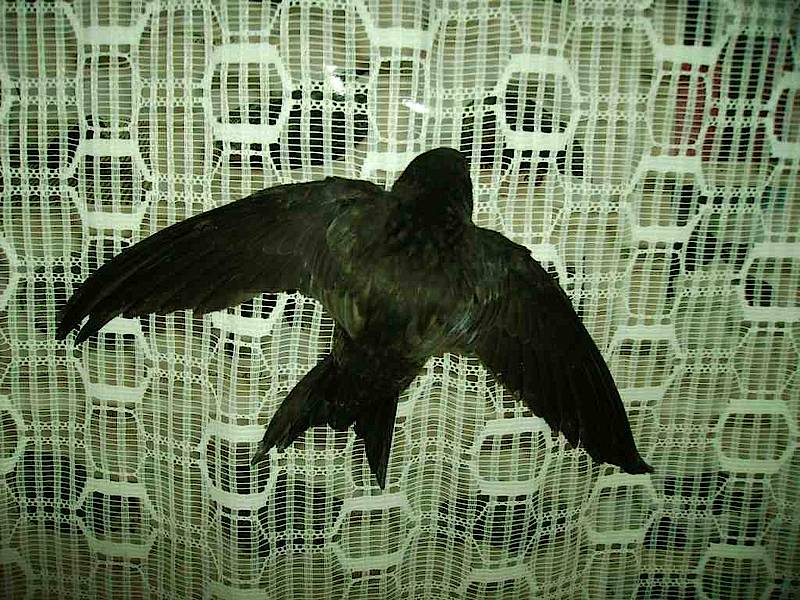
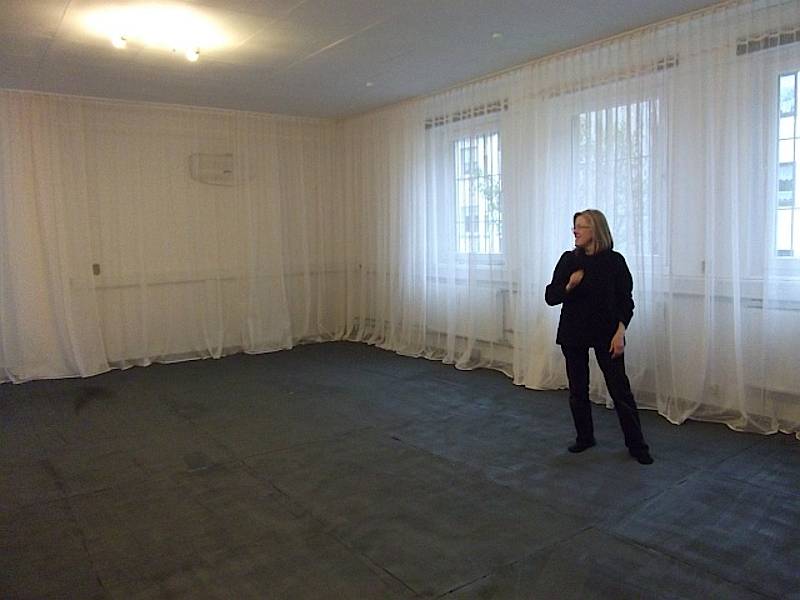
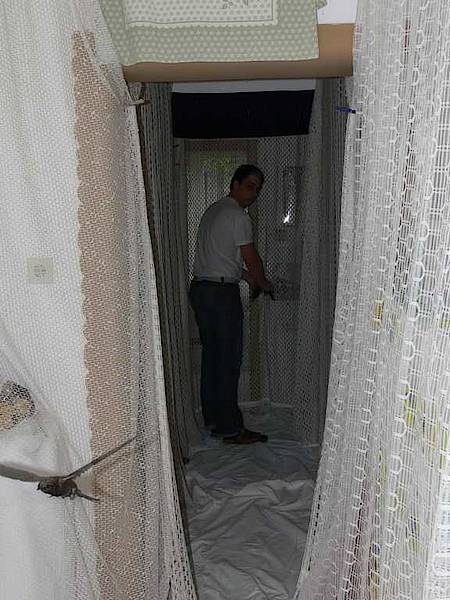
Optimal ist mindestens eine halbe Stunde Bewegungstraining pro Vogel und Tag. In der Mauerseglerklinik gibt es einen speziellen Trainingsraum: Der Boden ist mit weichen Decken ausgelegt und mit sauberen weißen Laken überdeckt, Wände und Fenster sind ringsum mit bodenlangen grobmaschigen Baumwoll-Gardinen abgehängt, in denen sich der Vogel beim Landen gut festklammern kann. Heizkörper, Fensterbank und Türrahmen sind mit Schaumstoff gepolstert. Der gesamte Raum ist so konzipiert, dass ein darin fliegender Vogel sich nirgendwo verletzen kann.Wer einen Mauersegler in eigenen Räumlichkeiten trainieren muss, sollte daran denken, dass dieser Vogel auch auf kurzen Strecken hohe Geschwindigkeit erreicht, und alle Einrichtungsgegenstände, Fenster, Spiegel etc. gründlich absichern. Da Mauersegler beim Training oft zu Boden fallen, muss dieser weich abgepolstert sein.
Wie?
Zu Beginn der Physiotherapie muss der Mauersegler an die Art der Übungen gewöhnt werden. Man setzt ihn am besten erstmal auf den gepolsterten Boden und überlässt es ihm, zu flattern oder herumzukrabbeln. Sehr schnell wird er die Flügel benutzen und durchs Zimmer „rodeln“.
Nun sollte man ihn in die Gardine hängen, damit er lernt, dass er sich hier festhalten und hochklettern kann. Manche tun dies so wieselflink, dass man gar nicht schnell genug nach einem Stuhl rennen kann, um den Mauersegler oben von der Gardinenleiste wieder abzupflücken. Bitte äußerste Vorsicht beim Ablösen aus der Gardine, die Füße sind sehr empfindlich, und in der Regel krallen sich Mauersegler sehr fest!
Den Vogel niemals im Trainingszimmer unbeaufsichtigt lassen! Gefahrenquellen, an die niemand gedacht hat, gibt es immer irgendwo. Außerdem kann ein Mauersegler am Boden ganz schnell jemandem unter die Füße geraten.
Kletterübungen
Das Klettern in der Gardine, das unter Zuhilfenahme beider Flügel erfolgt, stärkt die Brustmuskulatur des Vogels – und besser als jedes teure Fitness-Studio die Po- und Oberschenkelmuskeln des Physiotherapeuten, der dauernd auf den Stuhl steigen, sich hochrecken und den Kandidaten wieder herunterholen muss. Denn ebensowenig wie eine Katze im Wipfel eines Baumes denkt ein Mauersegler daran, von allein wieder herunterzukommen. Aus seiner Sicht verständlich, für den Trainer aber nur dann tolerabel, wenn er die Statur eines Basketballspielers besitzt.
Flugtraining
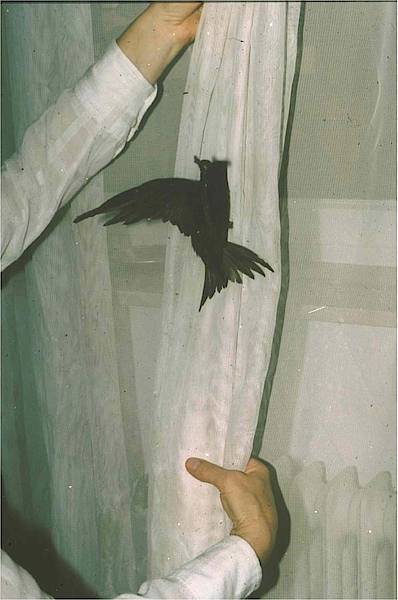
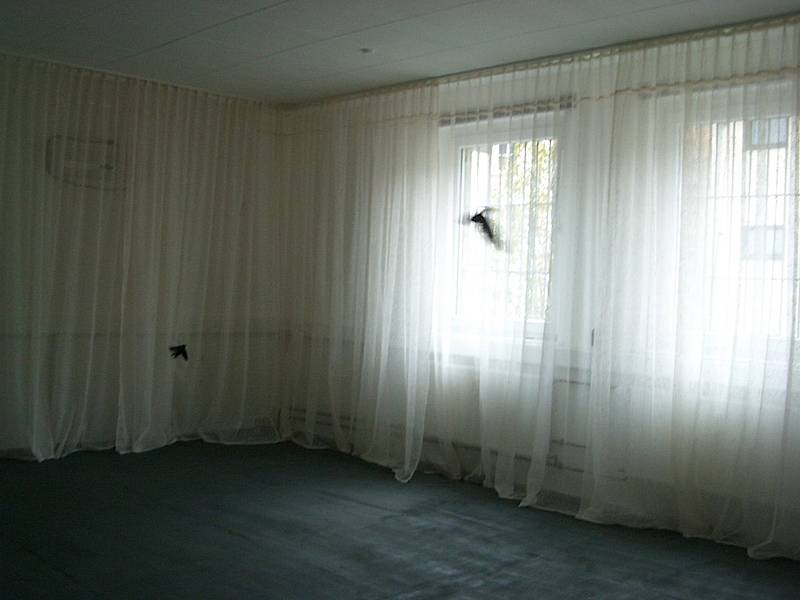
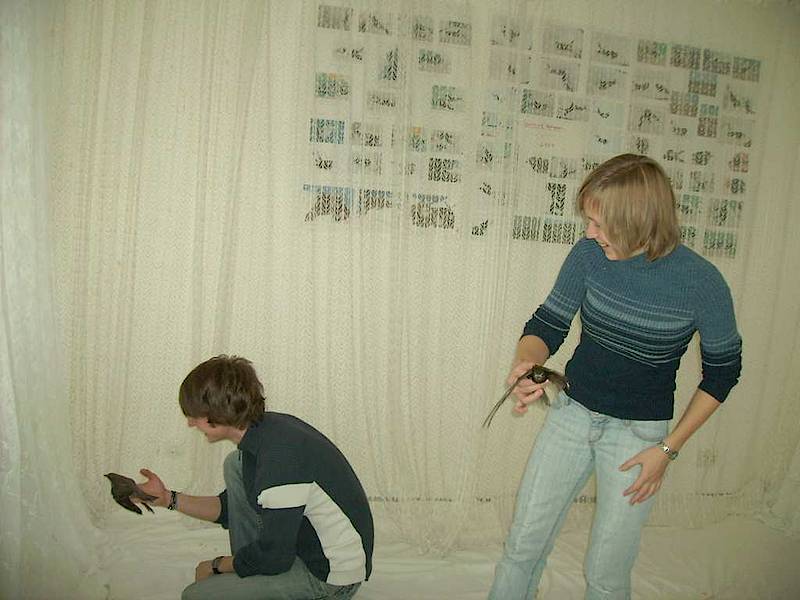
Manche Mauersegler stoßen sich auch von selbst aus der Gardine ab. Das kann kritisch sein, wenn der Kandidat noch stark lahmt, dann wird er niederstürzen und kann sich weh tun. Man muss langsam austesten, was man dem Vogel im Anfang zumuten kann, und ihn erst aus kurzer, dann aus immer etwas weiterer Entfernung in die Gardine fliegen lassen. Dies erfolgt mit leichtem Schwung von der flachen Hand. Der Trainer muss das richtige Verhältnis von eigenem Krafteinsatz und Flugvermögen des Vogels herausfinden. Weder darf der Mauersegler zu Boden plumpsen noch an die Zimmerdecke klatschen, sondern er sollte sauber in der Gardine landen. Also bitte mit viel Gefühl! Das Mauersegler-Trainingszimmer ist keine Bowlingbahn.
Handtraining
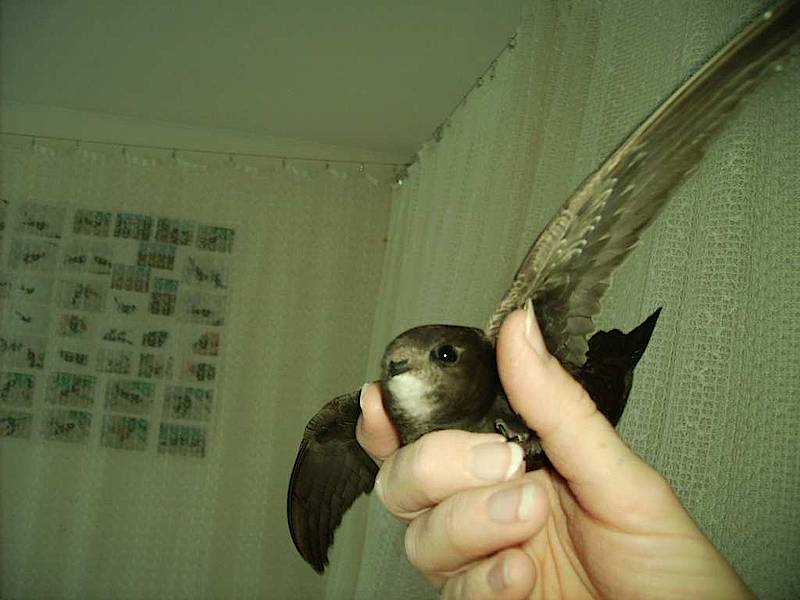
Das Trainieren „auf der Hand“ ist schwierig und erfordert viel Übung. Beherrscht man es jedoch, ist es eine sehr gute Möglichkeit, auch Mauersegler zu trainieren, die nicht ins Kletter- oder Flugtraining dürfen, beispielsweise weil sie neue Federn nachschieben. Die hochempfindlichen Blutkiele würden bei normalem Training angeschlagen werden, knicken oder brechen. Da diese „Federschieber“ aber meist sehr unruhig sind, brauchen sie eine Art der Bewegung, bei der sie sich die kostbaren Federn nicht ruinieren.
Man setze sich zunächst auf eine weiche Decke am Boden – damit nichts passiert, falls der Vogel runterfällt! Der Mauersegler wird auf die rechte Hand genommen, man lässt ihn sich mit den Krallen auf Zeige- und Mittelfinger einhaken. Mit Ring- und kleinem Finger umfasst man vorsichtig stützend Rumpf und Schwanz seitlich. Der Daumen liegt sanft auf dem Rücken des Seglers auf, gerade fest genug, um ihn am Fortspringen zu hindern. In dieser Position vorsichtig fixiert, beginnen die meisten Kandidaten sofort mit den Flügeln zu schlagen.
Der Trainer muss nun sorgsamst darauf achten, 1) dass der Vogel sich nicht aus den Fingern windet und abspringt, 2) dass die rotierenden Flügel nicht gegen die Hand schlagen, 3) dass in der Handfläche nicht die Schwanzfedern verbogen oder geknickt werden, 4) dass die eigenen Finger nicht von hinten in die feinen Armschwungfedern des Seglers geraten und diese verknicken, 5) dass er den Vogel vor lauter Anstrengung nicht in der Hand zerdrückt... – alles gleichzeitig! Handtraining ist eindeutig Physiotherapie für Fortgeschrittene.
Weitere Formen der Physiotherapie
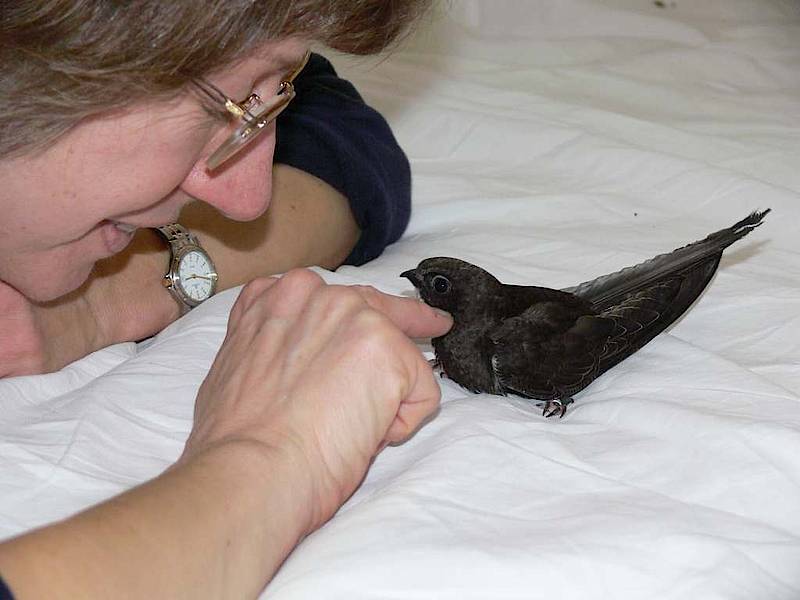
Wie bei der Reha von Menschen können auch beim Mauersegler vom erfahrenen Pfleger mit gutem Erfolg Dehnübungen, Akupressur und leichte Massagen mit der Fingerspitze vorgenommen werden. Solche Behandlungen werden oft erstaunlich bereitwillig toleriert. Fingerspitzengefühl, Einfühlungsvermögen und Kenntnisse der Anatomie sind hier allerdings unabdingbar.
Wie lange?
Bis zum Freilassen! Trainingsdauer und –verlauf richten sich nach den Fortschritten, die der Kandidat macht. Manche sind sehr schnell wieder „auf den Flügeln“ und drehen geschickte Runden im Trainingsraum. Bei anderen kann es Wochen und Monate dauern, ehe die Flugfähigkeit nach Menschenermessen wiederhergestellt ist. Besonders zu achten ist auf Lahmheiten und Asymmetrien der Flügel, des Schultergürtels und der Flugbewegungen. Wenn man unsicher ist, hilft oft die „Drehprobe“: Den Mauersegler auf den Rücken legen – dreht er sich sofort wieder in die physiologische Bauchlage, ist der Schultergürtel heil. Vermag er dies nicht, zappelt er mit halb angelegtem Flügel hilflos auf dem Rücken herum, ist die Prognose zweifelhaft. Dann muss dringend röntgenologisch abgeklärt werden, was dem Vogel fehlt.
Für den Laien kann es sehr schwer sein, zu beurteilen, ob ein rekonvaleszenter Mauersegler wirklich wieder fit für die Freiheit ist. Gehen Sie kein Risiko ein, überweisen Sie solche Vögel lieber zur Mauerseglerklinik, wo aufgrund langjähriger Erfahrung mit Tausenden von Mauerseglern eine bessere Beurteilung von Verletzungen und Verletzungsfolgen möglich ist.
Abschluss der Trainingsstunde sollte für den Mauersegler immer ein positives Erlebnis sein. Also immer mit einem „guten“ Flug aufhören, d. h. nie mit einem Absturz, Niedertrudeln oder einer Bauchlandung, sondern immer mit einem erfolgreichen Aufwärtsflug in die Gardine. Das stärkt das Selbstvertrauen des Vogels. Reden Sie mit ihm, während Sie ihn trainieren, loben Sie ihn und sprechen Sie ihm Mut zu. An Ihrem Tonfall wird er genau spüren, was Sie meinen, Ihre Zuversichtlichkeit wird sich auf ihn übertragen. Mauersegler sind äußerst sensitiv!
Wann darf keinesfalls trainiert werden?
Niemals Flugübungen mit noch nicht flüggen jungen Mauerseglern unternehmen! Nestlinge brauchen kein Training! Allenfalls empfiehlt es sich, unmittelbar vor dem Freilassen im Trainingsraum kurz auszuprobieren, ob der flügge Jungvogel flugfähig ist. Immer wieder kommt es vor, dass man nichtsahnend einen jungen Mauersegler aufzieht, der als Küken beim Absturz aus dem Nest eine Verletzung des Flügels oder Schultergürtels erlitten hat, und diesen Defekt während der ganzen Aufzuchtzeit nicht bemerkt. Beim Start kommt es dann zum bösen Erwachen und für den flüggen Mauersegler zu einer üblen Bauchlandung, bei der er sich sehr weh tun kann. Durch einen kurzen Flugtest im gepolsterten Zimmer lassen sich Lahmheiten, asymmetrische Flügelstellung u.ä. noch rechtzeitig bemerken.
Bei Mauerseglern mit frischen Verletzungen, Luxationen, instabilen Frakturen etc. dürfen ebenfalls niemals Bewegungs- oder gar Flugübungen vorgenommen werden. Prellungen sind äußerst schmerzhaft, hier ist unbedingt mit dem Beginn der Physiotherapie zu warten, bis der Vogel von sich aus wieder anfängt den Flügel zu bewegen. Auch traumatisierte Vögel mit Gehirnerschütterung oder im Schock dürfen nicht trainiert werden. Patienten nach Anflug brauchen manchmal Tage bis Wochen, ehe man vorsichtige Versuche unternehmen kann, sie zu trainieren. Klassisch für Patienten nach Anflug z. B. ist, dass sie beim behutsamen Test ihres Flugvermögens wie ein „nasser Sack“ zu Boden fallen, manchmal ohne jede Flügelbewegung. Man kann das im Wochenabstand testen. Es kann 4-6 Wochen dauern, bis sie sich erholen! Dann allerdings kehrt die Flugfähigkeit oft binnen weniger Tage zurück, und die Rekonvaleszenten zeigen sprunghafte Verbesserung im Training.
Ist Training keine Quälerei für Mauersegler?
Eher im Gegenteil. Die meisten Mauersegler, die über die normale Nestlingszeit hinaus oder zum Ausheilen von Verletzungen in Menschenhand verweilen müssen, haben einen so ausgeprägten Bewegungsdrang, dass sie gar nicht wieder aufhören wollen. Tägliches Training ist für ihr Wohlbefinden unabdingbar, ganz abgesehen von der Notwendigkeit, Gelenke und Sehnen geschmeidig zu halten und der Atrophie von Muskeln vorzubeugen.
Wenn jedoch ein Mauersegler sich im Training auffällig lustlos und unwillig zeigt, krallt, plustert, sich verkriecht o.ä., dann liegt der Verdacht nahe, dass ihm etwas fehlt. Er kann z. B. an Vitamin-B-Mangel leiden oder Schmerzen haben. Es kam sogar schon vor, dass beim Training aufgrund ungewöhnlichen Verhaltens des Mauerseglers entdeckt wurde, dass der Vogel auf einem Auge blind war.