Knochenbrüche und Bänderrisse
a) Flügel
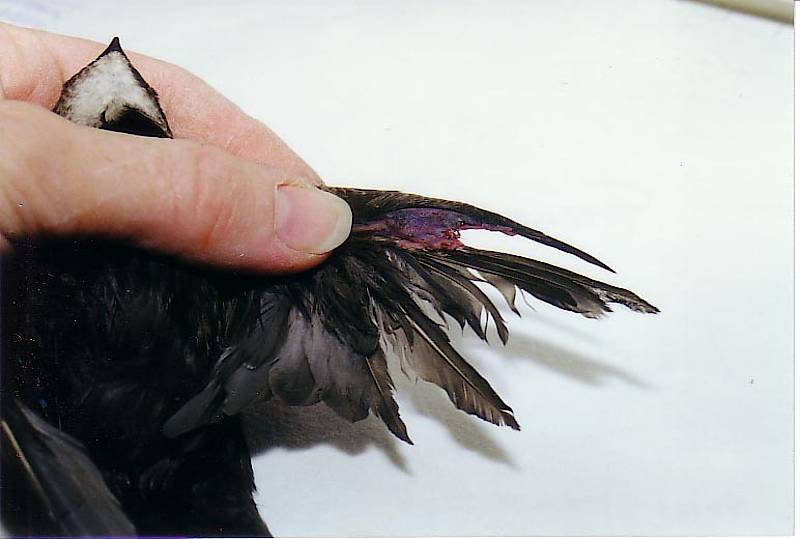
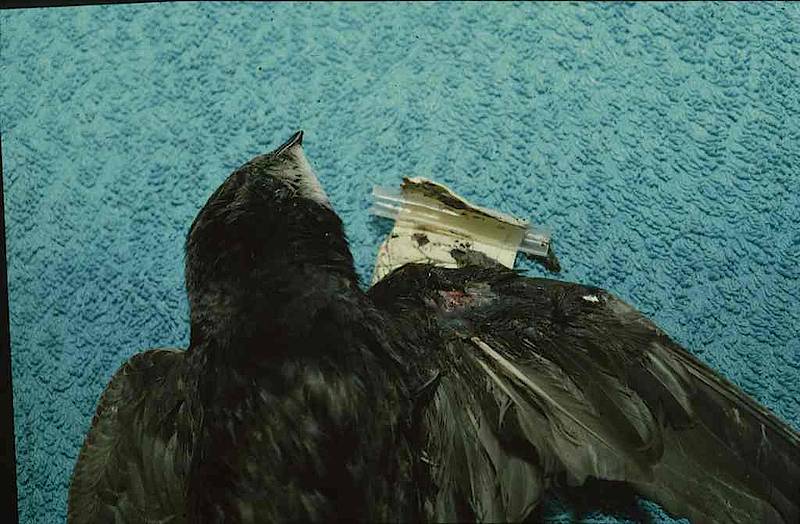
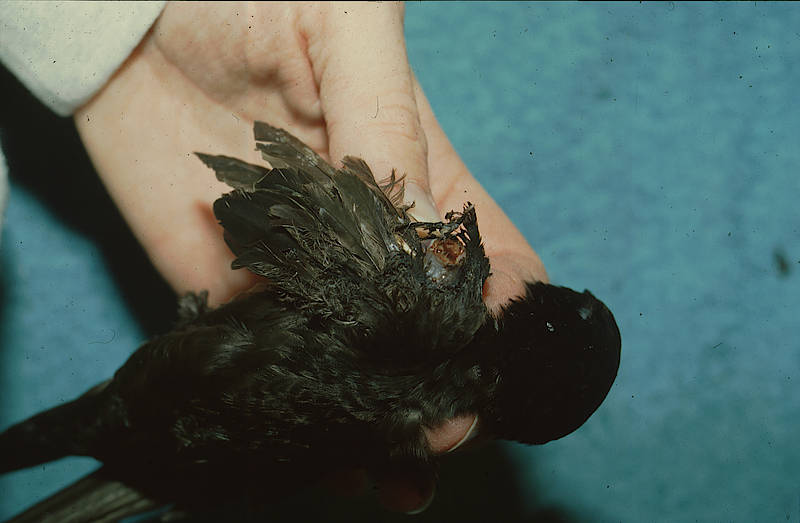
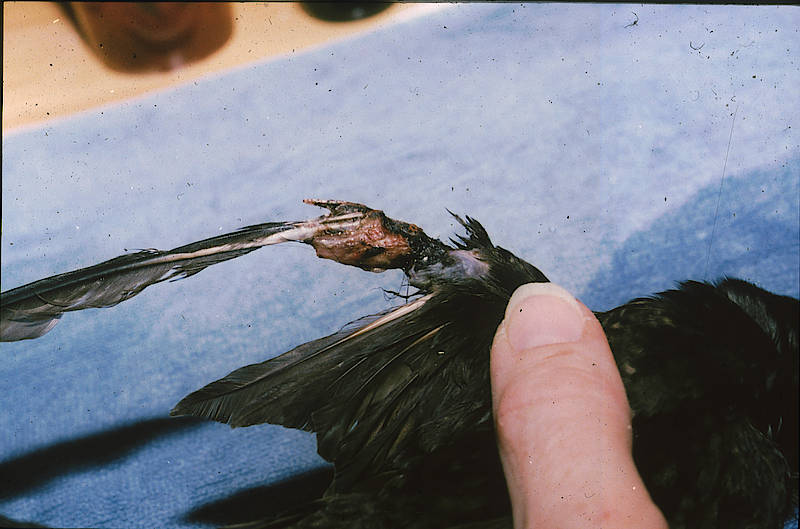
Hat Ihr Findling einen gebrochenen oder ausgerenkten Flügel, sieht es meist übel für ihn aus. Mauersegler sind Hochleistungsflieger, für die ein intakter Flugapparat lebenswichtig ist. Im Laufe ihres Lebens, das über 20 Jahre dauern kann, erbringen sie jährlich eine Flugleistung von ungefähr 200.000 km. Bedenken Sie stets, daß es für einen Mauersegler keine Kompromisse gibt: Er muss perfekt fliegen können - oder wird jämmerlich zugrundegehen. Trotzdem sollte man nicht von vornherein verzweifeln, wenn ein Flügel hängt: Es gibt auch günstige Fälle, die geheilt werden können. Der vogelkundige Tierarzt wird ein Röntgenbild anfertigen und die Lage beurteilen.
b) Schultergürtel
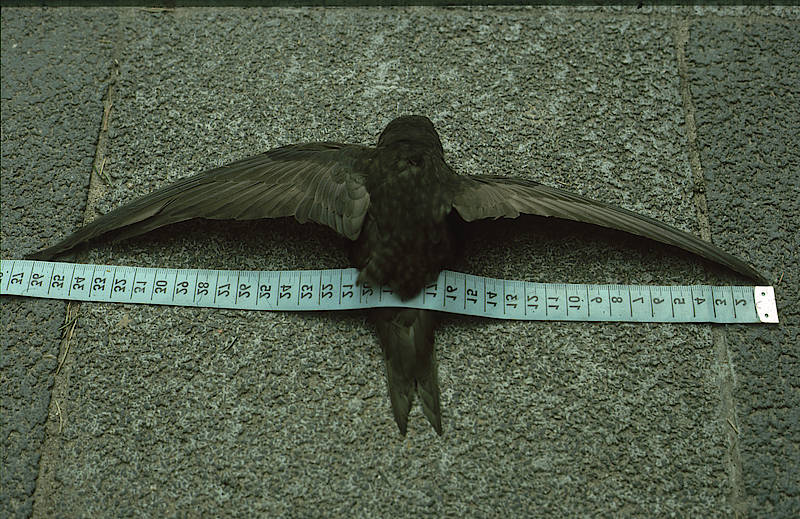
Die wichtigsten Knochen des Schultergürtels beim Vogel sind das filigrane Gabelbein und das kräftige, die Flugbewegung stützende Rabenschnabelbein. Prallt ein Segler mit hoher Geschwindigkeit gegen ein Hindernis, sind Brüche dieser Knochen und abgerissene Bänder nicht selten - und immer aussichtslos. äußerlich ist meist nicht mehr zu sehen, als dass der Mauersegler nicht oder nur ein ganz kurzes Stück fliegen kann. Und dass er sich, wenn man ihn probeweise kurz auf den Rücken legt (die sogenannte "Drehprobe"), nicht aus eigener Kraft wieder herumdrehen kann – was er mit unversehrtem Schultergürtel sofort täte! Gerade weil diese fatalen Verletzungen nicht so offenkundig ins Auge springen wie etwa ein Flügelbruch, mag man kaum glauben, dass es hier keine Rettung gibt. Der Tierarzt kann Ihnen eine Verletzung des Schultergürtels auf dem Röntgenbild zeigen.
c) Bein
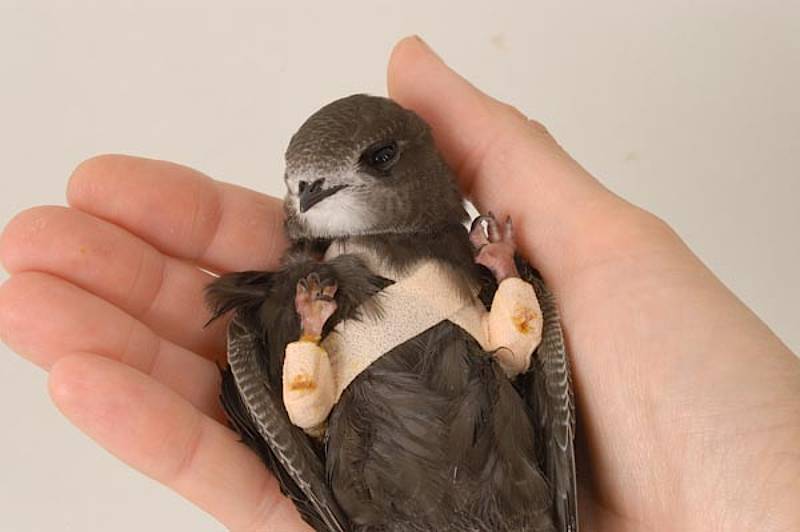
Zu Beinbrüchen kommt es nicht selten durch den Sturz des Jungvogels aus dem Nest oder aber, wenn ein Mauersegler sich am Nistplatz in einem Faden verfängt und vergeblich freizukommen versucht. Es passiert leider immer wieder, dass solch ein Vogel dann hilflos am Dach unter seiner Nisthöhle hängt und ohne aufmerksame Nachbarn und eine engagierte örtliche Feuerwehr zu einem unsagbar qualvollen, lange Tage andauernden Tode verurteilt ist. Widerfährt ihm jedoch das Glück, gerettet zu werden, hat man es oft mit einem hochgradig geschwollenen, verdrehten oder sogar abgestorbenen Fuß zu tun, und tierärztliche Hilfe ist notwendig.Ein gebrochenes Bein heilt, wenn es vom Tierarzt mit einem kleinen Verband um den Körper herum ruhiggestellt wird, im allgemeinen komplikationslos zusammen, und eine geringe Schiefstellung beeinträchtigt den Vogel nicht. Bei einem komplizierten Beinbruch, einem Fuß, der nur noch an Sehnen und Haut hängt, oder bei einer abgestorbenen Gliedmaße sollte der Tierarzt eine Amputation unter Vollnarkose vornehmen. Es ist bewiesen, daß Mauersegler mit nur einem Bein ohne weiteres leben und sogar brüten können.
d) Schnabel
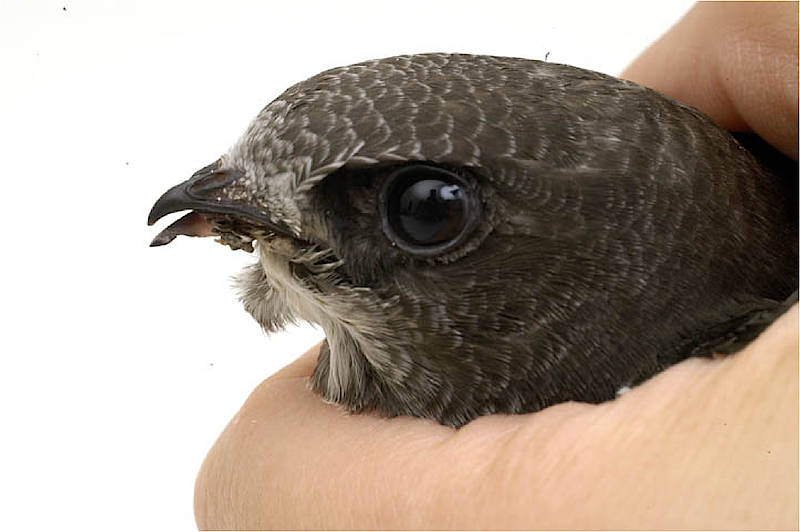
Schnabelbrüche entstehen nur selten durch Unfälle, sondern fast immer durch unvorsichtiges oder zu grobes Füttern: Häufig wird der Fingernagel nur an der Schnabelspitze angesetzt und der Unterschnabel gewaltsam heruntergebogen, was den feinen Knochen dann fast immer brechen läßt. Diese Fraktur ist unnötig und vermeidbar und kann zu schweren Deformationen führen! Manchmal heilt die Fraktur durch die ständige Bewegung beim Füttern nicht mehr zusammen, die Knochenenden trocknen ab, Infektionen breiten sich unter der defekten Hornscheide und bis in den Knochen aus, - der Mauersegler ist verloren. Aber auch wenn die Knochenstücke irgendwie wieder zusammenwachsen, schließen dann oft Ober- und Unterschnabel später nicht mehr passgenau übereinander; unkontrolliertes Hornwachstum kann die Folge sein. Im schlimmsten Fall kommt es zum Verlust von Teilen der Hornscheide des Schnabels oder sogar zum Abbrechen der Schnabelspitze - ein Todesurteil! Der Umgang mit einem Mauersegler mit gebrochenem Schnabel erfordert große Sachkenntnis und allergrößte Behutsamkeit und Vorsicht beim Füttern. Eine schnellstmögliche Fixation durch den Tierarzt ist angeraten.
Prellungen
Prellungen insbesondere der Schulter kommen beim Mauersegler häufig vor und äußern sich klinisch ähnlich wie ein Knochenbruch oder Bandabriss im Schultergürtel. Macht man die Drehprobe, kann sich der betroffene Mauersegler auch nicht vom Rücken herumdrehen. Allerdings sieht die Schulter symmetrisch aus. Streckt der Segler eine Schwinge nicht, schont er oder presst er sie fest an den Körper, muss unbedingt ein Röntgenbild angefertigt werden.Denn eine Prellung, obwohl hochgradig schmerzhaft, ist heilbar! Meist beginnt der Segler bereits nach Ablauf einiger Tage, den Flügel wieder vorsichtig zu bewegen. Danach ist eine kontinuierliche Besserung zu beobachten, und nach etwa 10 bis 14 Tagen sollte man behutsam mit der Physiotherapie (Trainieren am Boden oder in der Gardine) beginnen. Erfahrungsgemäß ist nach etwa drei bis sechs Wochen die Flugfähigkeit vollständig wiederhergestellt.
Wunden, Bisse
Gehen Sie mit einem verwundeten Segler unbedingt sofort zum vogelkundigen Tierarzt. Er kann entscheiden, ob das Tier eingeschläfert werden muss oder zu behandeln ist, wird eine Wundtoilette vornehmen, eventuell nähen und die notwendige antibiotische Versorgung ausführen. Oft ist auch eine Infusion mit Aufbaupräparaten nötig, vor allem wenn der Mauersegler viel Blut verloren hat.
Fettende Salben, stark klebende Verbände und dergleichen sind beim Mauersegler unbedingt zu vermeiden, das Gefieder darf nicht beschädigt werden!
Sollten die Wunden des Vogels von einer Katze stammen, muss er so schnell wie möglich ein geeignetes Antibiotikum bekommen. Jede Stunde zählt! Die Krallen verursachen nadelfeine, hochinfektiöse Verletzungen, während sich unbehandelte Katzenbisse binnen kürzester Zeit tödlich auswirken. Über den Speichel von Katzen werden Pasteurellen, bakterielle Infektionserreger, in die Blutbahn des Vogels übertragen und führen nach ein bis zwei Tagen den Tod durch Septikämie ("Blutvergiftung") herbei, da Vögel gegen diese Erreger sehr empfindlich sind.
Augenverletzungen
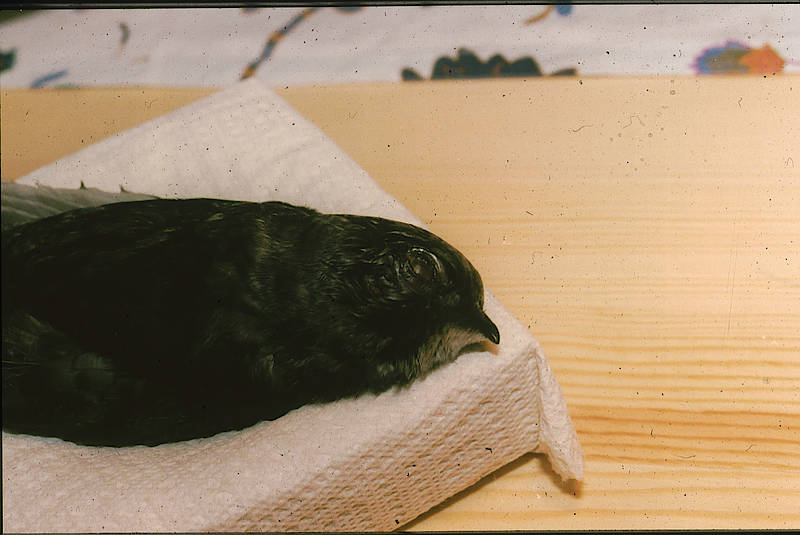
Augenverletzungen haben beim Mauersegler meist eine schlechte Prognose. Nicht abwarten, sofort zum Tierarzt! Unter hochgradigen Schwellungen, blutigen Krusten etc. verbirgt sich leider in der Regel ein zerstörtes Auge, z. B. ein Linsenabriss oder ähnliches. Mit nur einem Auge kann ein Mauersegler nicht leben, da ihm dann das räumliche Sehen fehlt und er keine Nahrung mehr fangen könnte. Noch dazu sind Augenverletzungen in allerhöchstem Ausmaß schmerzhaft! Dem Rat des Tierarztes, den Vogel dann von seinen Qualen zu erlösen, muss unbedingt Folge geleistet werden!
Blutungen
Blutungen aus Nase oder Schnabel treten oft nach Anflügen auf. Blutansammlungen vorsichtig mit einem Wattestäbchen aus dem Rachen entfernen, sonst kann der Vogel ersticken! Des weiteren ist tierärztliche Notversorgung nötig. Blutungen aus dem Ohr sind kennzeichnend für einen Schädelbasisbruch; es bleibt nur die Euthanasie.
Profuse Blutungen, die erschreckende Ausmaße annehmen können, entstehen z.B. beim Abbrechen / Abriss einer Kralle oder wenn ein junger Mauersegler eine wachsende, noch im Blutkiel befindliche Feder verliert. Eine blutende Kralle kann man in ein Stück Seife drücken, um das Blut zu stillen, aber bei einem abgebrochenen Blutkiel gibt es kein Hausmittel. Man kann versuchen, eine sterile Kompresse solange mit sanftem Druck auf der Bruchstelle festzuhalten, bis es endlich aufhört zu bluten. Danach muss der Stumpf des abgebrochenen Blutkiels gründlich austrocknen, was in der Regel ca. 8-10 Tage dauert, und dann behutsam entfernt werden, um das Nachwachsen einer neuen Feder zu ermöglichen. Mauersegler, deren Federn noch wachsen, müssen mit äußerster Behutsamkeit behandelt und angefasst werden, um ihre Blutkiele nicht zu beschädigen!
Großgefiederschäden
Während ernährungsbedingte Gefiederschäden unter "Fehlernährung" noch ausführlich zur Sprache kommen, soll an dieser Stelle darauf hingewiesen werden, dass immer wieder Mauersegler mit vermutlich unfallbedingten Federschäden in Menschenhand gelangen: mit abgeknickten, abgebrochenen oder aus unbekannten Gründen fehlenden Schwungfedern.
Solche Schäden sind meist asymmetrisch und auf nur eine Schwinge beschränkt (im Gegensatz zu genetisch bedingten oder durch falsche Ernährung hervorgerufenen Gefiederdefekten, die meist symmetrisch auftreten).
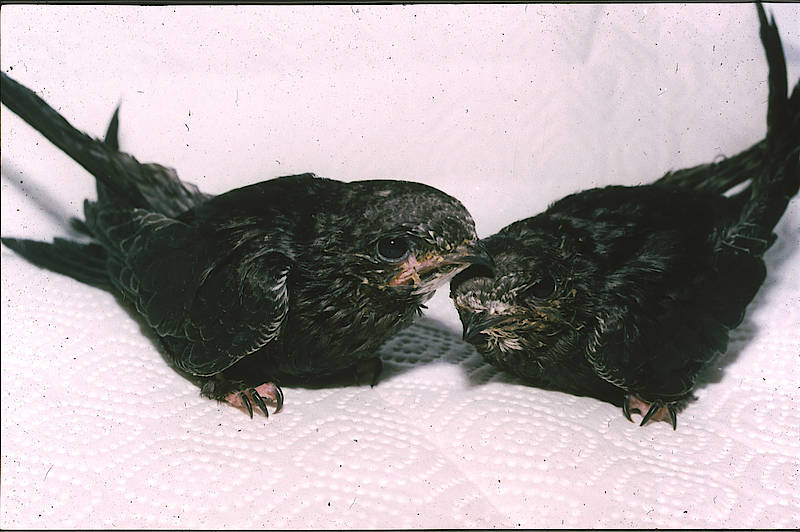
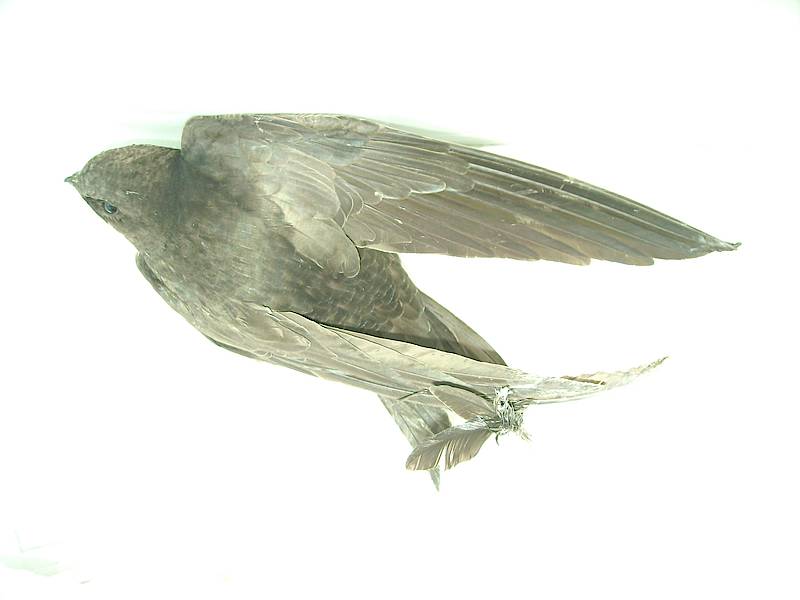
Wenn Sie einen Mauersegler mit einem Großgefiederschaden haben, sollten Sie unbedingt Kontakt mit der DGfM aufnehmen und den Vogel an die Mauerseglerklinik in Frankfurt / Main abgeben, da hier die größten Chancen bestehen, seine Flugfähigkeit wiederherzustellen.
Ist dies nicht möglich, muss die schwierige Entscheidung, was mit dem "Unglücksvogel" geschehen soll, letztlich vom Tierarzt getroffen werden. Gewiss kann er unter Allgemeinnarkose die beschädigten Schwungfedern vorsichtig entfernen. Allerdings sind die Kiele der großen Handschwungfedern außerordentlich fest - bis in den Unterarmknochen! - verankert, und die Gefahr ist groß, selbst bei fachkundiger Entfernung schwere Verletzungen zu verursachen. Oft wächst dann keine neue Feder mehr nach, oder nur eine deformierte, weil die Federanlage zerstört oder verletzt wurde. Selbst im allergünstigsten Fall dauert es mindestens sieben bis acht Wochen, ehe die neuen Schwungfedern vollständig ausgewachsen sind.
Das Nachschieben neuer Federn wird meistens von vielen Komplikationen begleitet. "Federschieber" sind häufig sehr unruhig und ruinieren sich die neuen Blutkiele immer wieder. Auch stellt die lange Gefangenschaft, die nötig ist, um auf neue Federn zu warten, eine erhebliche psychische und physische Belastung für den Mauersegler dar. Seine Flugmuskulatur bildet sich zurück, sein Immunsystem wird geschwächt, er wird anfällig für Infektionen. Und es kann selbst bei ausgewogener Fütterung und Zugabe von Mineralstoffen zu Wachstumsstörungen der neuen Federn kommen. Deshalb ist erfahrungsgemäß zum Ziehen beschädigter Handschwung- oder Schwanzfedern nicht zu raten!
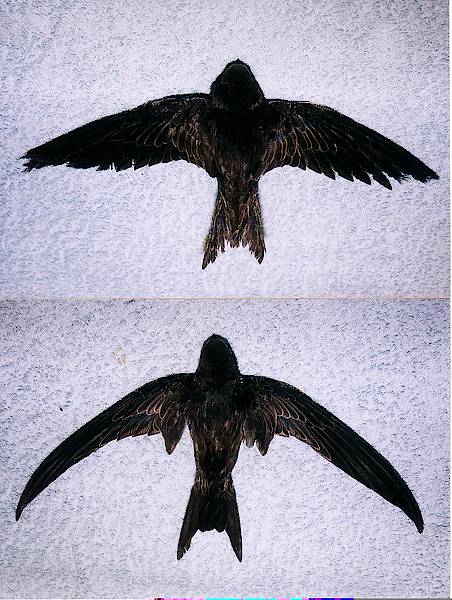
Die falknerische Methode des Schiftens, d.h. des Aufsetzens unversehrter Federn auf die Kiele der beschädigten, kann in solchen Fällen die Rettung sein, ist aber beim Mauersegler keinesfalls eine Routineoperation. Die Vorteile liegen jedoch klar auf der Hand: Schon wenige Tage nach der Operation kann der geschiftete Mauersegler wieder in die Freiheit starten. Insbesondere bei einem brütenden Altsegler, der daheim Junge im Nest hat, ist dies von unschätzbarem Wert, denn sonst wäre vermutlich nicht nur er, sondern auch seine Brut verloren.
Das Schiften eines Mauerseglers erfordert sehr viel Übung und das passende Federmaterial. In der Mauerseglerklinik rettet diese Operation alljährlich Dutzenden von Mauerseglern das Leben.
Krankheiten
Über Infektionskrankheiten bei freilebenden Mauerseglern ist nichts bekannt. Die bisher bei Mauerseglern in Menschenhand beobachteten Erkrankungen waren fast ausschließlich auf mangelnde Hygiene, Haltungs- und Fütterungsfehler durch die Finder bzw. Pfleger der betroffenen Vögel zurückzuführen und äußerten sich u.a. als Rachenentzündungen, als Imbalancen des Magen-Darm-Traktes mit schweren Verdauungsstörungen, als Atemwegserkrankungen sowie als Leber-, Nieren-, Skelett- und sekundär Gefiederschäden. Kontakt zu Zier- und Wildvögeln anderer Arten führte in einigen Fällen ebenfalls zur Übertragung von Infektionskrankheiten auf den Mauersegler (z. B. Ornithose). Durch ungeeignete Medikamente (z. B. Sprays gegen Parasiten) kam es in mehreren Fällen zu schweren Intoxikationen, nicht selten mit Todesfolge.
Zeigt Ihr Mauersegler-Findling unspezifische Symptome wie z. B. Apathie, Atemnot, Lähmungen, gesträubtes Gefieder, aufgekrümmten Rücken, auffallend blasse, gelbliche oder bläuliche Schleimhäute, stinkende oder süßlich riechende Rachenbeläge, geschwollene Augenlider, verschmiertes Gefieder unterhalb des Schwanzes, übelriechenden Kot, stellen Sie ihn einem auf Haus- und Wildvögel spezialisierten Tierarzt vor. Eine bakteriologische und mykologische Untersuchung kann auf den richtigen Weg führen.
Eine Reihe oftmals sehr hartnäckiger bakterieller Schmierinfektionen und Pilzerkrankungen kann vor allem durch mangelnde Hygiene beim Füttern und bei der Aufbereitung des Fütterungszubehörs verursacht werden. Das Ausbrechen solcher Infektionen wird durch falsche Ernährung, Mangelzustände und ein geschwächtes Immunsystem gefördert. Sie manifestieren sich in den meisten Fällen im Rachenraum und in den Atemwegen. Es kommt zu deutlich erkennbaren Veränderungen im Rachen (weißliche oder bräunliche Punkte, Beläge und Krusten, schleimige Fäden, süßlicher oder übler Geruch etc.), zu schmatzenden Atemgeräuschen und sogar Atemnot. Der Rachenraum von Mauerseglern, die noch nicht in Menschenhand waren, ist in der Regel steril. "Vorbehandelte" Mauersegler hingegen weisen oft ein breites Spektrum von Keimen auf, verschiedenste Bakterien und auch Hefepilze (Candida). Während letztere relativ einfach zu bekämpfen sind, erfordern bakterielle Krankheitserreger eine aufwendige Behandlung und haben sich in nicht wenigen Fällen sogar als therapieresistent erwiesen und zum Tod des erkrankten Mauerseglers geführt! Die bakteriologische und mykologische Untersuchung eines Rachentupfers sowie ein Antibiogramm sind für die erfolgreiche Behandlung einer Racheninfektion notwendig, da auch bei Wildvögeln zunehmend Resistenzen gegen die gängigen Antibiotika beobachten werden.
Hochanfällig sind Mauersegler für Schimmelpilze (Aspergillus). Die Pilzsporen kommen überall vor und tummeln sich noch im saubersten Teppich oder Vorhang. Eine Übertragung von Vogel zu Vogel ist nicht möglich, die Sporen werden aus der Umwelt eingeatmet und keimen dann im feuchtwarmen Atmungsapparat des Vogels binnen Stunden aus. Insbesondere immungeschwächte Mauersegler oder solche, die gerade eine Antibiotika-Therapie bekommen, sind leichte Opfer für eine Aspergillose. Wenn die Pilze sich in der Luftröhre ausbreiten, können sie den befallenen Vogel binnen weniger Stunden töten: Er erstickt qualvoll bei vollem Bewusstsein. Deshalb ist bei besonders schwachen Mauerseglern eine prophylaktische Verabreichung eines Antipilzmittels ratsam. Und auch ein Antibiotikum darf nie gegeben werden, ohne den Vogel gleichzeitig mit einem Mittel gegen Schimmelpilze zu schützen!
Erste drohende Anzeichen für eine Aspergillose: Schnabelatmung, Mattigkeit, Atemgeräusche. In diesem Stadium ist eine sofortige Therapie möglicherweise noch erfolgreich. Kommt es aber zu quietschenden quiekenden Lautäußerungen, die völlig ohne vorherige warnende Anzeichen auftreten können, und ringt der Mauersegler sichtbar nach Luft, sollte er unverzüglich eingeschläfert werden, um ihm den grausamen Erstickungstod zu ersparen.
Mit Schimmelpilzen ist nicht zu spaßen. Ihren möglicherweise spektakulärsten öffentlichen Auftritt hatten sie in den 20er Jahren als "Fluch des Pharao", als ein 3000 Jahre alter und äußerst aggressiver Aspergillus niger zum Tode mehrerer namhafter í„gyptologen führte!
Auch durch falsche Fütterung wird ein Mauersegler krank – schwerkrank sogar! Davon mehr unter "Fehlernährung".
Parasiten
Der Befall mit Parasiten ist nicht als Erkrankung zu werten, kann aber unter gewissen Umständen dazu beitragen, einen Mauersegler krank zu machen. Grundsätzlich hat kein Parasit ein Interesse daran, seinen Wirt nachhaltig zu schädigen oder gar umzubringen, da es auch seinen eigenen Tod bedeuten würde. Doch bei einem sehr geschwächten, unterernährten Mauersegler mit stark verminderter Immunlage kann natürlich Parasitenbefall zu einem Problem werden.
Wie bei den meisten Tieren gibt es auch beim Mauersegler Ekto- und Endoparasiten. Zu den Ektoparasiten zählen die harmlosen Federlinge, die vorwiegend von abgeschilfertem Federmaterial leben und leicht zu beobachten (und abzusammeln!) sind, wenn sie am Auge des Mauerseglers Tränenflüssigkeit trinken.
Unangenehmer ist die blutsaugende Seglerlausfliege (Crataerina pallida), die von Größe und Aussehen entfernt einer Stubenfliege gleicht, jedoch zurückgebildete Flügel und mit vielen Widerhaken behaftete Füße hat. Fliegen kann sie nicht, doch sie bewegt sich unglaublich schnell vorwärts, springt gern mal auf Menschen über und ist aufgrund ihres harten Panzers mit den Fingern praktisch nicht zu zerdrücken. Besonders panische Zeitgenossen sollen schon mit einem Hammer auf sie losgegangen sein! (natürlich nicht, solange sie auf einem Mauersegler saßen!!!)
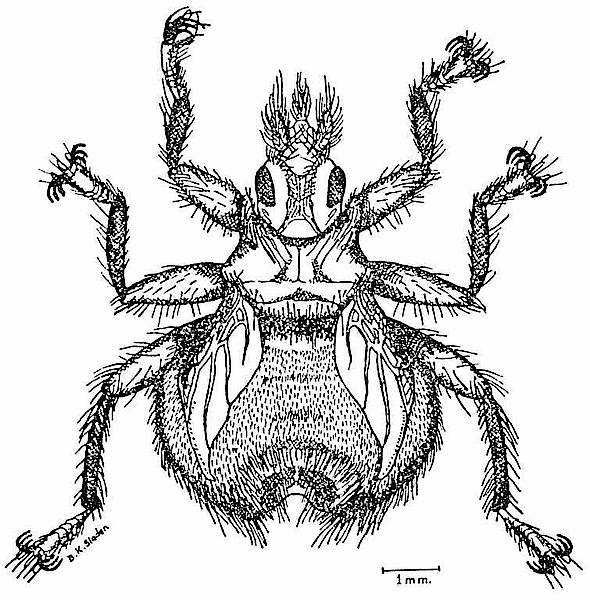
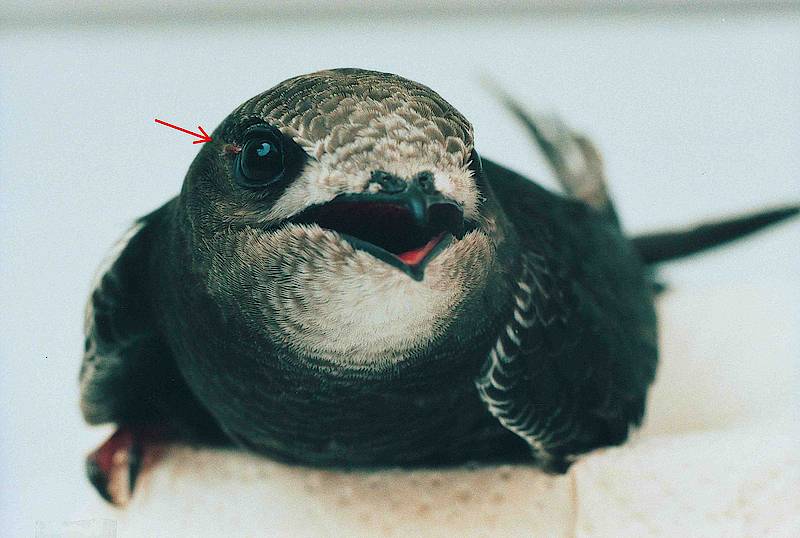
Für den Menschen sind die Ektoparasiten des Mauerseglers nicht gefährlich, höchstens lästig, und werden oft schlichtweg als eklig empfunden. Am besten und schonendsten ist es, wenn Sie Ihrem Pflegling Federlinge und Lausfliegen mit den Fingern absammeln und vernichten. Wer sich davor ekelt, kann dem Vogel auch eine kleine Prise eines für Vögel geeigneten Insektenpuders (z. B. "Bolfo"-Puder) im Nackengefieder verteilen. Keine Sprays! Das Mittel darf dem Mauersegler nicht in Augen und Schnabel geraten.
Gelegentlich findet man beim Mauersegler die Rote Vogelmilbe, jedoch nicht als eigentlichen Mauersegler-Parasiten, sondern als unerwünschte "Dreingabe" aus alten Spatzennestern, auf denen er mancherorts seine Brut großzieht. Winzig kleine sich fortbewegende rote Punkte, die sich um Ihren Pflegling herum verbreiten, sollten Sie alarmieren. Die Rote Vogelmilbe ist ein opportunistischer Blutsauger, der seine Opfer vor allem nachts traktiert und, sofern er keinen Vogel mehr vorfindet, auch mit Menschen vorlieb nimmt. Man zerdrücke die ausschwärmenden Plagegeister emsig und lasse seinem Mauersegler vom Tierarzt einen Tropfen des Antiparasitikums "Ivomec-S" auf die Hals- oder Nackenhaut auftragen. Das genügt.
Eine weitere Milbe, neu entdeckt beim Mauersegler und möglicherweise ebenfalls ein "Auswanderer" aus anderen Vogelnestern, ist eine ca. 1 mm große Saugmilbe, die in den Nasenlöchern der geplagten Mauersegler parasitiert und dort in erstaunlicher Anzahl vorkommen kann. Anzeichen dafür ist wässriger "Schnupfen", der auf keine Behandlung mit Nasentropfen o.ä. anspricht. Schaut man ganz genau hin, kann man dann gelegentlich die Nasenmilben als kleine rotbraune Punkte in den Nasenlöchern des Mauerseglers erkennen. Sie wurden auch schon beim Alpensegler gefunden, dem großen Verwandten des Mauerseglers!
Der Tierarzt kann behutsam die zuvorderst sitzenden Milben aus der Nase des Vogels entfernen. Des weiteren hilft auch hier ein Tropfen "Ivomec-S", auf die Haut des Halses oder Nackens aufgetragen.
Vermutlich sind die meisten Mauersegler auch von Endoparasiten befallen. In der Vergangenheit mehrfach nachgewiesen wurden Bandwürmer, Spul- und Haarwürmer, die im Darm des Seglers schmarotzen und unter besonderen Bedingungen zum Tod des Vogels führen können (z. B. wenn eine Ansammlung von Würmern einen Verschluss des Darms bewirkt). Man kann solche Würmer bei starkem Befall manchmal sogar mit bloßem Auge im Kot erkennen.
Mauersegler, die schlecht essen, nicht zunehmen und kümmern, sind verdächtig für starken Befall mit Endoparasiten und sollten in jedem Fall behandelt werden.
Natürlich kann man vom Tierarzt eine Kotuntersuchung auf Band-, Spul- und Haarwürmer vornehmen lassen. Zwei verschiedene Untersuchungen sind dafür nötig, eine Sedimentation und eine Flotation. Ob der Aufwand lohnt, ist fraglich. Erstens werden Wurmeier nur sporadisch ausgeschieden, man kann also sogar mehrfach Kotproben untersuchen, ohne etwas zu finden. Zweitens hat eine neuere Untersuchung der Zier- und Wildvogelklinik der Tierärztlichen Hochschule Hannover an gestorbenen Mauerseglern verschiedensten Alters ergeben, dass im Darm der Tiere ausnahmslos Bandwürmer einer bisher nicht bekannten Art vorkamen.
Deshalb ist eine generelle prophylaktische Entwurmung des Mauersegler-Patienten sinnvoll. Unbedingt müssen dafür aber die richtigen Medikamente aus der Vogelpraxis verwendet werden, da die meisten in der Kleintiermedizin gebräuchlichen Antiparasitaria nicht für Vögel geeignet sind!!!